News
12,736 articles from 50+ sources
Myanmar's spiralling rights and humanitarian crises risk getting "much worse" as global attention focuses on the Middle East war and aid dwindles further, the top United Nations expert on the Asian country warned. More than five years after Myanmar's military snatched power in a coup, the junta is relentlessly continuing to attack civilians and obstruct desperately needed humanitarian aid, Tom Andrews, the UN special rapporteur on rights in Myanmar, told AFP in an interview this week.
Iran War Causing Largest Ever Oil Disruption, I.E.A. Says The New York Times

submitted by /u/1-randomonium to r/worldnews [link] [comments]
Authorities have said most of those who died were found buried in mud.

The company has been hit by the ongoing crisis in the Middle East, with many customers reluctant to fly if they can avoid it
Turkey’s Central Bank Holds Rates as Iran War Threatens Inflation Pickup WSJ

submitted by /u/1-randomonium to r/geopolitics [link] [comments]

Iran 'not in danger of collapse', say US intelligence sources Peter McNamara on Thu, 03/12/2026 - 10:18 After nearly two weeks of constant bombardment and the assassination of its Supreme Leader, Iran's administration remains intact A portrait of Ayatollah Ali Khamenei's son and new Supreme Leader Mojtaba at the funerals of IRGC commanders, March 2026 (Atta Kenare/AFP) Off US intelligence reports suggest that Iran's leadership retains control of the country, several sources familiar with the matter have told Reuters. After two weeks of joint US-Israeli strikes on the country, including one that killed Supreme Leader Ayatollah Ali Khamenei, one source told the news agency that there is "consistent analysis that the regime is not in danger" of collapse and "retains control of the Iranian public". Following a “multitude” of intelligence reports that have reached this conclusion, the most recent coming in the last few days, President Donald Trump’s decision to end the bombardment, which he told CBS on Monday will end “soon, very soon”, could signal a costly failure for the administration. The reports follow comments from Democratic senators, who said following a behind closed doors briefing from President Donald Trump's administration that the US has "no plan" in Iran, and that earlier CIA assessments had concluded that if Iran's leaders were taken out, an "even more radical group" would emerge. Trump's intervention, which has so far left at least seven American troops dead and 140 others injured, has provoked a backlash among parts of his supporter base. (adsbygoogle = window.adsbygoogle || []).push({}); With oil prices surging as Iran controls the Strait of Hormuz, through which 20 percent of the world's oil is shipped, a failure to topple the Iranian administration will likely pile more pressure on the White House. The senators briefed by US officials said that "regime change" was not one of the war's goals. US has ‘no plan’ for Iran war and Strait of Hormuz, senators say after briefing Read More » A separate Reuters report found that Israeli officials did not believe it was certain there would be an uprising from the Iranian public nor the collapse of the government, which recently appointed a new supreme leader, Mojtaba Khamenei, the son of the previous supreme leader. While another source insisted that Israel has no intention of allowing any form of the Iranian government to survive, they did suggest it would require forces on the ground in order to successfully topple the regime, which the US has not ruled out doing. The Trump administration has given multiple reasons for initiating Operation Epic Fury, as the military bombardment has been dubbed, including as an act of self-defence against Iran’s nuclear ambitions as well as a chance to liberate the Iranian people. Now, though, amid warnings from Iran that oil prices could climb far higher, the biggest US military operation since 2003 might well end unsuccessfully, with intelligence reports indicating that the Islamic Revolutionary Guard Corps (IRGC) and Iran's interim leaders retain control of the country. The US government has also put forward mixed messages on how it intends to proceed. A day before Trump promised the war would end soon, Secretary of Defence Pete Hegseth told CBS, "This is only just the beginning." War on Iran News Post Date Override 0 Update Date Mon, 05/04/2020 - 21:19 Update Date Override 0

San Diego Veterans for Peace place sign outside of California base urging Armed Forces not to bow to orders they believe to be illegal

Mortgage lenders have been withdrawing deals as concerns grow over rising prices
Iran regime's resilience poses a challenge and Trump's tariff war enters new phase: Morning Rundown NBC News

The Most American King: Jordan’s Abdullah II and the craft of survival Hossam el-Hamalawy on Thu, 03/12/2026 - 09:07 A rare biography into the life of Jordan’s king gives insight into the statecraft that has kept him in power, but not the domestic cost of his policies King Abdullah II meets US President Donald Trump at the White House in February, 2025 (AFP) Off Aaron Magid’s The Most American King: Abdullah of Jordan sets out to fill an important gap in contemporary Middle Eastern history. Despite Abdullah II having ruled Jordan for more than a quarter of a century, surviving regional upheavals that swept away presidents and monarchs alike, no comprehensive political biography has previously attempted to map his life, networks, and rule in detail. Magid offers a richly reported narrative built on more than a hundred interviews with Jordanian officials, western diplomats, intelligence figures, military officers and analysts, supplemented by archival material in the US and UK. The result is a fast-moving, accessible portrait of a ruler deeply embedded in western political and security circuits. Yet the book is marked by a striking tension. Its tone, one feels, is almost sympathetic, at times openly admiring, presenting Abdullah as disciplined, pragmatic, culturally fluent, and strategically astute. (adsbygoogle = window.adsbygoogle || []).push({}); At the same time, the empirical material Magid assembles repeatedly exposes an authoritarian system marked by concentrated power, failed political reform, economic stagnation, and reliance on foreign sponsorship. The biography oscillates between semi-celebratory narrative and inadvertent indictment, with reality impinging on the author’s at times admiring - and at others neutral - framing. Magid's book is a rare biography of Jordan's king (Universal Publishing) Ironically, the book’s sharpest political assessment appears only at its very end, quietly contradicting the spirit of much that precedes it. After more than two hundred pages of storytelling and contextual explanation, Magid concedes that Abdullah’s long-promised transformation of Jordan into a constitutional monarchy akin to the United Kingdom remains distant, that power has only become more concentrated, and that economic conditions have deteriorated. The author concludes that if Abdullah’s son rules in the same manner, he is unlikely to enjoy popular legitimacy. (adsbygoogle = window.adsbygoogle || []).push({}); The opening chapters dwell on Abdullah’s formative years in Britain and the United States, where he attended elite boarding schools in Massachusetts and later trained at Sandhurst. These experiences are framed as instilling discipline, openness, and cross-cultural understanding. His two-year service in the British army is presented as evidence of seriousness and professionalism, further embedding him within western military culture. This is not merely biographical colour; it becomes central to Magid’s implicit argument that Abdullah is a different kind of Arab ruler, one shaped by western institutions and modern statecraft. Yet these same chapters contain early signs of political orientation that deserve greater interrogation. (adsbygoogle = window.adsbygoogle || []).push({}); A Western alignment During a mid-career fellowship at Georgetown University, Abdullah wrote a paper defending Israeli military operations against Palestinian fighters inside Jordan in 1968, arguing that the strikes were justified. Magid reports this almost in passing, as a curious detail revealing Abdullah’s independent thinking. But politically, it is far more telling: it signals a worldview aligned early on with western and Israeli security logic, prioritising state order over popular mobilisation, and treating Palestinian resistance primarily as a destabilising threat. This perspective would go on to shape much of Abdullah’s domestic and regional policy once he ascended the throne. Jordan: From a nationalist uprising to backing an Arab-Israeli Nato Read More » Magid’s account of Abdullah’s rise to power and consolidation of authority highlights his skill in navigating both domestic elites and international patrons. The king emerges not as a ceremonial figure but as an intensely hands-on ruler, micromanaging security institutions, cultivating intelligence cooperation, and personally intervening in political crises. His relationships with US presidents, CIA directors, and military commanders are portrayed as central to Jordan’s survival in a hostile regional environment. This is where the book becomes most revealing. Far from depicting Abdullah as a passive proxy of imperial power, Magid documents his relentless lobbying in Washington, his manipulation of regional fears to secure military aid, and his ability to leverage Jordan’s strategic position into billions in financial and security assistance. Abdullah is shown flying repeatedly to the US Congress to pressure for advanced weaponry, shaping American perceptions of regional threats, and presenting Jordan as an indispensable ally in the “war on terror”. In this sense, the biography usefully undermines simplistic notions of Middle Eastern rulers as mere puppets of western sponsors. Abdullah appears instead as a Machiavellian political actor, acutely aware that his regime’s survival depends heavily on US support, yet equally determined to maximise his own leverage within that dependency. He manoeuvres, bargains, and frames crises to extract resources, legitimacy, and protection. ‘Reform cycles’ The empire here does not operate through blind obedience but through constant negotiation between patron and client, with considerable agency on the part of the latter. Domestically, the biography documents a familiar pattern of controlled reform cycles. Periodic promises of democratisation, constitutional change, and parliamentary empowerment are followed by limited adjustments that leave real power firmly in royal hands. Magid’s access to former prime ministers, intelligence officials, western diplomats, military commanders, and royal insiders provides a textured account of elite decision-making Opposition movements, particularly the Muslim Brotherhood, are alternately tolerated, co-opted, and repressed depending on political need. Protest waves, including during the Arab Spring, are managed through a mixture of concessions, security crackdowns, and elite reshuffles. Magid often frames these tactics as pragmatic responses to instability. Yet the cumulative picture is unmistakably authoritarian: power is centralised, political participation tightly constrained, and dissent systematically neutralised. The language of reform becomes a recurring performance rather than a pathway to meaningful change. Economically, the record is no less damning, even if the author rarely pushes the analysis far. Unemployment remains persistently high, public services have deteriorated, and successive privatisation drives have enriched narrow elites while deepening social frustration. The book notes these trends repeatedly but treats them as unfortunate policy challenges rather than structural features of Jordan’s political economy. The monarchy’s role in shaping and benefiting from these economic arrangements is left largely unexplored. The author surely deserves praise for the effort put into the sources. Magid’s access to former prime ministers, intelligence officials, western diplomats, military commanders, and royal insiders provides a textured account of elite decision-making. The narrative benefits from vivid anecdotes, behind-the-scenes diplomacy, and candid assessments from figures who interacted directly with Abdullah. Jordanians as side characters Yet this same elite focus shapes the book’s limitations. Ordinary Jordanians appear mainly through opinion polls or moments of protest, rarely as political actors with coherent demands and historical agency. The social consequences of economic restructuring, repression, and political stagnation are acknowledged but not deeply explored. The king’s ability to navigate crises earns admiration, even when the methods involved rely on repression, external dependency, and the systematic narrowing of political space Magid’s perspective remains overwhelmingly top-down, reflecting how power holders interpret their own actions. This elite-centred approach also helps explain the book’s tonal ambivalence. Because Magid spends much of his time within the worldview of diplomats, generals, and palace insiders, stability becomes a central virtue. Survival itself is treated as political success. The king’s ability to navigate crises earns admiration, even when the methods involved rely on repression, external dependency, and the systematic narrowing of political space. What makes the final paragraph so striking is that it momentarily steps outside this elite consensus. By directly linking Abdullah’s concentration of power to economic failure and declining legitimacy, Magid finally connects governance style to social outcomes. A video circulating online reportedly shows a missile interceptor malfunctioning during an attempt to intercept a missile, which then hit the Muwaffaq Salti Air Base in Jordan on Tuesday. pic.twitter.com/9Iw8BWGBH2 March 3, 2026 The suggestion that the monarchy’s model of rule may be fundamentally incapable of producing either democracy or prosperity quietly punctures the heroic narrative that precedes it. Had this analytical clarity been sustained throughout the book, the biography might have evolved into a far more critical study of authoritarian resilience in the age of empire and counterterrorism. Instead, readers are left to piece together the critique from the evidence itself. Ultimately, The Most American King succeeds as a detailed political portrait of Abdullah II as a strategic actor operating at the intersection of domestic authoritarianism and international power politics. It shows convincingly that Jordan’s monarch is no passive client but an active architect of his own survival, lobbying relentlessly, exploiting geopolitical fears, and positioning his regime as indispensable to western interests. At the same time, the book inadvertently demonstrates the costs of this model: hollow reform, entrenched inequality, political stagnation, and a legitimacy increasingly propped up by external support rather than popular consent. The Most American King: Abdullah of Jordan by Aaron Magid is published by Universal Publishers Inside Jordan Discover Post Date Override 0 Update Date Mon, 05/04/2020 - 21:29 Update Date Override 0

Russia's Rosatom says it will stay in Iran despite war Russia’s state nuclear corporation Rosatom will stay in Iran despite the conflict in the Middle East and is committed to its agreement to build two more units at the Bushehr nuclear plant, its head Alexei Likhachev said on Thursday. Rosatom, which built the first 1‑gigawatt unit of Iran’s sole nuclear power plant at Bushehr, evacuated some of its staff and suspended construction work on the new units after the United States and Israel launched strikes against Iran on 28 February. Around 450 Rosatom employees remain at the site, Likhachev said, after 150 returned to Russia via Armenia this week. "The construction of the second and third units remains among the corporation’s priorities. It is definitely not the time to leave. What is happening in the Middle East is only part of a global mosaic," Rosatom quoted Likhachev as saying. In this handout picture released by Russia's state nuclear agency Rosatom on September 24, 2025, Alexei Likhachev, General Director of Rosatom, meets with the head of the Iranian Atomic agency Mohammad Eslami in Moscow. (AFP)

submitted by /u/GreyClay to r/worldnews [link] [comments]
Iraqi prime minister condemns attacks on Popular Mobilisation Forces Iraq's Prime Minister Mohammed Shia al-Sudani has today condemned attacks on the Popular Mobilisation Forces (PMF), a government umbrella organisation that oversees various paramilitary groups, including those close to Iran. The PMF has fired at US bases in Iraq during the Iran war and come under attack, with one fighter killed in the most recent attack in Kirkuk in northern Iraq. Sudani is keen to maintain balanced ties between Tehran and Washington.
Why Iran-Israel War Will Lead To A Summer Of Chaotic Travel For Indians NDTV
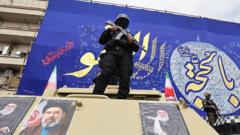
Iran's police chief has warned that his forces would treat anyone taking to the streets "at the enemy's request" as an enemy.
Tens of thousands have fled the Gulf to escape the Middle East war, but Bangladeshi migrant workers say they have little choice but to return to earn a living. At Dhaka airport, lines of workers hugged family members and said tearful goodbyes before boarding flights back to their jobs abroad. "It's natural to be scared, to feel sad as I am going back," said Mohammed Sakib, 28, flying to Saudi Arabia, leaving his new wife and extended family behind. "Who knows what might happen?"
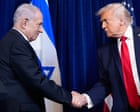
The differences between what Trump and Netanyahu want out of this war are starting to show and complicating how it will end When the US and Israel launched an attack on Iran to start a war that is now entering its third week, it was the start of something unprecedented; the first joint Israeli-American war. Even though the US has long been a close military ally of Israel, this has never happened before. Unlike last year’s “12-day war” where Israel launched a war that the US joined near the very end with a single set of strikes on Iran’s nuclear facilities, this Israeli-American war on Iran is deeply coordinated at the operational level between both belligerents day in and day out. That is precisely why clear, shared objectives between Washington and Tel Aviv will be crucial for the US to exit this war with a political victory and not just the tab for tons of destruction across the region with little significant change. Much of what we have seen so far suggests strongly that that is not the case; Israel and the US have different goals here, if they even really know what their goals are, and because of this no clear endgame can be envisioned even as the costs of the war mount. Continue reading...
Fallen debris in Dubai after drone attack, Kuwait airport hit Dubai reported a drone attack and fallen debris in two locations on Thursday, while Kuwait's airport was damaged in yet another strike on the facility during Iran's Gulf campaign in the Middle East war. The Dubai government's media office reported "a minor incident caused by debris from a successful interception that fell onto the facade of a building on Sheikh Zayed Road". Earlier, the media office reported "a minor drone incident in the Al Bada'a area". Both incidents caused no casualties, it said in the statements on X.