News
12,736 articles from 50+ sources
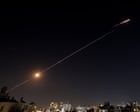
Emanuel Fabian says his routine report became focus of wager with $23m at stake on online prediction platform An Israeli journalist received threatening messages from users of the online prediction platform Polymarket after one of his reports, on a minor missile strike near Jerusalem, suddenly became the focus of an unresolved bet about the Israel-Iran conflict. “After you make us lose $900,000 we will invest no less than that to finish you,” said one message to the journalist, Emanuel Fabian. Continue reading...
March 18 (Reuters) - The site in Kabul hit by a Pakistani airstrike this week was used for storing drones and military grade ordnance, and to train suicide bombers, the Pakistani military said on Wednesday. The Afghan Taliban government had said the strike targeted a rehab centre and killed more than 400 people. (Reporting by Saad Sayeed, writing by Sakshi Dayal; Editing by YP Rajesh)

submitted by /u/graveyardofgoodsense to r/worldnews [link] [comments]
WASHINGTON, March 18 (Reuters) - U.S. President Donald Trump has full confidence in Director of National Intelligence Tulsi Gabbard, White House press secretary Karoline Leavitt told Fox News on Wednesday, after a top security official resigned over the war in Iran. Joe Kent, who headed the National Counterterrorism Center, and is the first senior official in Trump's administration to resign over the conflict, was not involved in any discussions on the Iran operation, Leavitt said. (Reporting by Katharine Jackson, and Bhargav Acharya; Editing by Caitlin Webber)

Japanese Prime Minister Sanae Takaichi is heading to the United States for what she expects to be a “very difficult” meeting with U.S. President Donald Trump
The United Arab Emirates' banks have seen their stocks plummet since the war erupted on Feb. 28.

submitted by /u/1-randomonium to r/worldnews [link] [comments]
Sara Saleh and her family fled wearing their pyjamas on Wednesday when Israel's military said it would strike a central Beirut building near the school-turned-shelter where they had been staying. Several other strikes, however, came without warning, jolting terrified residents in the middle of the night and early morning and killing at least 12 people. They were just the latest Israeli attacks on the Lebanese capital since war again erupted between Israel and Hezbollah this month.

Esmail Khatib said to be third senior Iranian figure killed in 24 hours as Israel authorises military to kill targeted officials Middle East crisis – live updates Israel claimed on Wednesday to have killed a third senior Iranian figure in 24 hours, stating that its forces had “eliminated” Tehran’s intelligence minister, Esmail Khatib, in an overnight strike. If confirmed, his death would follow those of Ali Larijani, the head of the supreme national security apparatus, and the commander of the Basij militia, Gholamreza Soleimani. Continue reading...
A multibillion-dollar pipeline sale in Kuwait has emerged as one of the early signs that the Gulf’s dealmaking machine is taking a hit from the US-Israel-Iran war.
The deployment to a key Turkish airbase likely signals NATO planners’ heightened concern over Turkey’s military assets.

Turkey tightens military-transit rules to stop illicit arms trade Ragip Soylu on Wed, 03/18/2026 - 11:35 New regulation aiming to combat unregistered transit military exports comes as US-Israeli war on Iran spills into the region Massive container and cargo ships docked at the piers or positioned in dry docks within the Tuzla Shipyards Zone, Turkey, 13 March 2026 (Tolga Ildun/Zuma Press Wire via Reuters) Off The Turkish government has tightened controls on the transit and re-export of military equipment and defence-related items to third countries through Turkey under a new regulation introduced on Monday. The regulation, published in the Official Gazette, establishes a new framework for inspecting defence industry goods and components transported via Turkey or re-exported by Turkish companies under transit trade arrangements. Under the new rules, it is now mandatory to obtain a letter of conformity from the Ministry of Trade for the transit passage through Turkey or the re-export via Turkey of products included on Ankara’s list of controlled items. Upon an application by the individual or entity carrying out the shipment, the ministry will assess the request after obtaining the opinions of relevant institutions and organisations. Shipments not accompanied by a letter of conformity will not be allowed to transit through Turkey. (adsbygoogle = window.adsbygoogle || []).push({}); The regulation also states that some products not typically regarded as military components or systems may still be subject to inspection, even if they are not included on the list of controlled items. “The Ministry of Trade may initiate the conformity procedure where there is suspicion that the product could be used for military purposes, where risks are identified that could jeopardise national or international security, where there is a possibility of human rights violations, or where findings emerge that could lead to adverse consequences for international relations,” the regulation said. The timing of the decision sparked some controversy on social media, as the US and Israeli war on Iran escalates further across the region. Turkey shares a long border with Iran. Some commentators questioned whether the regulation could be used to facilitate Nato or US weaponry through Turkey, while others asked whether it might allow Iran to import more equipment. 'Because these supplier countries are unable to send weapons directly to Libya or Sudan, they have been trying to use Turkish ports and borders' - Turkish industry expert However, Turkish sources familiar with the issue, as well as a defence industry expert, told Middle East Eye that the decision was intended to tighten controls over the re-export of such equipment through Turkey, rather than make it easier. One Turkish official familiar with the matter said Ankara had decided to more closely monitor transit exports of these products because Turkey does not want to become a hub for illicit arms trading. The official added that the government would now be better informed about the origins, contents, and final destinations of the goods, enabling it to inspect the cargo more effectively. A Turkish defence industry expert, speaking anonymously to MEE, said certain arms dealers had been trying to use Turkey as a route for importing and exporting weapons from Eastern Europe and the Balkans into the region, and that Ankara was seeking to clamp down on such attempts through the new regulation. He said arms destined for Libya may be procured from Serbia and then shipped onward to the North African country. Similarly, weapons sourced from Eastern Europe, including the Czech Republic, may be sent to Sudan. “Because these supplier countries are unable to send weapons directly to Libya or Sudan, they have been trying to use Turkish ports and borders,” he said. The expert said the new regulation is aimed precisely at preventing such practices. Arms Trade Ankara News Post Date Override 0 Update Date Mon, 05/04/2020 - 21:19 Update Date Override 0
Fed meeting live updates: Will the Iran war influence interest rates? USA Today
Disputed toll and competing accounts of strike deepen crisis between Islamabad and Kabul.
Germany says change in Iran won't happen through war Germany’s foreign minister says political change in Iran cannot be imposed through external military force. Speaking in Berlin alongside his French counterpart, Johann Wadephul said Germany would prefer to see change emerge internally. "Given the brutality and ruthlessness of this regime, it is desirable that regime change occur," Wadephul said. "I just believe that this has to develop from within the country, and fortunately there are positive attempts at this," he added, noting Germany is in contact with Iranian opposition figures.

Berlinale 2026: Arab and Turkish filmmakers deliver strong line-up despite Gaza controversy Joseph Fahim on Wed, 03/18/2026 - 09:18 Palestinian-Syrian director Abdallah al-Khatib ruffled the feathers of the German elite with his passionate defence of the Palestinian cause A scene from Rania Rafei's 'The Day of Wrath: Tales from Tripoli' (Orjuane Productions) Off After a week of “will they, won’t they” speculation, as this writer had anticipated, Tricia Tuttle, the artistic director of the Berlin International Film Festival (Berlinale), has not been removed from her post, despite hints to the contrary from right-wing German tabloids. Several letters of support have since been signed by Berlinale staff, as well as filmmakers and programmers from around the world. “Supporting genuine freedom of expression, including the freedom to articulate imperfect or unpopular opinions, has never been more important,” one open letter reads The German news agency Deutsche Presse-Agentur (dpa) reported that Tricia Tuttle will remain in her position “after agreeing to plans for an advisory council and a code of conduct”, according to Wolfram Weimer, chair of the festival’s supervisory committee, Kulturveranstaltungen des Bundes in Berlin (KBB). Tuttle later emphasised that “the recommendations from the KBB Supervisory Board are in fact recommendations and not conditions of my employment”. (adsbygoogle = window.adsbygoogle || []).push({}); What this particular code of conduct entails, how it should be applied, and to whom it applies remain anyone’s guess. The same uncertainty surrounds the role of the proposed advisory council. One thing is clear, however: an impassioned pro-Palestine speech along the lines of Abdallah Al-Khatib’s fiery closing-ceremony address will likely not be tolerated, though how speeches of this kind could be controlled or moderated remains a mystery. Amid the struggle to keep her position, Tuttle has yet to defend Khatib’s right to speak his mind, nor did she stand by the selection of his film, Chronicles from the Siege. With accusations of antisemitism from the German press and right-wing commentators still hanging over him, the Palestinian-Syrian director remains something of a persona non grata within German cultural circles, still awaiting similar vocal support that has been so readily extended to Tuttle in recent weeks. Germany's veil of silence over Israel's atrocities is now a blood-soaked shroud Read More » Meanwhile, publications around the world have come to the conclusion that it’s nearly impossible to create large-scale democratic cultural events in Germany in such a repressive climate. Anti-Palestinian sentiment is unlikely to vanish in Germany anytime soon - at least on an institutional level. It is difficult to imagine that Berlinale would risk inviting contentious films or artists like Khatib again in the near future. The 2026 edition could therefore prove to be the last for some time to feature edgier Middle Eastern titles, with more major talents from around the globe continuing to turn their backs on a platform where freedom of speech is not protected. To give the festival’s selection committee its due, the 76th Berlinale was otherwise a formidable edition, boasting the strongest line-up since the banner 2021 edition. While the films from Turkey stole the show, the Arab selection - as uneven and patchy as it may have been - still contained intriguing elements, politically if not always formally or cinematically. Here are some of the most notable Middle Eastern titles from Berlinale 2026. (adsbygoogle = window.adsbygoogle || []).push({}); Chronicles from the Siege Khatib burst onto the festival scene with the documentary Little Palestine: Diary of a Siege, a harrowing look at the slow death of the Palestinian-populated Syrian Yarmouk Camp between 2011 and 2015. Chronicles from the Siege, his sophmore effort and first foray into fictional storytelling, shares the aesthetic rawness of its predecessor, albeit with a neater narrative structure. Set in an unidentified Arab war zone shelled by Israeli bombs that clearly stand in for Gaza, the film is divided into three separate stories, each exploring a different facet of life under military siege. In the first vignette, a group of friends debate whether to burn the video cassettes of their favourite films to stay warm or preserve the collection of a reclusive video-store owner. Although not explicitly named, the setting of 'Chronicles from the Siege' is based on Gaza (Issaad Film Productions) (adsbygoogle = window.adsbygoogle || []).push({}); The second centres on several men squabbling over a single cigarette. The third follows a couple repeatedly interrupted while attempting to have sex. There is nothing graceful or heroic in Khatib’s Gaza stand-in. The inhabitants of the besieged space he depicts are locked in a Sisyphean struggle for survival and adaptation. Rather than foregrounding the overt political rhetoric that has shaped much post-7 October Palestinian cinema, Khatib gravitates toward the elemental experience of life on the battered side of war. The result is a starkly different vision of Gaza: an unmistakably liberal perspective populated by strong-willed, deeply flawed, and palpably human characters; figures rarely depicted in their full complexity in the many cinematic portrayals of the Strip where Palestinians are habitually portrayed as helpless, passive victims. However, it is a film that is not without its defects. The dialogue occasionally lapses into distracting theatricality, while certain narrative beats, the burning of the videotapes, the intrusive African family knocking on the couple’s door, and the overly contrived ending, are awkwardly handled. Moreover, the absence of a clear aesthetic point of view flattens the film’s raw visual energy after the midpoint. These shortcomings, nevertheless, do little to diminish the power and political significance of Khatib’s bracingly original perspective. Yellow Letters German-Turkish filmmaker Ilker Catak established himself as one of the most exciting filmmakers in a country with a thinning pool of emerging talents thanks to his superb 2023 classroom drama The Teacher’s Lounge, which earned an Oscar nomination for Germany. His follow-up, the surprise winner of the Golden Bear, raises the stakes while expanding the thematic terrain of its predecessor. Palestinian ghost stories: How filmmakers are using the supernatural to confront the wounds of the Nakba Read More » Shot entirely in Germany, with Berlin and Hamburg standing in for Ankara and Istanbul respectively, Catak’s fifth feature centres on a theatre director and university professor married to the leading actress in his company. After participating in anti-war demonstrations and signing a petition condemning the government, he loses his job and finds himself effectively blacklisted. A downward spiral ensues for the couple and their daughter, moving with the director’s mother in Istanbul before he takes on taxi driving to make ends meet. The wife, meanwhile, receives a lucrative offer in a TV series broadcasted on state TV that the husband deems as blatant selling out. Catak lends a glossy sheen to the proceedings coupled with stylised dialogue that harks to Turkey’s famous soap operas. This deliberate aesthetic ploy, paired with the aforementioned employment of the German cities which is explicitly announced, augments the protagonists’ increasing dislocation from a place that continues to reject them. Based on Erdogan’s rounding up of the artists and academics who condemned the Turkish military‘s operations in the Kurdish regions in 2016, the crackdown resulted in the dismissal and jailing of numerous producers and performers. 'Yellow Letters' is based on the actual purge of media figures in Turkey in 2016 (Alamode Film) Catak places someone through the wringer, posing difficult questions about the fragile boundary between pragmatic survival and moral compromises when making art under authoritarian rule. In that sense, Yellow Letters is unquestionably the most politically pointed Turkish picture in recent years: A multifaceted examination of the thorny relationship between artists and autocratic authorities whose resonance and urgency transcends the borders of the Middle East. Only Rebels Win Equally political but less ambitious is the latest feature by veteran Lebanese director Danielle Arbid (In the Battlefields, Parisienne). A remake of Rainer Fassbinder's German classic Ali: Fear Eats the Soul, great Palestinian star Hiam Abbass (Palestine 36, Ramy) plays a lonely Christian Lebanese widow who alienates and incites the ire of her children and neighbours when she falls in love with a Sudanese migrant menial worker (newcomer Mahamat Amine Benrachid). The film was originally slated to be shot in Beirut, but, as Arbid notes at the beginning, the Israeli strikes of 2023 forced the production to relocate to Paris, where the Lebanese capital was recreated on a studio set. Hiam Abbass and Mahamat Amine Benrachid star in 'Only Rebels Win' (Easy Riders Films) These unusual circumstances suggested a range of possibilities for exploiting the artificiality of the setting, potentially fashioning an expressionistic work that could amplify the story’s heightened emotions and charged milieu. Alas, Arbid curiously opts for a largely straightforward approach, resulting in a potent and involving, if rudimentary, drama that adheres closely to the Fassbinder original without introducing notable aesthetic flourishes or particularly perceptive sociological insight. Still, Abbass and Benrachid carry the film with ease. Their story never hits a false note and remains largely affecting and tender all throughout. However, it is exiled stand-up comedian Shaden Fakih who plays Sana, Abbass's character's daughter, who steals the show, with her hilarious larger-than-life performance, which hints at a more exciting direction had Arbid opted to be more adventurous. In a Whisper Hiam Abbass also appears in the third feature by Tunisian filmmaker Leyla Bouzid, playing the mother of a Paris-based queer woman who returns to her hometown with her girlfriend, and who conceals her lesbian relationship from the family. A subplot revolving around the investigation into the mysterious death of a closeted gay uncle exposes the persistently hostile climate facing LGBTQ+ people even in what is often described as the most liberal state in North Africa, Tunisia. Bouzid’s tediously shot film reeks of exoticism in both its narrative framing and its details. The inclusion of the French girlfriend, who spends much of the film marvelling at the supposed backwardness of Tunisians, a perspective Bouzid treats with disconcerting nonchalance, feels like a transparent device aimed at securing French funding. In a Whisper is the kind of film in which part of the exposition involves the recital of Tunisian criminal law, underscoring how clearly the project is catered first and foremost to a French audience rather than a local one. 'In a Whisper' suffers for its director's decision to focus on French audiences (Unite Films) A scene set in a queer club briefly gestures toward Tunisia’s relative openness, or at least tolerance, toward the LGBTQ+ community. Yet Bouzid’s vapid, one-note “us versus a bigoted society” discourse soon grows tiresome, particularly as she fails to interrogate, or even mask, her own orientalist gaze. The history and social position of the queer community in Tunisia is a compound, contested subject that Bouzid reduces to a blunt schematic. In a Whisper belongs to the long line of indistinct LGBTQ+ dramas that populate French cinema every month: films that arrive quietly and disappear just as quickly. Only its Tunisian setting lends the picture the sense of distinction it desperately seeks - and one it ultimately does not earn. A solid addition to the budding queer Arab cinema the film certainly is not. Safe Exit Egyptian independent cinema makes a welcome return with Mohamed Hammad’s sophomore feature, an austere portrait of a Coptic Christian security guard and aspiring novelist who forms an unlikely bond with a young woman seeking medical treatment she cannot afford. Largely set in central Cairo and filmed in long, static shots that mirror the suspended existence of its characters, Safe Exit belongs to the socially minded strain of Egyptian independent filmmaking that has become increasingly rare during the censorship-heavy rule of Abdel Fattah el-Sisi. The security guard is the son of parents slain by Islamic State militants in Libya; the financial compensation he received has provided little respite or stability. The portrait Hammad draws of Cairo bears little resemblance to Sisi’s neo-liberal, market-driven “new Egypt”. A Coptic Christian security guard and a young woman looking for medical treatment form an unlikely friendship in 'Safe Exit' (Pareidolia Productions) There are no aspiring entrepreneurs, social media influencers, Mahraganat singers, or app developers riding the country’s newfound fixation on consumption, and no signs of the grand gentrification the Egyptian capital has been enduring over the past decade. Hammad’s protagonists are defeated, deflated characters, too exhausted and too ill-equipped to carve a tangible path out of their eternal purgatory. The film occasionally recalls the bleak fatalism of early works by Michael Haneke and Lars von Trier, a sensibility that now feels somewhat dated. Yet flashes of humour temper the film’s morbidity, while its daring inclusion of a non-believing Christian protagonist and a brief, non-graphic sex scene constitutes a quietly defiant gesture against the prevailing censorship. While certainly imperfect, and perhaps ascetic to a fault, Safe Exit nonetheless represents a significant step forward for Hammad, a serious talent that will continue to be honed in works to come. Salvation The very worthy winner of the Silver Bear, the fifth feature by Turkish maverick Emin Alper further establishes him as the boldest and most politically astute filmmaker working in Turkey today. Of Frenzy and Burning Days fame, Alper returns to his preferred rural setting with this parable about an ancient feud between two rival clans that reignites when one returns to reclaim land long seized by the other. As the leader of the dominant clan becomes haunted by visions he interprets as divine warnings to defend his territory from the returning tribe, terror and violence erupt. Salvation is based on clan rivalry that takes on a religious dimension (Liman Film) Structured and shot as an atmospheric folktale, Alper’s gorgeously photographed latest work channels some of the most urgent anxieties haunting populist-led societies today: collective paranoia, the latent violence of tribalism, the instrumentalisation of religion to persecute the “other” and susceptibility to manipulation by charismatic leaders. Alper’s Anatolian mountainous setting could be anywhere. It is the United States; it is Germany; it is Turkey, and it is unmistakably Israel. The film’s most impressive achievement lies in its patient and meticulous demonstration of how power is seized and sustained; how fear remains the most effective tool for mobilising communities; and how any scant breach of collective morality can lead to the irrecoverable tear of civil order and communal consciousness. In the months to come, Salvation is bound to become a key reference point in conversations surrounding contemporary Middle Eastern cinema. The Day of Wrath: Tales from Tripoli The sophmore feature by visual artist and filmmaker Rania Rafei is a quintessential cinematic document of Tripoli, the northern Lebanese city that has seldom been explored on film. Divided into four chapters, The Day of Wrath traces the turbulent history of the country’s second-largest city. It covers the student protests of 1943 that helped ignite the struggle for independence from France; the rise of Gamal Abdel Nasser’s pan-Arabist influence in 1958; the death of Arab nationalism following the defeat by Israel in the Six-Day War in 1967, and finally the nationwide protests of 2019 that ultimately failed to reshape the entrenched political order. Interweaving testimonials from longtime residents, interviews with school students largely unaware of their city’s past, and extensive archival material - anchored by a narration framed as an open letter from the director to her deceased father - the film becomes a portal into the psyche of a city. Rania Rafei speaks during a panel at the Berlin Film Festival on 17 February (Berlinale) Tripoli is a place shaped by the bitter legacies of French colonialism and the unfulfilled promises of Arab nationalism. The takeover of Tripoli by the Islamic Unification Movement during the Lebanese Civil War and the city’s rapid Islamisation form the film’s most intriguing chapter, though one that unfortunately receives less attention than it deserves. What ultimately emerges from these overlapping upheavals is a portrait of an Arab city repeatedly swept up in historical forces that have consistently nullified individual agency. Time and again, the people of Tripoli have been reduced to pawns within a political order that has persistently failed them, one they have rarely been allowed to participate in. Today the Mediterranean port has become a shadow of its former self: worn, neglected, and weary, a city scarred by the many revolutions that promised transformation yet delivered none. Classical in both form and structure, The Day of Wrath might have benefited from a touch more visual dynamism. Yet that does little to diminish the magnitude of Rafei’s undertaking, whose epic scope and historical importance make it the first essential Arab documentary of the year. Film Discover Berlin Post Date Override 0 Update Date Mon, 05/04/2020 - 21:29 Update Date Override 0
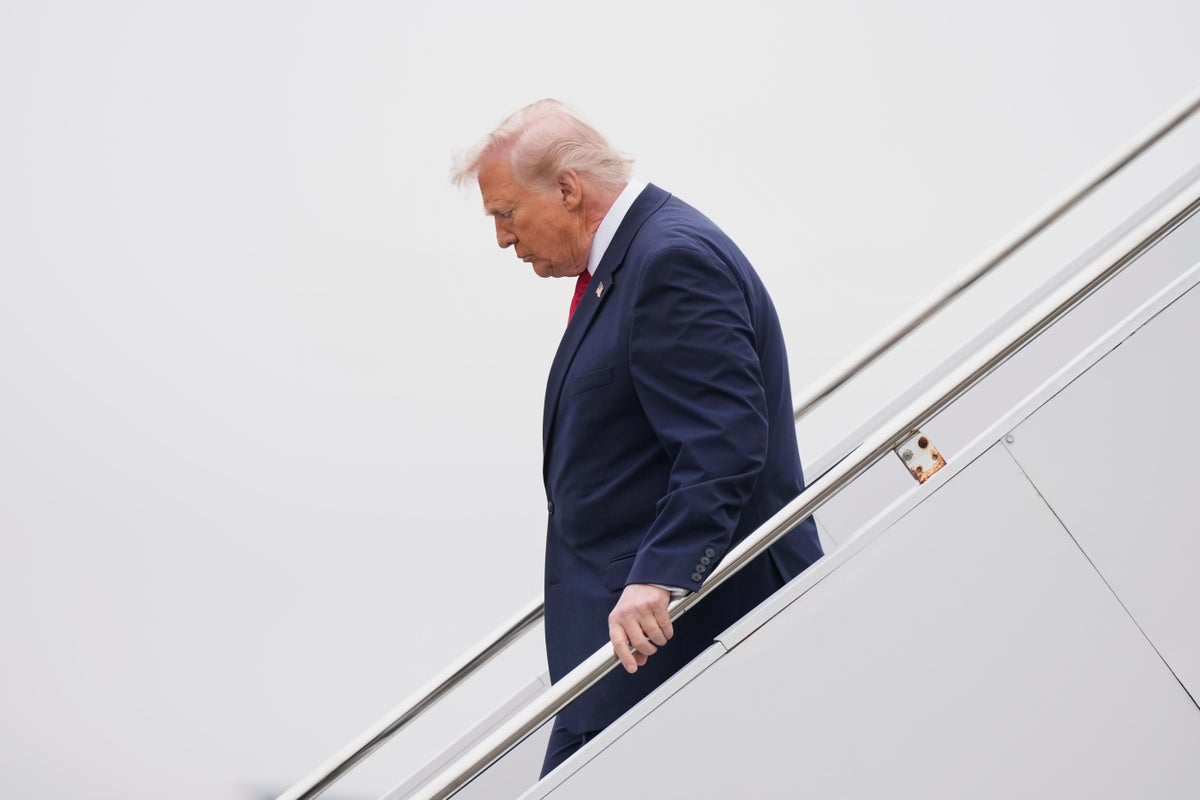
President Donald Trump will be present when the remains of six U.S. service members return from the Middle East to Dover Air Force Base in Delaware
Strikes hit Iran’s South Pars oil and petrochemical facilities Facilities linked to Iran’s oil industry in South Pars and Asaluyeh came under attack on Wednesday, according to the semi-official Tasnim news agency. The report said petrochemical installations in South Pars were targeted, though the scale of damage has not yet been confirmed.
Many Iranians hope the war will end soon dw.com
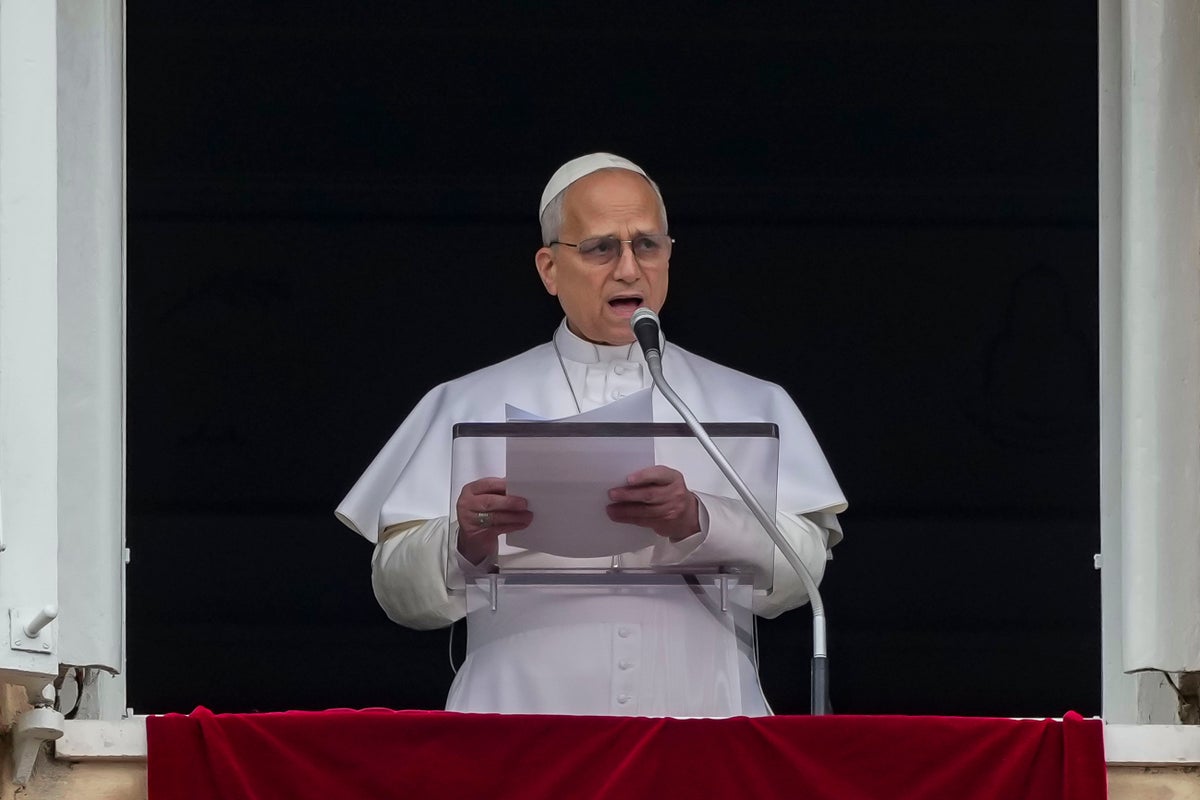
It comes after Leo said that Christians who start wars should go to confession