News
12,736 articles from 50+ sources
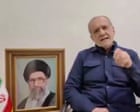
As Masoud Pezeshkian tries to de-escalate conflict, hardliners urge installation of new supreme leader to marginalise the president Middle East crisis – follow live The surprise offer by the president of Iran, Masoud Pezeshkian, not to attack countries in the neighbourhood so long as their airspace and US bases within their territories are not used to attack Iran has provoked a storm inside the country as the military appeared to contradict him, if not outright overrule him. There were also calls for a new supreme leader to be installed as quickly as possible, as a means of marginalising the president. Attacks on facilities in Bahrain and elsewhere have continued, and there were unconfirmed reports that Bahrain had become the first Gulf country to fire back at Iran. Continue reading...
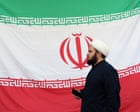
Report indicates that US intelligence officials question effectiveness of strikes to produce regime change in Iran US government reviews of the war in Iran show that the Trump administration may be ill-equipped for a regime-change war, according to reports. The Washington Post reported on Saturday morning that a classified intelligence review found that the war in Iran is unlikely to oust the Iranian establishment, despite the Trump administration’s desire to continue its attacks. Continue reading...

It comes as U.S. military operations continue to escalate, with Trump boasting that Iran was being ‘beaten to hell’ in a Truth Social post Saturday

Royal Navy readying HMS Prince of Wales so it can be quickly deployed if decision made to mobilise it to region Middle East crisis live: latest news updates The UK is preparing an aircraft carrier before a possible deployment to the Middle East, the Ministry of Defence has said. Royal Navy workers in Portsmouth are readying HMS Prince of Wales, the navy’s flagship, meaning it could be deployed more quickly if a decision is made to mobilise it to the region. Continue reading...
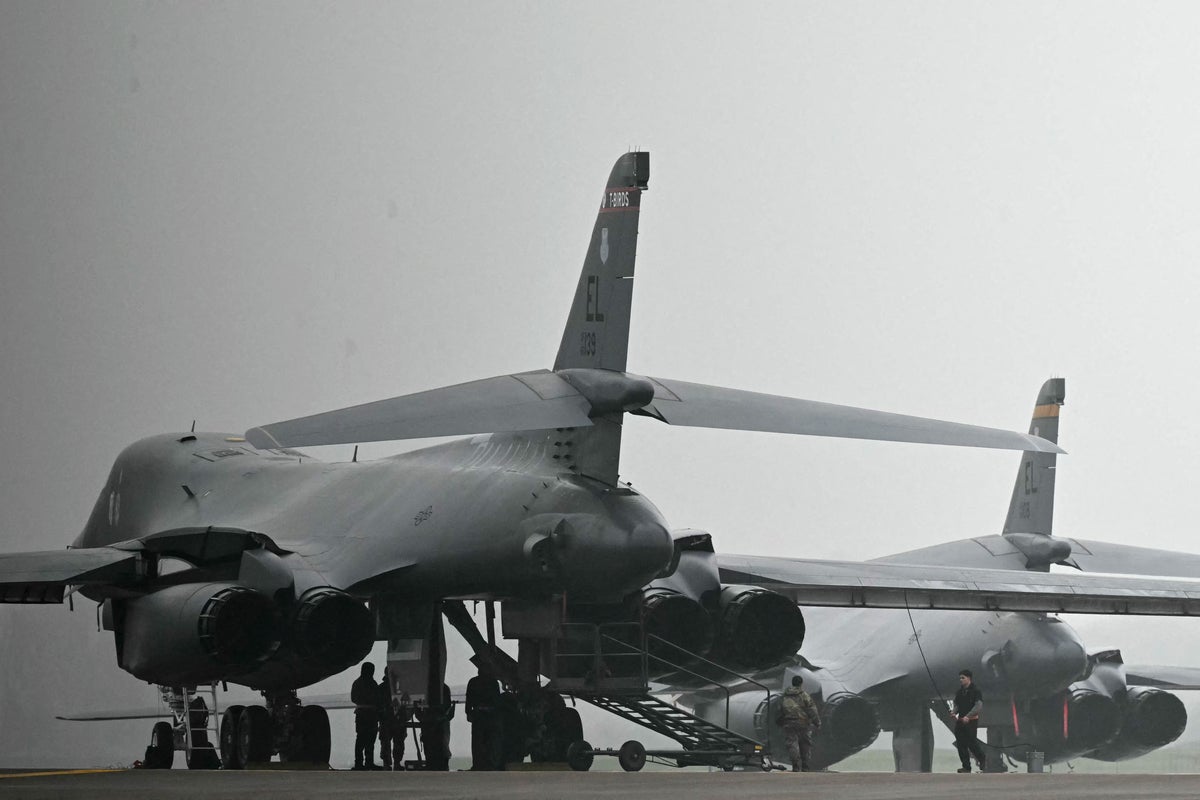
Airstrikes have shaken the Middle East after the US and Israel launched attacks against Iran, killing the country's supreme leader, Ayatollah Ali Khamenei. The Guardian looks back at the seven days that ignited a war, which has already claimed the lives of hundreds of people Seven days on, seven questions about the US-Israeli war on Iran Middle East crisis – live updates Continue reading...
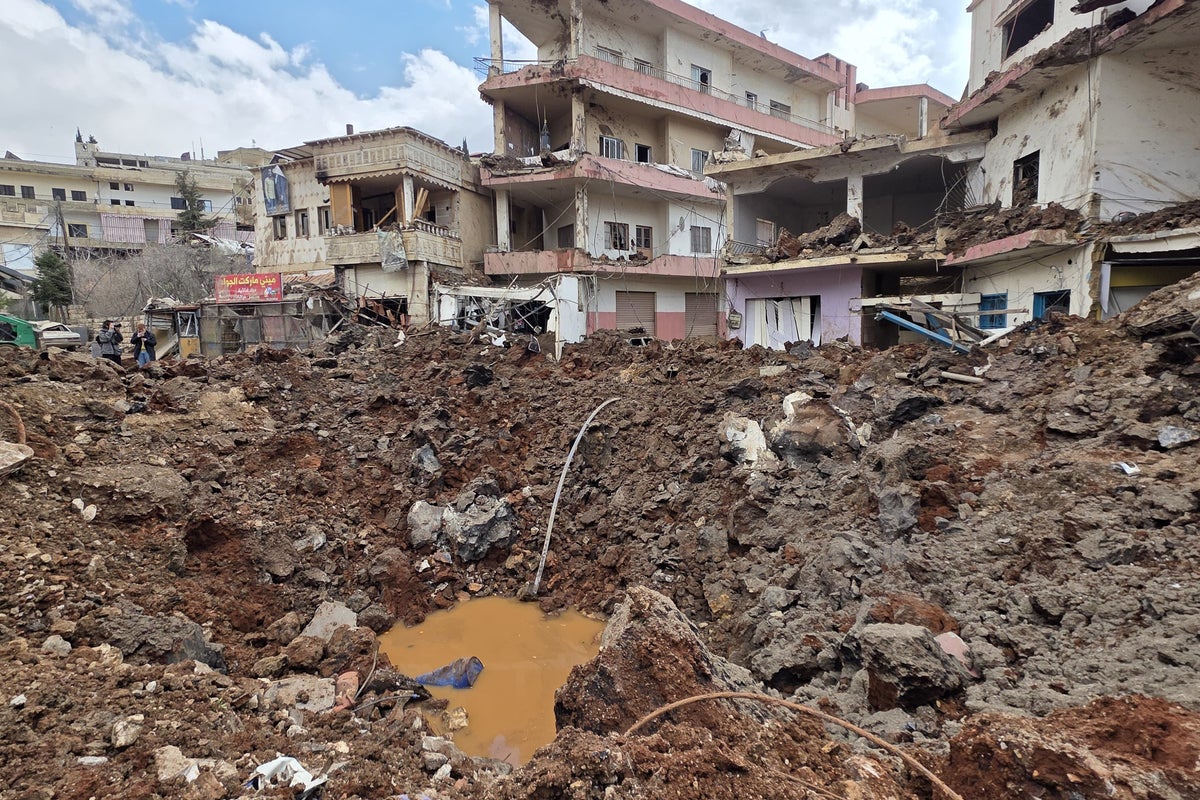
Israel carried out a commando raid in eastern Lebanon to search for clues about a navigator who went missing 40 years ago
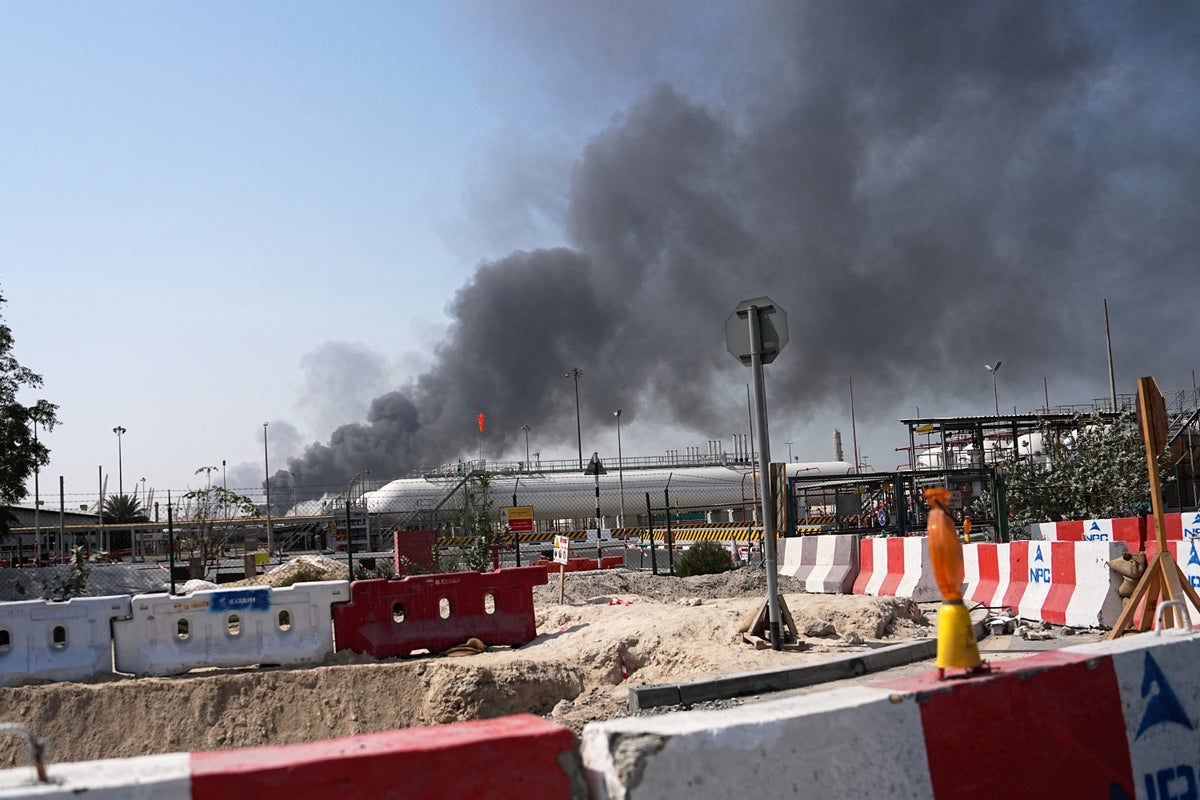
The U.S. and Israeli strikes on Iran have raised concerns among Democrats and others about diminishing American stockpiles of certain weapons
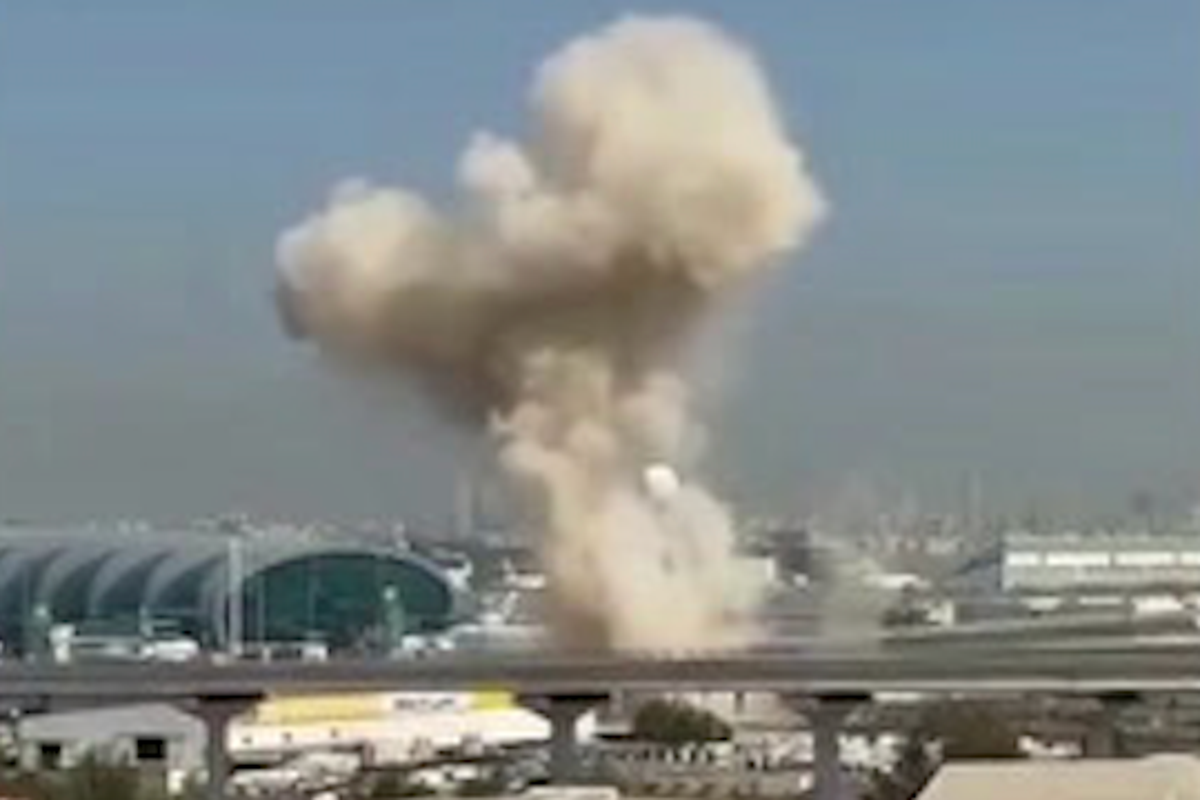
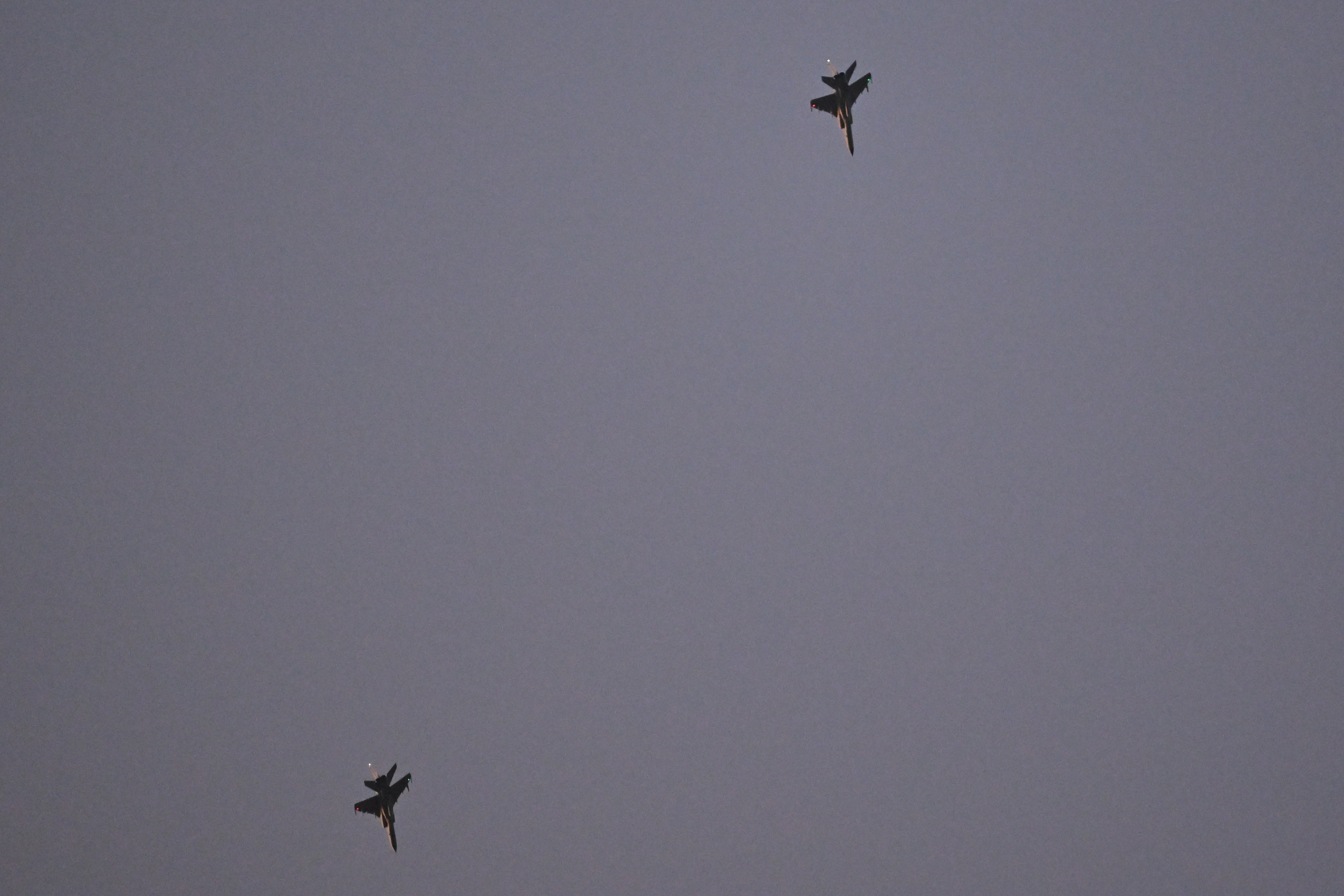
Hiatus coincided with start of US-Israeli war against Iran

Senate blocks war powers measure and House follows suit – now president can bomb Iran free from congressional interference Middle East crisis – follow live Before US troops invaded Iraq, George W Bush asked Congress to pass a resolution authorizing military force against Washington’s longtime nemesis, a request that lawmakers obliged. Twenty four years later, the United States is at war with a different Middle Eastern rival – Iran – under a different Republican president – Donald Trump. But this time, the president did not bother to seek permission from the Senate and House of Representatives before joining Israel in launching the air and naval campaign. And far from objecting, Congress’s Republican majorities have simply stepped aside. Continue reading...
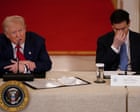
Regime change, nuclear threat – or something else? US officials seem unable to land on one coherent reason for war Middle East crisis – follow live When the United States launched Operation Epic Fury last Saturday, the Trump administration had a major communications question to figure out: how to explain to the American public, Congress, and the world why it had just started a war with Iran. During war time, talking points and propaganda reflexively fly in every direction, but the Trump administration still hasn’t been able to land on one coherent answer. Continue reading...
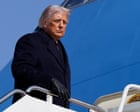
In reality, US president’s opposition to foreign entanglements had only ever been partial Middle East crisis live: latest news updates Donald Trump ordered the launch of the war on Iran last Friday afternoon while on board Air Force One, as the presidential plane made its descent towards Corpus Christi, Texas. Trump was on his way to the port city to give a speech titled American Energy Dominance and had spent the three-hour flight chatting to Texas Republican politicians including the state’s two hawkish senators, John Cornyn and Ted Cruz, about his options in Iran. Continue reading...
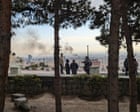
In a park overlooking the city, I ran into a group of young people chatting and joking. As the bombs fall, fragments of life remain I was at work last Saturday when I heard the blast. Since that moment, the world has been turned on its head. The school called asking me to come and pick up my child. I rushed to the metro and headed north in a carriage filled with anxious people calling their loved ones to ensure their safety, melancholy etched on their faces, uncertainty metastasising from one to another as they checked the latest news on their mobiles. This is the second time within a year that Israel has decided to go for a war of choice with Iran, but I suppose that is the new normal. Israel has long enjoyed a unique position of near-total impunity when it comes to harassing Palestinians, and now the green light to aggression seems to extend to its unending wars and spreading of terror across the region. And it feels different this time. The pretence that there is some level of precision in the strikes is gone. Instead, the attacks appear indiscriminate, with targets ranging from schools to hospitals, from police stations to urban amenities – all hit with a level of might that seems aimed at demolition, total destruction, the flattening of the city. Continue reading...
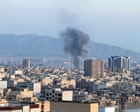
One week on from the first strikes, we look at why the war started, what the cost has been and what may come next Middle East crisis live: latest news updates The US-Israeli war on Iran, now into its seventh day, has set the Middle East alight, threatening millions of people’s lives and livelihoods as the violence spreads in widening arc stretching from central Asia to the edge of Europe. The joint operation, named “Epic Fury” by the US and “Roaring Lion” by Israel, has been sold as a high-impact show of intimidating power, but its impact so far beyond the chaos and bloodshed is unclear. What is certain is that predictions that this type of war would destabilise the region have indeed rapidly materialised. Continue reading...
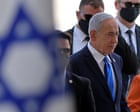
The Israeli PM’s war on its nemesis is playing well domestically. But real safety for Israelis requires another leader altogether Aluf Benn is the editor-in-chief of Haaretz When Yitzhak Rabin became the prime minister of Israel in 1992, he debated which regional power would be the Jewish state’s stronger enemy – the Islamic Republic of Iran, or Saddam Hussein’s Iraq. Baghdad had the stronger military, but Rabin decided that Tehran posed the larger threat with its combination of Islamist ideology, regional proxies and nuclear ambitions. Rabin’s response to the looming Iranian threat was negotiating land-for-peace deals with Israel’s immediate neighbours – the Palestinians, Jordan, Syria and Lebanon – following the example of the pre-existing peace with Egypt. He argued that a ring of normalisation would strengthen Israeli security and counter the rise of radical Islam, and believed there was an urgency to conclude the peace process before Iran, following the Israeli example, acquired the bomb and became a regional hegemon. Rabin predicted in early 1993 that within a decade, Tehran’s rulers could cross the nuclear threshold. Aluf Benn is the editor-in-chief of Haaretz Do you have an opinion on the issues raised in this article? If you would like to submit a response of up to 300 words by email to be considered for publication in our letters section, please click here. Continue reading...