News
12,736 articles from 50+ sources

'If I don't work, I go hungry': The migrant workers risking their lives to keep the Gulf running Areeb Ullah on Wed, 03/11/2026 - 13:54 Migrant workers from across the Gulf share the experience of having no choice but to work despite the threat posed by Iranian missile strikes Migrant workers sit on a wall against the backdrop of the city skyline as they take a break in Dubai on March 11, 2026 (AFP) Off The day after the missiles struck the Gulf, a Bangladeshi delivery rider in Dubai was back on his bike. The roads were quieter than usual, but the tips were better. But for a Pakistani rider who has spent four years working 12-hour shifts in the same city, there was never really a choice. “I came here to earn money, and working in any situation has become a necessity for me,” the driver told Middle East Eye. “Although many people feel afraid, we riders still have to continue working with courage. I get paid for every delivery. So if I do not work, I may go hungry.” The worker is one of hundreds of thousands of cleaners, construction workers, drivers and security guards keeping the Gulf running as the region comes under attack by Iranian missiles. (adsbygoogle = window.adsbygoogle || []).push({}); Since the conflict between Iran, the US and Israel escalated, Iranian strikes have killed at least 12 civilians across the Gulf states. Notably, in the UAE, every civilian casualty so far has been a migrant worker from Bangladesh, Nepal or Pakistan. Among the dead was Saleh Ahmed, 55, from Bangladesh, who was killed while delivering water in the UAE on the first day of the war. But as missiles target the Gulf, the region’s vast population of migrant workers - who make up the majority of residents in countries such as Qatar and the UAE - are being left to fend for themselves, according to a human rights organisation with researchers embedded in the affected countries. Mustafa Qadri, executive director of Equidem, told MEE that the organisation’s network of migrant worker investigators across the UAE, Qatar, Saudi Arabia and Jordan has documented widespread panic, psychological trauma and systematic exclusion from official safety measures. “There is universal trauma, panic, worry, regardless of who the workers are,” said Qadri. Huge crude oil spike and Asia plummet: How the Iran war hit the markets Read More » “And I’m talking about workers that come from different countries, different jobs - both men and women.” Qadri said workers face two distinct forms of discrimination. The first is exclusion from official safety communications. While some formal statements have referenced all residents, workers on the ground say they have not received meaningful guidance on shelters, evacuation routes or emergency support. The second is structural discrimination. As essential workers in every sector of Gulf society - construction, hospitality, healthcare, security, domestic service and logistics - many of these workers are required to continue working through attacks, often moving toward danger rather than away from it. "There is a conscious choice made to get workers that are from relatively poor countries, who don't get paid as much and have a lot less power in the social dynamic of these countries, to do this difficult work - because they're less likely to complain or to demand protection," Qadri said. Particularly alarming, he added, is the situation of delivery riders and other gig economy workers, who remain on the streets while their wealthier clients shelter at home. (adsbygoogle = window.adsbygoogle || []).push({}); And since the start of the conflict, more and more residents in the Gulf are using delivery services, opting to stay inside instead of venturing out to buy basic goods and necessities. ‘Back to back orders’ MEE spoke to three delivery riders working for major platforms in the UAE, all of whom described continuing to work through the attacks with no instruction, support or choice. The drivers described an increased workload since the onset of the war and wished to remain anonymous to protect their employment. 'Although many people feel afraid, we riders still have to continue working with courage.... If I do not work, I may go hungry' - Pakistani delivery driver in Dubai A Bangladeshi rider who has worked for his company for two years said that on the day of the first attack, the roads were empty. But the day after, he was back out making deliveries. Customers, he noted, were tipping more generously than usual. A Pakistani rider based in Abu Dhabi, who has been in the country for five years, described the days immediately following the attack as relentless. With many local residents refusing to leave their homes, orders kept flooding in. “I worked day and night, taking only short rests,” he told MEE. He believed only around 70 percent of the usual number of people were out on the roads. People, he suspected, were bulk-ordering food and groceries in anticipation of the situation worsening. Another Pakistani rider in Dubai, who has worked for the same company for four years, described a system that offers no margin for fear. He lives in a shared rented room with friends, works 12-hour commission-based shifts, and said stopping was not an option. “The company only pays me for the orders I complete,” he said. “If I do not work, I do not earn anything.” As the attacks unfold, migrant workers are also becoming the primary witnesses documenting their impact. Much of the visual documentation of strike impacts circulating online has been captured and shared by migrant workers filming on their phones. The war on Iran has ignited rare civil unrest in Bahrain Read More » Earlier this week, Bahrain arrested five Pakistanis and one Bangladeshi worker for allegedly praising Iranian strikes while filming footage of the aftermath of the attacks. Qadri fears more workers could face arrest and bear the brunt of any further crackdown, particularly in the UAE, which has a strong track record of imprisoning people who film security-related incidents. "It's very similar to Gaza, where the most vulnerable people in a society become the eyes and ears in a conflict zone," Qadri said. "They should not face persecution for doing that." Compounding the crisis is the historically poor record of sending countries - among them Nepal, Kenya, India, Bangladesh and Ethiopia - in providing meaningful consular support to their nationals. While communities back home are pressing their governments to act, Qadri said the response so far has been inadequate. Workers on US and western military bases in the Gulf, many of them Nepali nationals hired specifically because of Nepal’s perceived neutrality, are thought to be particularly exposed. Standard operating procedures on such bases typically evacuate western civilians when risk rises - while essential services continue to be run by migrant workers who remain behind. (adsbygoogle = window.adsbygoogle || []).push({}); "The US, which started this war, and other western nations, which are mostly indirectly supporting it - they've got a lot of political pressure to get their own nationals out of the region. So there's not much pressure from those states to make sure migrant workers are protected," Qadri said. Numbness In Qatar, Shaheen Abdullah was turning onto the main road near his house when the explosions began. He stopped the car. A piece of shrapnel, still on fire, fell directly in front of him. His family, in the car behind, saw everything. “I wish they hadn’t seen it,” he told Middle East Eye. He called the police. While they put him on hold, officers arrived and cordoned off the area. “I was stunned by the moment, but then I didn’t give it much thought.” Iran war and Hormuz shock fuels cost-of-living crisis across South Asia Read More » That numbness, he says, has become the norm. Abdullah runs a shop in Doha and describes a community of migrant workers who have no option but to absorb what is happening and carry on - the shops, restaurants and delivery services cannot close. “Nobody can take a day off,” he said. He also points to a sharp disparity in how different communities are responding. “Everyone is watching how European countries are evacuating their citizens,” he said. “But evacuations are not in the minds of people who have nothing to go back to. They can’t afford any of that.” When the conflict does come up in conversation within his community, Abdullah says the discussion rarely turns to personal safety. “The conversations are not about wellbeing or safety. They’re political and existential.” Trauma, he says, goes unspoken. “Mental health is passive. It’s about being prepared and navigating this if it prolongs. Spending 15 minutes of our day worrying about falling shrapnel is something people have made peace with.” War on Iran News Post Date Override 0 Update Date Mon, 05/04/2020 - 21:19 Update Date Override 0
WASHINGTON, March 11 (Reuters) - Iran has deployed about a dozen mines in the Strait of Hormuz, two sources familiar with the matter said, in a move likely to complicate the reopening of the narrow waterway, an important route for shipping oil and liquefied natural gas. Exports of oil and LNG through the strategic chokepoint along Iran's coast have effectively been halted by the war launched 12 days ago by the United States and Israel, helping to drive a surge in world energy prices.
Iran deploys mines in Strait of Hormuz, sources tell Reuters Iran has deployed around a dozen naval mines in the Strait of Hormuz, potentially complicating efforts to reopen the crucial shipping route, two sources familiar with the matter told Reuters, corroborating earlier reporting by CNN. The strategic waterway, through which roughly a fifth of the world’s oil and liquefied natural gas normally passes, has effectively been shut to exports since the war between the US, Israel and Iran began nearly two weeks ago. According to the sources cited by Reuters, the locations of most of the mines are known, though it remains unclear how the US plans to deal with them. Iran has long warned it could mine the strait in response to military attacks, a move that could give Tehran significant leverage over global energy markets. The US military has targeted Iranian mine-laying vessels, destroying 16 earlier this week. President Donald Trump has demanded that Iran remove any mines from the strait immediately, warning there would be military consequences if it does not.
Lloyd’s of London stresses it is still insuring shipping in strait of Hormuz The Guardian
The Strait of Hormuz isn’t totally closed. Meet the ‘shadow fleet’ Fortune
Macron urges swift G7 action to restore navigation in Strait of Hormuz French President Emmanuel Macron on Wednesday urged Group of Seven leaders to take swift action to restore navigation through the Strait of Hormuz after the US-Israeli-Iran war brought traffic in the crucial shipping route to a halt. Speaking during a video conference of G7 leaders, Macron stressed the need for coordination to ensure that freedom of navigation is restored "as soon as possible." Macron also called for engagement with other countries to prevent restrictions on oil and gas exports, warning that disruptions could further strain global energy markets
Trump says G7 decisions having ‘tremendous impact’ after record oil stock release recommendation US President Donald Trump said decisions taken by world leaders were having a "tremendous impact" during a call with Group of Seven (G7) leaders discussing the war with Iran and its economic fallout. Speaking in a video clip shared by the French presidency, Trump said: "I think we are having a tremendous impact, unbelievable actually, on the world." The G7 meeting chaired by French President Emmanuel Macron came shortly after the International Energy Agency (IEA) recommended releasing 400 million barrels of oil from global reserves to help curb soaring prices linked to the US-Israeli war on Iran.
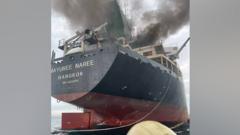
The cause of attacks on the commercial vessels in the strait - a vital corridor for oil - is being investigated.
The United Nations aid chief warned Wednesday that the Middle East war was impacting aid routes and called for "exemptions" so humanitarian supplies could get through. The war in the Middle East has effectively closed the Strait of Hormuz, while fuel supply disruptions are sending freight rates soaring. UN aid chief Tom Fletcher warned that the escalating war and its impact on the strait was having "a direct impact on our humanitarian supplies, including going to areas of key need in sub-Saharan Africa".
Drones struck oil storage facilities in Oman’s Salalah port, as local authorities say they're responding to a big fire.
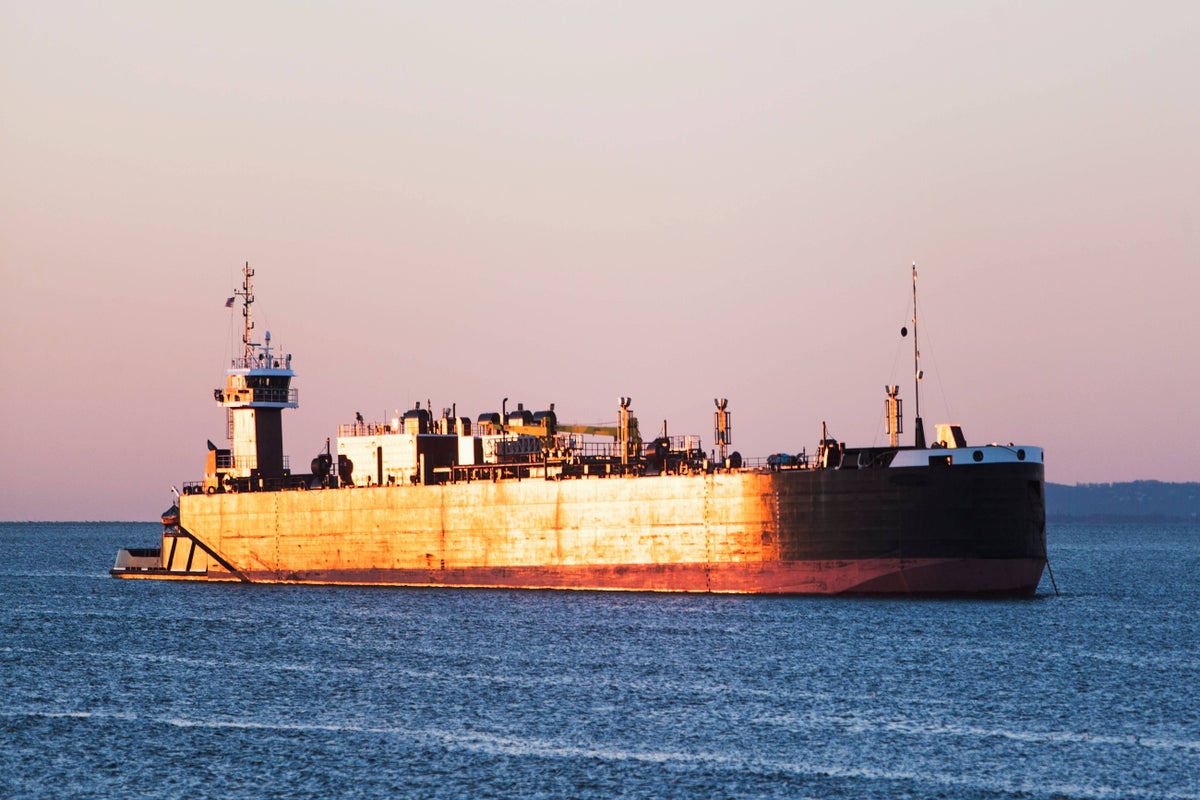
The conflict in Iran has halted shipments through the Strait of Hormuz and pushed the price of oil and gas sharply higher.
Trump says ‘practically nothing left’ to target in Iran, Axios reports US President Donald Trump said there is “practically nothing left to target” in Iran after days of US strikes, suggesting the war could end soon, according to a report by Axios. Speaking in a brief phone interview with the outlet on Wednesday, Trump claimed the military campaign had exceeded expectations and caused more damage than originally anticipated. “The war is going great. We are way ahead of the timetable,” Trump told Axios, adding that the conflict could end whenever he decided it should. Despite the president’s remarks, US and Israeli officials told the outlet that there has been no internal decision on when the fighting will stop, with some officials preparing for at least two more weeks of strikes. Axios also reported that the US recently received intelligence indicating Iran had begun laying mines in the Strait of Hormuz, the critical global oil shipping route. Trump said US strikes destroyed 16 Iranian mine-laying boats, while US Central Command said its operations aim to weaken Iran’s ability to threaten regional shipping and project military power.

submitted by /u/Alxman777 to r/worldnews [link] [comments]
Iran war has blocked the Strait of Hormuz, a vital oil chokepoint. Reopening it is a big challenge Toronto Star

The International Energy Agency (IEA) has agreed to release 400 million barrels of emergency oil reserves, marking the largest volume in its history.

Despite rare act of multilateralism, there is no guarantee the IEA’s release of 400m barrels from reserves will depress prices IEA poised to call for largest ever release of stockpiled oil to reduce price How the Iran conflict could affect energy prices – video explainer When the global economy was still in the grip of the devastating 1970s oil crises, exposing the chokehold exerted by a few important oil states, the International Energy Agency (IEA) was created, in the hope of limiting future shocks. Almost half a century on, the IEA’s 32 members have drawn up plans to hit the emergency button, for only the fifth time in its history. Continue reading...

submitted by /u/Possible_Cheek_4114 to r/geopolitics [link] [comments]
Three more vessels hit by projectiles in Strait of Hormuz, showing merchant ships remain in firing line The Detroit News

submitted by /u/JinnBhoot to r/worldnews [link] [comments]
US releases footage of strikes on mine-laying vessels in strait of Hormuz – video The Guardian