News
12,736 articles from 50+ sources

The State Department will permanently close the U.S. consulate in Peshawar, Pakistan, which has been America’s closest diplomatic mission to the Afghan border
All you need to know about the Strait of Hormuz 350.org

submitted by /u/ICIJ to r/geopolitics [link] [comments]
'Supercell' thunderstorms hit Illinois and Indiana, after eight people killed by tornadoes in US Midwest last week.
UN Security Council adopts resolution demanding Iran halt attacks on Gulf states The UN Security Council has adopted a resolution backed by Gulf Cooperation Council (GCC) countries calling on Iran to stop its attacks on Gulf nations. The measure passed with 13 votes in favour, with Russia and China abstaining. No countries voted against it.
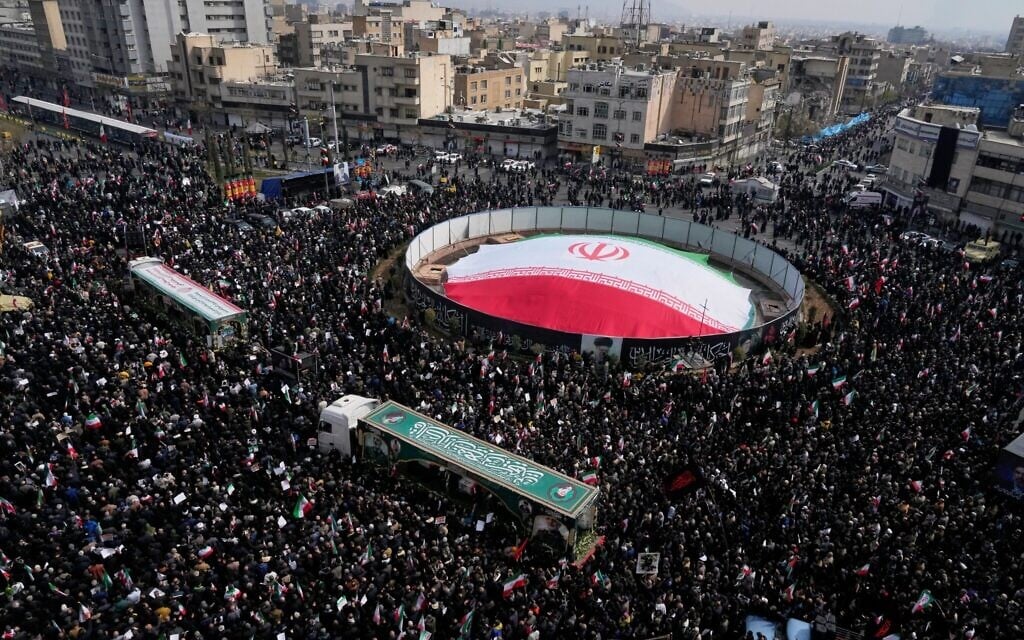
Mass funeral held for Armed forces chief of staff Moussavi, Revolutionary Guards chief Pakpour, defense minister Nassirzadeh, and top security adviser Shamkhani The post Thousands in Iran mourn slain top commanders under heavy security presence appeared first on The Times of Israel.

submitted by /u/EssoEssex to r/worldnews [link] [comments]

Interceptor shortage could force Gulf states to be selective in their targets: Report Sean Mathews on Wed, 03/11/2026 - 19:15 Gulf pleas for restocking interceptors have been 'stonewalled' by the Trump administration, as it deals with global shortage, MEE revealed Explosions from the interception of an Iranian projectile are seen in the sky over Dubai in the UAE, on 1 March 2026 (Giuseppe Cacace/AFP) Off The Trump administration has been informed that its Gulf partners are running so low on missile and drone interceptors that they now need to be selective about which projectiles to target amid the war on Iran. The report by CBS published on Wednesday follows Middle East Eye’s exclusive report on 2 March about how the US was “stonewalling” requests by Gulf states to replenish their interceptors as early as the first week of the war on Iran. “Whatever munitions were produced in the last couple of months, we have shot several years' worth of production in the last few days,” a former US official familiar with the requests told MEE at the time. The situation in the Gulf has only deteriorated since then, with Iran firing thousands of missiles and drones at the US's energy-rich partners. The UAE alone has destroyed 241 ballistic missiles and 1,385 drones since the start of the war. Bahrain said on Wednesday that it had intercepted at least 106 missiles and 177 drones from Iran since the war began. (adsbygoogle = window.adsbygoogle || []).push({}); As a general rule, defenders are expected to fire around two interceptors to down one incoming projectile. The Gulf states have been firing expensive interceptors from Terminal High Altitude Area Defence ballistic missile defence systems as well as Patriot batteries. The US only produces around 600 Patriot Pac-3 interceptors per year. Photos on social media show debris that suggests older Pac-2 interceptors are being used in the Gulf. MEE could not independently confirm the reports. Current and former US officials have told MEE that the Pac-2s have been used. 'Asset or liability?': Gulf's US security dependence under scrutiny as Iran lands blows Read More » MEE reported on Tuesday that Iranian missiles may have been testing Turkish airspace over the past week to target a crucial Nato radar base in Malatya. Turkey has hosted Spanish-owned Patriot missile systems in the south of the country since 2015, but the Pac-2 model was considered insufficient for intercepting Iranian ballistic missiles. A new Patriot system- a Pac-3 model- was deployed to Malatya from Nato’s Ramstein base in Germany, according to reports. The US has had to pull air defence systems from East Asia, a critical theatre of competition with China, as well. On Tuesday, South Korean President Lee Jae Myung confirmed the US planned to pull air defence systems from his country despite objections from Seoul. War on Iran News Post Date Override 0 Update Date Mon, 05/04/2020 - 21:19 Update Date Override 0
The toll the war in Iran has on the U.S. economy NPR

submitted by /u/PestoBolloElemento to r/worldnews [link] [comments]
Israel says 200 munitions used in strikes on Beirut The Israeli military said it has carried out large-scale air and sea strikes on Beirut, using about 200 munitions. In a statement, the army said around 70 sites across the Lebanese capital have been targeted so far, including about 50 high-rise buildings. Lebanon’s death toll from Israeli attacks has risen to 634, including 91 children, according to earlier figures from Lebanese authorities.

submitted by /u/thejoshwhite to r/worldnews [link] [comments]

submitted by /u/Savings_Aspect6493 to r/worldnews [link] [comments]

submitted by /u/Dizzy_Industry1287 to r/worldnews [link] [comments]
What Is the Strait of Hormuz? Why It's Important and What's At Stake Katie Couric Media

submitted by /u/joe4942 to r/geopolitics [link] [comments]
Three cargo ships damaged by ‘projectiles’ in Strait of Hormuz Colorado Politics
Thousands of Americans decline evacuation flights from UAE The US State Department said it offered nearly 9,000 Americans and their family members seats on evacuation flights from the UAE. Officials said around 300 seats were available on Wednesday’s flights but some remained empty after passengers boarded. At least one charter flight scheduled over the weekend was cancelled after no passengers arrived. Many Americans in the region have chosen to arrange their own travel or remain in the Middle East. Meanwhile, over 43,000 Americans have returned to the US since February 28, most on commercial flights.
Iran Says Truce Depends on US, Israel Pledging No Future Strikes Bloomberg.com
By Cassell Bryan-Low LONDON, March 11 (Reuters) - Naval drones have been used in at least two attacks on oil tankers in the Gulf region since war erupted between the U.S., Israel and Iran, according to maritime authorities and analysts, demonstrating a dangerous new threat in the key shipping lane. The emergence of the use of explosive-laden unmanned surface vessels, which Ukraine has used with great effect in its war with Russia, comes as Iran threatens to block oil shipments from transiting the key Strait of Hormuz, the chokepoint for one-fifth of the world's oil.