News
12,736 articles from 50+ sources
War on Iran Is Enriching Weapons Firms as It Tanks the Global Economy Truthout
How America gamified its war with Iran Axios
US bombs Iran’s oil hub Kharg Island Al Jazeera
Israeli strikes kill 26 paramedics in Lebanon: Lebanese Health Ministry Lebanon's health ministry confirmed on Saturday that Israeli strikes had killed 26 paramedics and wounded 51 others since conflict erupted between Israel and Hezbollah. Earlier, Lebanese authorities said an overnight Israeli strike killed 12 doctors, paramedics and nurses working at a healthcare centre in the southern town of Burj Qalawiya, following another strike on the town of Sawaneh that left two paramedics affiliated with Hezbollah and its ally Amal dead. The health ministry statement also accused Israel of repeatedly "targeting ambulance crews while they were performing rescue duties", after the Israeli military on Saturday accused Hezbollah of using ambulances militarily.
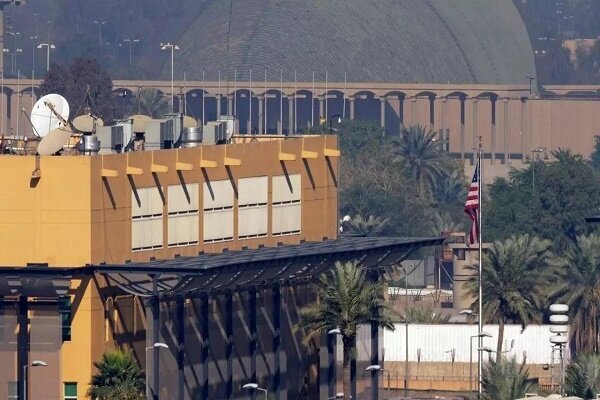
TEHRAN, Mar. 14 (MNA) – An Iraqi security source announced that the air defense system of the US Embassy in Baghdad broke down as a result of Iranian attacks.
Iranians grapple with whether to flee the country because of the war The Washington Post
Iran warns UAE residents to evacuate port areas Iran's Tasnim news agency is calling on people in the United Arab Emirates to "immediately" evacuate the areas surrounding Jebel Ali port in Dubai, Khalifa port in Abu Dhabi and Fujairah port. "These areas have become legitimate targets due to the presence and concealment of US military forces among civilian installations and will be targeted in the coming hours," the agency said.
The Iran War Is Creating a Public Health and Environmental Crisis Rolling Stone
Iran hits back after the US bombs a key island as the war enters its third week AP News

TEHRAN, Mar. 14 (MNA) – The spokesman for the Khatam al-Anbiya Central Headquarters has warned that Iran will target the origin of hostile American missiles in some cities in the UAE.
Israeli forces carry out daily attacks on besieged Gaza, as humanitarian conditions amid Iran war worsen.

Fear grips Iranians as missiles fall and loyalist forces roam the streets MEE correspondent on Sat, 03/14/2026 - 09:38 Armed pro-government groups stage rallies, checkpoints and confront civilians, deepening anxiety Security forces deploy to guard a rally in support of Iran's new supreme leader at Enghelab Square in central Tehran on 9 March 026 (AFP) Off As the US-Israeli war rages overhead, a different kind of tension is taking hold across Iranian cities. In the two weeks since Supreme Leader Ali Khamenei was killed, pro-government paramilitary and security forces have become an ever-present force, staging rallies, manning checkpoints and confronting civilians on the streets. For ordinary Iranians, this has created a climate of fear, with people caught between the threat of air strikes and the intimidation of the state’s supporters. Seema, a 42-year-old mother who lives in the central city of Yazd, said she still struggles to breathe normally when she remembers what happened to her only days ago. She told Middle East Eye that groups of pro-government motorcyclists have been roaming the streets of Yazd every night since Khamenei’s death. (adsbygoogle = window.adsbygoogle || []).push({}); “We were driving home with my nine-year-old son when suddenly several motorbikes surrounded our car in the traffic,” she said. The riders, whom Seema described as “Hezbollah-style loyalists”, were shouting slogans such as “Khamenei is our leader” and “God’s hand has appeared, our leader has become young”, referring to the appointment of a new supreme leader. “They started kicking our car,” she said. “My son began screaming. I was terrified. But it felt like they enjoyed seeing us scared even more. They kept kicking the car.” Loyalists return to the streets Seema is not alone in expressing concern about the growing presence of government supporters in public spaces. Across several Iranian cities, residents report rallies by pro-government groups and the visible deployment of Basij paramilitary members and other security forces. (adsbygoogle = window.adsbygoogle || []).push({}); Ali, a 34-year-old resident of Tehran, said the atmosphere in the capital has become increasingly oppressive. Exclusive: Iranian girls killed by ‘double-tap’ strikes on Minab school Read More » “It feels like someone has unleashed a pack of wild dogs,” he said angrily. “The sound of missiles and fighter jets is already unbearable. Now we also have to endure the shouting of government supporters in the streets.” Ali said checkpoints have multiplied around the capital in recent days. “I live near Imam Hossein Square in central Tehran,” he explained. “You cannot imagine how toxic the atmosphere has become.” According to Ali, many of the people manning checkpoints appear to be young Basij volunteers, some of them teenagers, carrying weapons and stopping cars to question drivers. “They ask pointless questions: where are you going, where have you been, what is your job?” Ali believes public anger is building beneath the surface. “People are furious,” he said. “But nobody can do anything because these forces are extremely aggressive.” 'The government is showing teeth' The growing street presence of pro-government supporters comes as Iranian officials have openly encouraged loyalists to mobilise. On 11 March, Iranian Parliament Speaker Mohammad Bagher Ghalibaf posted on X, urging citizens to show their presence in public. 'The sound of missiles and fighter jets is already unbearable. Now we also have to endure the shouting of government supporters in the streets' - Ali, Tehran resident His message repeated a simple phrase three times: “Presence in the streets.” Analysts say such calls appear aimed at demonstrating that the Islamic Republic still retains a base of support, even after the killing of its long-time leader and during ongoing military attacks. Some observers had expected that Khamenei’s death might weaken the security apparatus and open space for anti-government protests. Instead, the authorities appear to be trying to project control. Another stage for that show of strength came on Quds Day, the annual pro-Palestine rallies organised by the Iranian government on the last Friday of Ramadan. Azin, a 26-year-old resident of Tehran, said the authorities transported participants to demonstrations by bus. “My home is near Azadi Square,” she said, “They brought people in buses so they could show the crowds on television and claim they still have massive support.” Azin said she saw several buses parked near the square after the demonstration. (adsbygoogle = window.adsbygoogle || []).push({}); For her, the initial excitement many Iranians felt after Khamenei’s death did not last long. “The happiness people felt was very brief,” she said. “Now the government is showing its teeth even more aggressively.” War outside, repression inside As the US and Israel press on with air strikes across Iran, Iranian security officials have warned citizens against joining anti-government protests. Trump reportedly wants to seize Iran's Kharg Island. He floated the idea 40 years ago Read More » On 11 March, Ahmad Reza Radan, Iran’s national police chief, warned that anyone taking to the streets at what he called the “enemy’s request” would be treated by police as an enemy. Meanwhile, opposition figure Reza Pahlavi, the son of the last shah of Iran, has urged Iranians to stay home for their own safety while waiting for what he called a future “final call”. Soheil, a 33-year-old resident of Mashhad, said the streets now belong only to the government's supporters. “You can go outside,” he said bitterly, “But only if you chant in support of the Islamic Republic. If you say anything else, they will kill you.” Raising his voice, he added: “Radan says they will treat us like enemies if we protest. But during the January protests, didn’t they already open fire on people?” 'I don't know if anyone can save us' Checkpoints and security posts have also become targets for the US and Israel in their war on Iran. On the morning of 13 March, Israeli strikes reportedly hit a checkpoint in southern Tehran and two police stations near Azadi Street in the west of the capital. For many Iranians, such attacks create conflicting emotions. Ghazaleh, a 48-year-old resident of Tehran, said the issue is complicated. “If checkpoints were really there to provide security, that would be fine,” she said. “But according to the government itself, thousands of terrorists supposedly entered Iran during the January unrest. If that was true, what were these checkpoints doing then? They were busy checking whether a woman’s headscarf had slipped or whether someone had alcohol in their car.” Tehran IVF clinic devastated by US-Israeli attack as hospitals and homes hit Read More » Yet Ghazaleh also worries about the human cost of the strikes. “Who stands at these checkpoints?” she asked. “It’s not only Basij members. Ordinary people are waiting in line to pass through. They can be killed too.” She strongly criticised the Iranians who once supported US and Israeli military action. “Where are those people now who said Israel and America have ‘precision strikes’?” she said angrily. “Don’t they see that civilians are also dying?” For Ghazaleh, the war has left ordinary Iranians trapped between forces beyond their control. “We are stuck between two groups of criminals,” she said. “Neither side cares about the people. They only care about their political goals.” She paused before adding quietly: “I don’t know if anyone can save us.” As the second week since Khamenei’s death comes to an end, many Iranians fear they may pay the price for the devastating war, only to see the Islamic Republic emerge even more repressive than before. For residents like Seema, Ali and Ghazaleh, the growing presence of pro-government forces on the streets only deepens that fear. War on Iran Tehran News Post Date Override 0 Update Date Mon, 05/04/2020 - 21:19 Update Date Override 0
‘The sums don’t add up’: UK farmers struggle as Iran war drives up costs The Guardian
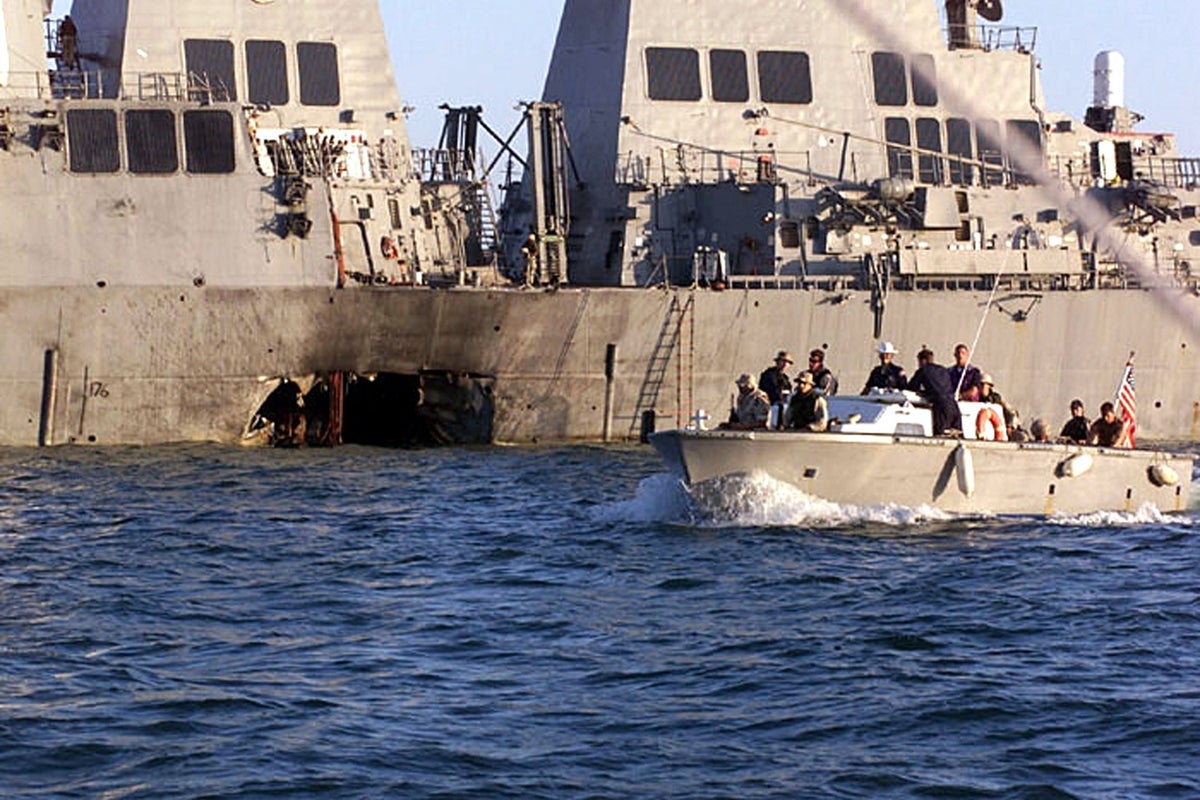
One of the president’s justifications for going to war with Iran could throw a wrench into a long-awaited trial for a top lieutenant of the 9/11 terror mastermind, Andrew Feinberg reports
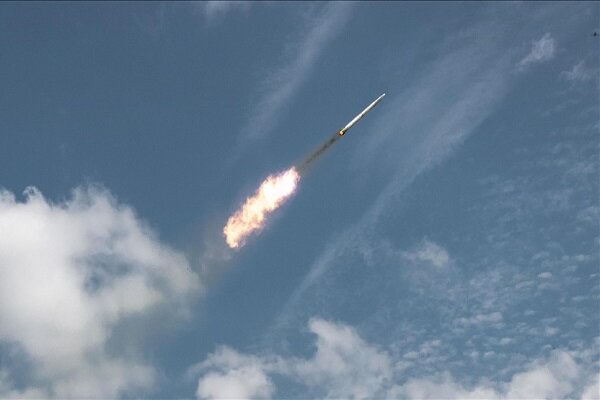
TEHRAN, Mar. 14 (MNA) – The commander of the Islamic Revolutionary Guards Corps (IRGC) Aerospace Force has said the accuracy rate of Iranian missiles hitting the American and Israeli targets has doubled in the past two days.
Hezbollah suffered heavy losses in a war with Israel more than a year ago, but the Shia movement has now regrouped only to end up fighting what it has called an "existential battle" and which some warn could be its last. Lebanon was drawn into the Middle East war last week when the militant group, funded and armed by Iran, attacked Israel in response to the killing of Iran's supreme leader Ayatollah Ali Khamenei in US-Israeli strikes.
Video shows rescue teams rescuing families from under the rubble after US-Israeli strikes hit residential areas in Tehra
As the US and Israel battle to control the story of their war against Iran, their messaging gets harder to defend.
Tehran says US-linked sites in UAE may be targeted in response to Kharg Island attack An official from Iran’s Revolutionary Guard Corps said US “hideouts” in the United Arab Emirates would be considered “legitimate” targets following American strikes on Kharg Island. In a statement carried by Iran’s Mehr news agency, the official warned residents of the UAE to stay away from ports, docks and areas linked to US military forces “to avoid any harm”. “We inform the leaders of the Emirates that the Islamic Republic of Iran regards it as its legitimate right, in defence of its national sovereignty and territorial integrity, to target the sites from which American enemy missiles are launched - including ports, docks, and locations hosting US military personnel in several cities across the Emirates,” a statement said on Mehr.
The roots of this war – Iran War Briefing #14 Counterfire