News
12,736 articles from 50+ sources

As the bombing continues across Iran, Lebanon and the Gulf states, a World Health Organisation chief tells chief international correspondent Bel Trew in Beirut how she fears the conflict could lead to chemical, nuclear or radiological war
Iran Israel US War: Iran Proposes 3 Conditions to End War With US and Israel The Logical Indian
Torn between hope and fear, a Tehran resident in her 30s agrees to share her thoughts with AFP about the ongoing war and daily life. We are withholding her identity for her protection. Here is an edited transcript of the conversation: - How is daily life in Tehran? - People left in waves, especially those who were next to targets.
Sudanese Doctors Network says 'horrific crime represents a continuation of the violations committed by the RSF.'
Iran War Forces Turkey to Rethink Rates Path and Put Cuts on Ice Bloomberg

Former PM says schools ‘deserve same moral status as hospitals’ after 168 schoolgirls killed in US-Israel war on Iran Gordon Brown: ‘Children killed, a school turned into a graveyard: even in wartime, we can’t accept this’ A school turned into a graveyard Minab school bombing: a visual guide Gordon Brown has called for the creation of an international criminal court for crimes against children, saying “no child should ever become collateral damage in a conflict”. Writing for the Guardian, the former prime minister drew on the tomahawk missile strike on the Shajareh Tayyebeh school at the start of the Iran conflict, which killed 168 schoolgirls, to argue that “schools deserve the same moral status as hospitals – protected places – and the same protection under international law”. Continue reading...
There are rules and world leaders must insist they are honoured in practice and in spirit. After this atrocity in Iran, a more effective tribunal for crimes against children is essential The killing of a reported 168 people, primarily schoolgirls, in the bombing of the Shajareh Tayyebeh school in Minab in Iran has shaken to its very core the conscience of the world. The attack, carried out nearly two weeks ago when classes were under way, reduced the school building to rubble. Parents who had sent their daughters to school discovered minutes later that classrooms had become mass graves. Gordon Brown is the UN’s special envoy for global education and was UK prime minister from 2007 to 2010 Continue reading...

With the war in Iran escalating and vivid footage of bomb and drone attacks dominating the news, it’s no wonder children are asking questions about how safe they are. As many parents are also feeling anxious, Charlotte Cripps talks to the experts about how to reply

Why the Gulf fears Israel's 'day after' in Iran Dania Thafer on Tue, 03/10/2026 - 17:18 The postwar landscape could leave GGC states encircled by instability, while removing the last major constraint on Tel Aviv's pursuit of regional hegemony A plume of smoke rises from the port of Jebel Ali following a reported Iranian strike on Dubai on 1 March 2026 (Fadel Senna/AFP) On Iran has struck every Gulf state with missiles and drones, yet the region’s richest nations and their powerful militaries have remained strikingly passive. They had plenty of warning that the conflagration was coming. Analysts spent weeks speculating on when the US and Israel would strike, while Iran’s leadership threatened to unleash “hell” on the region in return. In the end, both sides delivered on their threats: the US and Israel started the war, while Iran expanded it by striking various civilian targets and infrastructure in every Gulf Cooperation Council (GCC) state. Why, then, have the GCC states remained focused on defence and damage control? The answer is that although they are under unprecedented pressure, their strategic calculus remains largely unchanged. They may be furious at Iran, but - as before the war - they perceive that they have few good options for “the day after”. (adsbygoogle = window.adsbygoogle || []).push({}); On a strategic level, Israel and the Gulf states are fundamentally divided on how a postwar Iran should look. The Gulf states would prefer to end the war quickly and with minimal disruption. Israel, by contrast, wants a long war and is tolerant of chaos. Though the potential scenarios vary, there are two commonalities. Firstly, whether Iran’s regime falls or not, the Gulf states believe that further chaos and instability will likely be the result. Secondly, they fear that the conflict will enable Israel’s regional revisionism and its encroachment into the Gulf. This is why the GCC lobbied hard against the war. It also explains why Gulf states are now trying to buy time by sticking to a defensive strategy. Preferred outcome The most favourable outcome for the GCC would be a rapid end to the conflict following the decapitation of Iran’s senior leadership. For the Gulf states, Iran’s domestic order matters far less than its regional project of the self-proclaimed “axis of resistance”. Accordingly, any “same but different” leadership would have to significantly moderate Iran’s military adventurism and little else. This outcome could also mitigate the chaos that the Gulf states associate with a more transformative regime change. (adsbygoogle = window.adsbygoogle || []).push({}); It would allow the GCC to quickly return to the status quo, reopening for business and re-establishing dialogue with Tehran. In short, Gulf states could revert to their prewar strategy without having to ask many difficult questions about their own perceptions and policy prescriptions. For the Gulf states, this is a worst-case scenario. They are desperate to avert conflict and to not have chaos become a regional reality The problem is that there are substantial impediments to this outcome. Decapitation alone falls short of Israeli and US goals. President Donald Trump has bragged that the US has killed not just many key figures from the current Iranian leadership, but their potential successors as well. One plausible endgame for Washington is a deal requiring Iran to dismantle both its nuclear programme and its ballistic missile arsenal. Though the Iranians are likely now more than ever to resist giving up their ballistic missiles given their prolific use in the ongoing conflict, the biggest barrier to this scenario remains Israel. Israel’s approach appears to pursue the same outcome – disarming and neutering Iran – through a different pathway that requires far more than decapitation. Prime Minister Benjamin Netanyahu has explicitly stated that Israel will deem any reshuffling of Iran’s leadership as insufficient. Its aim is cumulative institutional destabilisation, designed to steadily erode Iran’s capacity to threaten its adversaries. The common denominator for both the US and Israel is an Iran that can no longer pose a threat to Israeli or US interests. Yet achieving that outcome remains far from certain, and would likely require a prolonged and destabilising confrontation. Slow-burn conflict The second potential outcome is less a “day after” scenario and more the perpetuation of the current conflict in slow-burn form. Like contemporary Gaza, even if a ceasefire is declared, it would be a ceasefire in name only. In between a series of flare-ups, low-level violence would simmer but never entirely abate, with repeated tit-for-tat exchanges between Israel, the US and Iran. The Iranian leadership would inevitably reshuffle, given the damage the US and Israel have already caused. But it would not rethink its grand strategy, and it would continue to strike GCC states to push the US towards a ceasefire. Israel and the GCC view this scenario from opposite strategic poles. For the Gulf states, this is a worst-case scenario. They are desperate to avert conflict and to not have chaos become a regional reality. Every GCC state is focused on ending their over-reliance on energy by diversifying their income streams. Even if the number of attacks abates, one drone or rocket is too many, because it can keep tourists and investors away. Moreover, a sustained threat to GCC states could add a premium to oil prices and further disrupt energy production. The Gulf states would also have to remain in a constant state of high alert, caught between two warring parties while trying to de-escalate, all the while bearing the brunt of the attacks in a war they did not want. Conversely, this looks like Israel’s optimal outcome. Unlike the Gulf states, Israel is not in close geographic proximity to Iran, nor do they share maritime borders. As a result, its risk tolerance is much higher. Being able to permanently “mow the grass” through regular strikes against Iran, rather than having to fight Tehran’s proxies next door, would give Israel the strategic depth it craves. For the Gulf states, however, this would provide the opposite: permanent conflict on the home front. This could be the new status quo already, given that Netanyahu claimed Israel had crippled Iran’s nuclear programme in the 12-day war last June, only for him to invoke the same alleged threat to justify the current wave of strikes. Pandora's box The third scenario is a Pandora’s box: the Islamic Republic’s collapse. Exactly how this would come about is an open question. From the perspective of GCC states, this scenario likely appears no better than the second, and could prove even more destabilising. Yet it also carries a narrow, albeit uncertain, possibility of a more favourable outcome, should a less hostile regime eventually emerge in Tehran. (adsbygoogle = window.adsbygoogle || []).push({}); The Trump administration’s inability to delineate what a “day after” may look like, and how to get there, does not help. Given that just one in four US voters currently support the conflict, boots on the ground are unlikely. There is no credible anti-regime armed group within Iran that could take power. Whether in Iraq, Libya or Afghanistan, history overwhelmingly shows that total regime collapse associated with outside interference is often followed by years of civil war and chaos. Although driven largely by internal forces, Syria has been the most hopeful outcome following the fall of the Assad regime, as the new government has moved closer to the Arab Gulf states and adopted a far less confrontational posture towards Israel. Yet while a post-collapse government in Iran that adopts a less hostile regional posture is theoretically possible, this prospect is highly unlikely given the country’s size, political structure, and entrenched security institutions. No optimal Gulf endgame Gulf states are caught in middle of the US-Israel war on Iran. There is a way out Read More » The second and third "day after" scenarios above, which are ideal outcomes for Israel, would leave the Gulf states surrounded by three perpetually unstable, fragile states: Yemen, Iraq and now Iran. Before Operation Epic Fury entangled all the Gulf states in a single escalation cycle, the Yemen-based Houthis hit Saudi Arabia and the United Arab Emirates in 2022. Iran and Israel both bombed Qatar in 2025. The last thing that the Gulf states want is the perpetuation of this descent into instability. Now, Iran and allied militias in Iraq have launched drones and missiles towards US bases across the Gulf. This has exposed an uncomfortable reality for Gulf leaders: when Israeli and GCC interests collide in Washington, Israel sits higher in the hierarchy of American alliances, as evidenced by Secretary of State Marco Rubio’s contention that the US timed this war to align with Israel’s plans. Gulf leaders have little interest in joining what they view as Israel’s war. They remain unconvinced that the US could or would constrain Israel. This illustrates why the Gulf states remain focused on defensive over offensive operations, even while Iran escalates the conflict. The Gulf states’ history when facing two competing regional rivals offers a pertinent lesson. During the 1980s and 1990s, GCC states sought to mitigate the revisionist aspirations of Iraq and Iran alike. Several Gulf leaders opposed the 2003 Iraq invasion, not because they supported Saddam Hussein, but because they feared regime change would produce chaos, and Iran would fill the void. They were right. It’s little wonder, then, that most Gulf leaders now fear that toppling the Islamic Republic will not bring quiet, and will instead only remove the last major constraint on a revisionist Israel’s pursuit of regional hegemony. The views expressed in this article belong to the author and do not necessarily reflect the editorial policy of Middle East Eye. War on Iran Rob Geist Pinfold Opinion Post Date Override 0 Update Date Mon, 05/04/2020 - 21:29 Update Date Override 0
German Foreign Minister Wadephul in Israel: Berlin backs US-Israeli escalation of war in the Middle East World Socialist Web Site
Lebanon said an Israeli strike on central Beirut's seafront killed at least seven people early on Thursday, another attack in the heart of the capital as Iran-backed Hezbollah launched more missiles at Israel. The Israeli military said separately it had carried out strikes on Beirut's southern suburbs overnight against Hezbollah, which had announced a major new operation against Israel. Local media aired footage showing smoke rising along the seaside road area after the strike in central Beirut, which state-run National News Agency (NNA) said targeted a car.
An Israeli strike on central Beirut's seafront killed eight people early on Thursday, Lebanon's health ministry said, another attack in the heart of the capital, as Iran-backed Hezbollah launched more missiles at Israel. The Israeli military said separately it had carried out strikes on Beirut's southern suburbs overnight against Hezbollah, which had announced a major new operation against Israel. In a statement, the Lebanese health ministry said "the Israeli enemy strike on Ramlet al-Bayda" in the centre of Beirut killed eight people and wounded 31.
Iranian school was on U.S. target list, may have been mistaken as military site The Washington Post

TEHRAN, Mar. 12 (MNA) – President Masoud Pezeshkian has announced conditions for ending the ongoing US-Israeli war against Iran, as the two terrorist regimes continue airstrikes on Iran’s vital infrastructures, civilians and historical monuments.

TEHRAN, Mar. 12 (MNA) – Brigadier General Ali Fadavi has said, “We have missiles that are designed to be fired underwater,” adding that “[US President Donald] Trump has been personally seeking a ceasefire since yesterday.”
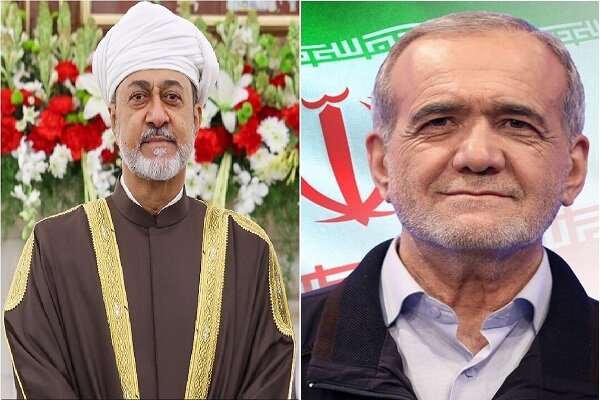
TEHRAN, Mar. 12 (MNA) –Iranian President Masoud Pezeshkian and Sultan of Oman Haitham bin Tariq Al Said held a telephone conversation late on Wednesday to discuss the latest developments in the region following the US-Israeli aggression against Iran.
Iranian boats appear to have attacked two fuel tankers, which were seen ablaze after projectiles struck three vessels in Iraqi waters, port officials said. The ships targeted in late-night armed boat attacks in the Gulf near Iraq were the Marshall Islands-flagged Safesea Vishnu and the Malta-flagged Zefyros. Continue reading...
Three crew aboard Thai ship attacked on Wednesday reported missing Three crew members have been reported missing after a Thai bulk carrier was hit by Iran on Wednesday while travelling through the crucial Strait of Hormuz. "Three crew members are reported missing and believed to be trapped in the engine room" of the Thai-registered Mayuree Naree, Thai transport company Precious Shipping said in a statement.
Iran Israel US War: Iran Outlines 3 Conditions To End War With US, Israel NDTV
Why war on Iran is not Trump’s to end: will Israel ‘fan the flames’? South China Morning Post