News
12,736 articles from 50+ sources
Live Updates: Iran's war tactic of punishing U.S. Gulf allies sends oil prices back up and stock markets down CBS News

submitted by /u/TheBoundlessOcean to r/worldnews [link] [comments]
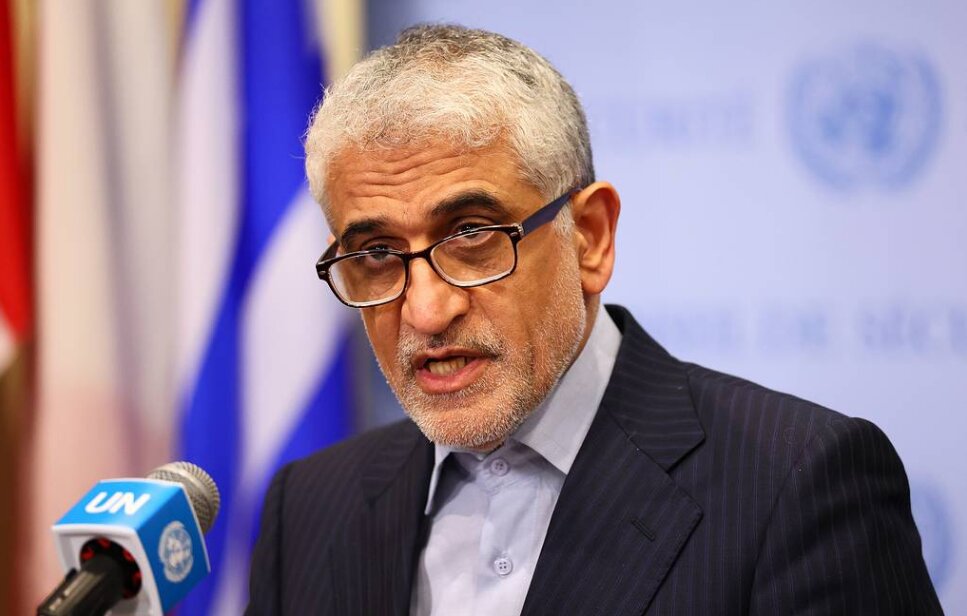
TEHRAN, Mar. 12 (MNA) – Iran’s ambassador and permanent representative to the United Nations has said that the country’s defensive operations are not against the national sovereignty and territorial integrity of Bahrain.
Italy joins IEA oil reserve release with 9 million barrels Italy will contribute with 9 million barrels to a coordinated release of strategic oil reserves, joining other International Energy Agency members, a government source said on Thursday. Asked about the timing, the source said "availability was immediate." The IEA recommended on Wednesday the release of 400 million barrels of oil, the largest such move in its history, to try to restrain soaring crude prices amid the US-Israeli war on Iran.
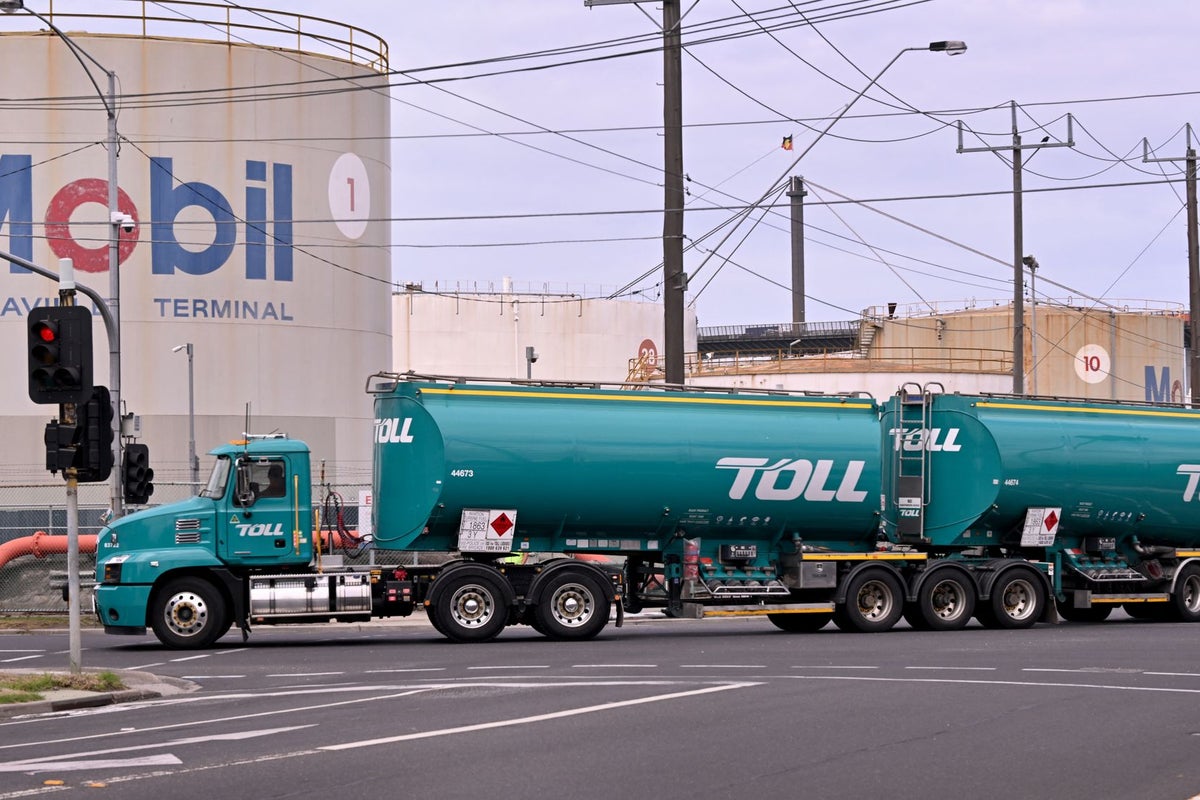
The Middle East conflict has seen oil prices surge as the flow of oil tankers has effectively stopped

TEHRAN, Mar. 12 (MNA) – The spokesman of Central Headquarters of Khatam al-Anbiya says that Iran will not allow one single liter of oil to reach the US and Zionists and their partners through the Strait of Hormuz.

submitted by /u/uncle-ice493 to r/geopolitics [link] [comments]
Why the Gulf fears Israel's 'day after' in Iran Middle East Eye
Iran’s sea mines raise fears of Strait of Hormuz oil disruption France 24

Global oil prices have risen sharply in response to the conflict
Tehran is seeking to choke the vital Strait of Hormuz to oil traffic following US and Israeli strikes against Iran, with fears it could be using sea mines to do so. US forces have struck 28 Iranian mine-laying vessels, President Donald Trump said Wednesday, more than a week into the Middle East war. Any Iranian mining of the key shipping lane, as its forces did in the 1980s, would be a nightmare for Western demining teams. Here's an explainer: - What are sea mines? -
Not ‘a litre of oil’ to pass Strait of Hormuz, expect $200 price tag: Iran Al Jazeera
How the Strait of Hormuz Globalizes the Iran War U.S. News & World Report
Attacks in the Strait of Hormuz intensify as Iran says it targeted commercial ships abcnews.com

By serving Israel's agenda, Trump betrayed Gulf allies Soumaya Ghannoushi on Wed, 03/11/2026 - 18:02 From Doha to Riyadh, the lesson is becoming difficult to ignore: the arrangement meant to guarantee their security is now exposing them to danger Protesters burn portraits of Israeli Prime Minister Benjamin Netanyahu and US President Donald Trump in front of the Iranian consulate in Istanbul, Turkey, on 18 January 2026 (Ozan Kose/AFP) Off Israeli Prime Minister Benjamin Netanyahu has succeeded in doing what many in Washington once swore would never happen again: he has dragged American power back into the Middle East. The last time this happened was in 2003, when the United States invaded Iraq. That war was driven by the ideology of the neoconservatives, who envisioned the birth of what they called the “New American Century”. Within weeks, American forces toppled the exhausted regime of Saddam Hussein, already weakened by years of sanctions following the disastrous invasion of Kuwait. But the apparent triumph quickly turned into something very different. The fall of Baghdad marked not the beginning of a new era of American dominance, but the start of a long descent into insurgency, instability and endless war. The US spent trillions of dollars, lost thousands of soldiers, and watched its credibility erode across much of the world. (adsbygoogle = window.adsbygoogle || []).push({}); Former US President Barack Obama came to power in part by promising repentance for that mistake. A broad conviction formed among sections of the American political elite that the invasion of Iraq was a grave error that must not be repeated. That realisation helped propel Obama to the presidency, and later contributed to the populist backlash that carried Donald Trump to the White House. Netanyahu has now succeeded in drawing Trump into the very Middle Eastern labyrinth Trump once promised to avoid. Sustained pressure Since Trump returned to power, Netanyahu has worked relentlessly to steer American policy towards confrontation with Iran. Through repeated visits, constant communication, and sustained political pressure - often channelled through close allies inside Trump’s circle - most notably his son-in-law, Jared Kushner - Netanyahu steadily promoted the idea that striking Iran would reshape the region and eliminate Israel’s most powerful adversary. Eventually, the decision was made. Trump authorised military operations against Iran and initiated a campaign of targeting senior figures within its leadership. (adsbygoogle = window.adsbygoogle || []).push({}); But it is already becoming clear that this war won't be quick, nor will it be the easy victory Netanyahu had promised. There will be no Venezuela scenario here. Instead of shielding the region from conflict, the presence of American bases turned Gulf states into targets in a war they neither started nor wanted The conflict was not forced upon Washington by an imminent Iranian attack on American territory. Iran does not possess strategic weapons capable of threatening the US itself. Its nuclear programme had previously been constrained under the 2015 agreement between Iran and world powers, which limited uranium enrichment and subjected it to international monitoring. Iran accepted those restrictions until the US withdrew from the deal during Trump’s first administration. During subsequent negotiations, Tehran even indicated a willingness to reduce enrichment levels again. Trump himself ironically claimed only months ago that Iran’s nuclear capabilities had been “obliterated” by American strikes - a statement that underscores how disconnected the rhetoric on this war is from reality. This war was not driven by a direct threat to American national security. It emerged from a convergence of Israeli strategic calculations and a receptive American administration. The result is an unprecedented overlap between American and Israeli military action. Distinction blurred For decades, Israel’s wars were formally its own, with the US providing weapons, intelligence and diplomatic backing. Today, that distinction has blurred dramatically. The two powers are now directly engaged in the same conflict. The consequences are already visible across the Gulf, where states have built their security architecture around a simple bargain: they would invest enormous wealth into the American economy and host US military bases, in exchange for protection and stability. The scale of that economic relationship is enormous. During Trump’s 2025 tour of the Gulf, Saudi Arabia, the United Arab Emirates and Qatar pledged investment commitments estimated at more than $3 trillion over time. Could a GCC energy embargo halt the US-Israel war on Iran? Read More » Gulf capital has also flowed into projects linked to Trump’s personal and political networks. Entities connected to the UAE’s national security leadership have reportedly acquired a 49 percent stake in the Trump-linked cryptocurrency venture World Liberty Financial, in a deal worth about $500m. Meanwhile, Kushner’s investment firm, Affinity Partners, manages billions of dollars from Gulf sovereign wealth funds, including a $2bn commitment from Saudi Arabia’s Public Investment Fund, as well as major investments from Qatar and the UAE. These financial ties form part of a broader strategic relationship, in which Gulf states purchase vast quantities of American military equipment and host major US bases across the region. By fully adopting Netanyahu’s vision and his war, Trump has effectively betrayed Washington’s Gulf allies, ignoring the very security and stability interests that formed the foundation of that partnership. The Israeli-American war against Iran was launched without consulting the Gulf states, even though it is being fought at their doorstep. This happened despite repeated warnings from governments in the region, which had tried in vain to dissuade Washington from escalating towards war, and had clearly outlined the dangers it would pose to their own security and stability. Those concerns were later voiced publicly by prominent figures in the region. Influential Emirati businessman Khalaf al-Habtoor recently lambasted Trump for dragging the region into war: “Did you calculate the collateral damage before pulling the trigger?” he wrote on X. “And did you consider that the first to suffer from this escalation will be the countries of the region itself!” Regional unease Such statements are significant not only for their content, but also because of who is making them. Habtoor is neither an opposition figure nor an activist, but a businessman closely associated with the Gulf’s economic and political establishment. (adsbygoogle = window.adsbygoogle || []).push({}); His intervention reflects a wider unease across the region about being drawn into a conflict whose consequences the Gulf states will bear, while the decisions on it were taken elsewhere. Because they host American bases, troops and military infrastructure, Gulf states automatically become targets whenever the US enters a war. The very installations meant to guarantee their security instead place them directly in the line of fire. These bases are not symbolic. They are vast military installations hosting thousands of troops, aircraft and command systems. They exist partly because Gulf governments financed their construction and maintenance, and purchased massive quantities of American weapons, under the assumption that the partnership would guarantee protection. Yet when war arrived at their doorstep, that protection did not materialise. The protector became a source of danger. Instead of shielding the region from conflict, the presence of American bases turned Gulf states into targets in a war they neither started nor wanted. This realisation has begun to surface publicly across the region. On Kuwaiti television, political analyst Musaed al-Maghnam captured the irony of the situation in unusually direct terms: “They think the Americans are defending us, but today we are the ones defending the Americans.” His remark reflected a broader frustration. Washington has drawn billions from Gulf countries, used their territories for military bases, and justified this relationship in the name of protection. For many in the region, that promise now looks like a mirage. Growing fears Washington has now gone further still, pressing Gulf states to join the war itself. Senator Lindsey Graham, a close ally of Trump and Netanyahu, publicly urged Saudi Arabia to enter the conflict against Iran, suggesting that if Gulf states expect security agreements with the US, they should be prepared to fight alongside it. Recent events have only deepened suspicions across the region. Israeli media circulated claims that the UAE had struck an Iranian desalination facility - a report that UAE officials quickly and firmly denied. The allegation raised immediate alarm, as such an attack could have triggered Iranian retaliation against Gulf desalination infrastructure, which is relied upon by countries such as the UAE for the vast majority of their drinking water. In attempting to serve Israel's agenda, the US is weakening its own position in the very region that has long sustained its global influence For many observers in the region, the episode reinforced fears that attempts are being made to draw Gulf states into a direct confrontation with Iran - a scenario that could ignite a destructive regional conflict reminiscent of the eight-year Iran-Iraq War. Such fears are increasingly being voiced within the region itself. Saudi journalist and political analyst Adhwan al-Ahmari warned that the strategy appears aimed precisely at widening the war. He said: “Some believe this war is an American-Israeli trap to implicate the Gulf countries and draw them into a confrontation with Iran … What if the US announces after a week, 10 days, or two weeks that it has achieved all its goals in this war and that the war is over, and then leaves the Gulf states in an open confrontation?” Who benefits from chaos in the Middle East? Not the Gulf states. Not the Arab world. But there is one country whose strategic thinking has long emphasised the creation of a regional vacuum: Israel. Political fragmentation For decades, Israeli strategists have argued that when surrounding states weaken, fragment, or descend into internal conflict, Israel’s relative power expands. This logic has occasionally surfaced openly in Israeli commentary. In a recent article published in the Israeli newspaper Yedioth Ahronoth, Israeli writer Meir Swissa argued that the Middle East should be reshaped through a new political fragmentation. The article, titled “Sykes-Picot 2026: Time to redraw the Middle East map”, noted: “The inevitable finale is already visible on the horizon … The Arab and Muslim states that present themselves as Western-style nation-states may lose relevance to a model in which tribe and clan once again become the true governing units.” Why Trump and Netanyahu are the most dangerous men on the planet Read More » Such fragmentation might amplify Israeli power and influence, but it does not serve American interests. For decades, the US benefited from the post-Second World War order in the Middle East, effectively inheriting Britain’s former strategic role. The Gulf, in particular, is not a peripheral theatre of American policy. It is one of the pillars of American global influence. The region sits at the centre of global energy markets, hosts some of Washington’s most important overseas military facilities, and represents a critical source of investment in the American economy. The partnership has long rested on a simple understanding: access and cooperation in exchange for security and stability. That arrangement is now under strain. By aligning itself completely with Israel and allowing Netanyahu’s strategy to shape American policy, the Trump administration risks destabilising the very architecture that underpins American influence in the region, and the partners upon whom its power depends. The longer this war continues, the clearer the strategic paradox becomes. In attempting to serve Israel’s agenda, the US is weakening its own position in the very region that has long sustained its global influence. For the Gulf states, the lesson is becoming difficult to ignore: the arrangement meant to guarantee their security is now exposing them to danger. And for the US, the question that will increasingly arise will no longer be about Iran. It will be about Israel: whether implementing its strategy is protecting Washington’s interests, or steadily eroding them. The views expressed in this article belong to the author and do not necessarily reflect the editorial policy of Middle East Eye. War on Iran Opinion Post Date Override 0 Update Date Mon, 05/04/2020 - 21:29 Update Date Override 0
Live - Iran mines Hormuz as Trump says few targets left ایران اینترنشنال
Attacks have targeted around 20 commercial vessels in or near the Strait of Hormuz, data analyst groups report, as the blockaded waterway becomes a front line in the Middle East war. Iran's quest to inflict maximum pain on the global economy in retaliation for US-Israeli strikes on its territory has all but shut the narrow strait through which 20 percent of global crude and LNG normally passes. Only a tiny fraction of the vessels that used to navigate the strategic waterway have made it through, while some have ended up in flames. - Vessels hit -

Iran war and Hormuz shock fuels cost-of-living crisis across South Asia Tauseef Ahmad on Wed, 03/11/2026 - 15:00 India, Pakistan, Bangladesh, Nepal and Sri Lanka all suffering from spike in energy and fuel costs Kashmiris queuing for fuel, March 2026 (Junaid Bhat/MEE) Off When tensions erupted around the Strait of Hormuz in early March, the impact was felt far beyond the Gulf’s narrow shipping lanes. Within days, the shock from the world’s most important energy chokehold rippled across South Asia, from petrol pumps in Karachi to vegetable markets in Dhaka and taxi stands in Mumbai. With oil prices surging as the US-Israeli war on Iran escalated, governments across the region scrambled to contain rising fuel costs while millions of households began bracing for higher transport fares, food prices and electricity bills. For the people of South Asia, already grappling with high inflation, the surge in fuel costs is rapidly turning into a complete cost-of-living crisis, highlighting how vulnerable the global energy market is to geopolitical disruptions, particularly in the Gulf. For South Asian economies that rely heavily on imported fuel and natural gas - India gets 40 percent of its gas from Qatar - the surge has immediate consequences: higher transport costs, rising food prices, electricity shortages and growing pressure on already strained government budgets. (adsbygoogle = window.adsbygoogle || []).push({}); Roughly 20 million barrels of crude oil and petroleum products pass through the narrow Strait of Hormuz every day, accounting for nearly one-fifth of global oil consumption. “South Asia’s energy systems remain deeply tied to Gulf oil,” Fatima Rahman, an energy analyst at the Institute of Strategic Studies Islamabad, told Middle East Eye. “When a geopolitical shock hits the Strait of Hormuz, the economic shock reaches households here within days,” Rahman said. Countries across South Asia, including India, Pakistan, Bangladesh, Sri Lanka and Nepal, import the majority of their energy needs. With limited domestic production and volatile currencies, even a modest increase in global oil prices can quickly strain public finances and household budgets. (adsbygoogle = window.adsbygoogle || []).push({}); Ramadan in Pakistan In Pakistan, the effects have been swift and visible. Petrol prices have risen by roughly 55 rupees (20 cents) per litre, pushing retail prices above 321 rupees ($1.15) per litre, while diesel has climbed to nearly 336 rupees ($1.20). For transport workers and small businesses, the increase has been immediate and painful. Ahmed Khan, a bus driver in Lahore who operates a route between the city’s suburbs and the old railway station, said his daily fuel expenses have surged in just a few days. “Earlier I spent around 6,000 rupees ($21) on diesel for a full day,” he said while waiting for passengers near Badami Bagh. “Now it’s close to 7,000 rupees ($25). I had no choice but to raise fares, otherwise I cannot run the bus.” (adsbygoogle = window.adsbygoogle || []).push({}); Transport operators across Lahore have increased fares by 15 to 20 percent, adding pressure on commuters who already struggle with rising living costs. The price shock is also rippling through food markets. In Karachi’s Empress Market, vegetable vendors say transport costs have pushed prices up by nearly 10 percent within a week. For families observing the holy month of Ramadan, the timing has been particularly difficult. Sara Ahmed, a mother of three in Islamabad, said the cost of everyday items such as dates, milk and cooking oil has climbed noticeably. People wait to break their fast at an event during the Muslim fasting month of Ramadan, in Karachi, Pakistan, February 2026 (Akhtar Soomro/Reuters) “We budget carefully during Ramadan,” she said. “But this year prices change almost every day. Even a small increase makes a difference for families like ours.” Pakistan’s government has introduced austerity measures to reduce fuel consumption. Schools in Punjab and Balochistan are scheduled to close for two weeks from 16 March, universities have shifted to online classes and public offices have adopted a four-day work week with partial remote staffing. Cabinet members have also agreed to forgo their salary for two months as part of cost-cutting efforts. Economists at the Pakistan Institute of Development Economics warn that sustained oil prices above $100 per barrel could add two to three percentage points to inflation, which already stood at about 23 percent in February. Meanwhile, the country’s foreign exchange reserves - estimated at roughly $8.5bn - could face additional strain as the import bill rises. Fuel rationing in Bangladesh In Bangladesh, where nearly 95 percent of energy demand depends on imports, the crisis has triggered fuel rationing and panic buying. Authorities have limited vehicles to 40 litres of fuel per purchase at petrol stations in an effort to prevent shortages. 'Without the generator we cannot manage the heat and the power cuts' - Fatima Begum, Dhaka resident In cities such as Dhaka and Chittagong, long lines stretching more than a kilometre have become a common sight as drivers wait hours for fuel. Fatima Begum, a Dhaka resident who relies on a diesel generator during frequent power outages, said she spent four hours waiting to buy fuel. “Without the generator we cannot manage the heat and the power cuts,” she said. “But fuel is becoming harder to find.” Electricity shortages have worsened as natural gas supplies tighten, forcing urban areas to endure power cuts lasting up to six hours a day. The disruptions are also affecting Bangladesh’s crucial export industries. In Chittagong’s garment district, factory workers say production shifts have shortened because of unreliable electricity. Rahim Uddin, a sewing machine operator at a clothing factory, said the changes have reduced his income. “My salary is the same, but I used to earn extra through overtime,” he said. “Now production stops early because of electricity problems.” Zahid Hussain, a former lead economist in Dhaka, said rising energy costs could significantly widen Bangladesh’s trade deficit. “For a country that imports nearly all its fuel, every $10 increase in oil prices puts serious pressure on the balance of payments,” Hussain said. Bangladesh’s inflation rate stood at about 9.5 percent in February, but analysts warn it could climb above 12 percent if oil prices remain elevated. India transport and cooking costs India, the world’s third-largest oil importer and a significant importer of liquefied natural gas (LNG) from Qatar, is being hurt by the Iran war. Petrol prices in Delhi have risen roughly 12 percent to about 108 rupees ($1.17) per litre, while diesel prices have reached around 95 rupees ($1.03). To cushion the impact, the government has released about five million barrels of crude from strategic reserves, but analysts say this is only a temporary measure. A bird flies next to a logo of Indian Oil outside a fuel station in New Delhi, India, 4 March 2025 (Anushree Fadnavis/Reuters) For workers who depend on fuel for their livelihoods, even modest price increases can have significant consequences. Rajesh Singh, a taxi driver in Mumbai, said his monthly fuel expenses have increased by about 4,000 rupees ($44). “Earlier I could save some money after paying rent and fuel,” he said. “Now most of what I earn goes straight into petrol.” Higher transport costs are also beginning to hit food prices. In Kolkata, wholesale onion prices have increased by about 10 percent in recent days as trucking costs rise. In rural Uttar Pradesh, households report higher cooking gas prices, with liquefied petroleum gas (LPG) cylinders approaching 950 rupees ($10). The Indian government has invoked emergency powers and directed oil refiners to maximise the production of LPG to try and prevent a shortage of cooking fuel. The country is the second-largest importer of LPG in the world. The gas, a mixture of propane and butane, is widely used as a primary cooking fuel in millions of Indian households, making stable supply critical. Structural inequality The shock of the war has been even more severe in smaller economies like Nepal and Sri Lanka. Iranian warship hit by US torpedo was 'defenceless', former Indian official claims Read More » In Sri Lanka, which is still recovering from the financial crisis that triggered mass protests in 2022, petrol prices have risen by roughly 18 percent. Authorities have introduced restrictions on imports of non-essential goods in an effort to protect foreign exchange reserves. In Nepal, petrol prices have increased, while the Nepal Oil Corporation has reduced fuel supplies to dealers by around 20 percent. Transport strikes in Kathmandu have disrupted food deliveries, pushing rice and vegetable prices upward. Across South Asia, rising energy prices are disproportionately impacting poorer households. Low-income families typically spend 15 to 20 percent of their income on food and energy, compared with roughly five percent for wealthier households. Energy analyst Anirban Mukherjee, based in Kolkata, said the current crisis exposes a deeper structural problem. “The lesson is clear,” Mukherjee said. “Energy security cannot rely solely on imported oil. Countries in the region need to accelerate investments in renewable energy and regional power cooperation.” War on Iran Sajid Raina Delhi Delhi News Post Date Override 0 Update Date Mon, 05/04/2020 - 21:19 Update Date Override 0
Warning comes as 400 million barrels of oil are being released from global reserves during waterway's closure.
Oil storage facilities hit in Oman’s Port of Salalah, says British maritime security firm Oil storage facilities at Oman’s Port of Salalah were struck in an apparent drone attack, according to British maritime security firm Ambrey. Ambrey said drones hit fuel tanks at the port, while Oman TV also reported that oil storage facilities had been targeted. The firm added that no damage to merchant vessels had been reported following the incident. The attack comes as Iran continues targeting energy production and storage sites across the Gulf in response to ongoing US and Israeli strikes on the country.