News
12,736 articles from 50+ sources
Ships Brandish China-Links to Weave Through Strait of Hormuz The China-Global South Project
Iran says it destroyed 10 advanced US radar systems Iran’s Islamic Revolutionary Guard Corps on Tuesday said it destroyed 10 advanced US radar systems across the region and downed several expensive drones during the ongoing conflict. According to a statement reported by Iranian media, the IRGC also said Iranian forces are anticipating the arrival of US naval forces in the Strait of Hormuz, including the aircraft carrier USS Gerald R. Ford. The group warned that “either there will be security for all or no security for all” in the region.
Iran military says 'not a single litre' of oil will be allowed An Iranian military official on Tuesday said Tehran would block oil exports in the region to countries it considers enemies or their allies, Fars News Agency reported. The official said Iran would not allow the export of “a single litre of oil” to those states until further notice. The statement comes as tensions escalate across the Gulf amid the widening conflict. Iran has closed the Strait of Hormuz, which has affected the global economy as oil prices have skyrocketed.
Ships brandish China-links to weave through Strait of Hormuz The Mountaineer
Iran Security Chief Says Strait of Hormuz Unsafe as Long as War Goes On Asharq Al-awsat - English

Iran war fuel crisis forces Pakistan to close schools, take austerity measures MEE staff on Mon, 03/09/2026 - 19:21 The steep austerity measures come as the US-Israeli war on the Islamic Republic shows no signs of slowing Pakistani Prime Minister Shehbaz Sharif at the Congress Centre in Ashgabat, Turkmenistan, on 12 December 2025 (Alexander Kazakov/Sputnik via Reuters) Off Pakistani Prime Minister Shehbaz Sharif announced on Monday the closure of all schools through the end of the month, and remote work for all university students and half the workforce, as his country implements steep austerity measures amid soaring global fuel prices. The US-Israel war on Iran is now into its second week, with few signs that US President Donald Trump plans to scale back the operation. Iran has been retaliating against US assets in the Gulf - a region that produces a quarter of the world's entire oil supply - and choking off the Strait of Hormuz. “These attacks have posed a great threat to the whole region,” Sharif said in televised remarks. With Pakistan highly dependent on energy exports from the Gulf, "the government took difficult decisions for the country’s economy", he added. The four largest exporters of fuel to Pakistan are the UAE, Qatar, Saudi Arabia, and Kuwait, all countries that have either stopped production due to the war on Iran, or cannot export due to the closure of the Strait of Hormuz. (adsbygoogle = window.adsbygoogle || []).push({}); Around 20 percent of all global petroleum consumption passes through the Strait of Hormuz. Together, Qatar and the UAE account for around 99 percent of Pakistan's Liquefied Natural Gas imports. Fifty percent of the staff in both the public and private sectors in Pakistan will work from home, Sharif said, excluding those in essential services such as agriculture and banking. Institutes of higher learning will also move their classes online. Will the Iran war trigger a Saudi Arabia-Pakistan mutual defence pact? Read More » Government expenses will be scaled back by 20 percent, and large purchases such as furniture and air conditioners are prohibited. Government officials who earn more than 300,000 Pakistani rupees ($1,074) a month will have two paydays deducted, and the use of government vehicles will be reduced by 60 percent for the next two months. Fuel allowances for those vehicles will be cut in half. The federal cabinet will not be paid a salary for the next two months, and members of parliament will see a 25 percent reduction in their wages. All lawmakers are banned from foreign trips. Official iftars for Ramadan and other dinners and parties have also been banned. Global shock It is not just Pakistan that is suffering from the shock to global energy markets, but it may be one of the first to implement austerity measures. Global commodity markets were jolted when they reopened on Monday, as the war on Iran continued to escalate over the weekend. Israel struck over 30 oil depots in Iran on Saturday, including in Tehran and Karaj. The strikes on depots went far beyond what the US expected when Israel notified it in advance, according to a report in Axios. (adsbygoogle = window.adsbygoogle || []).push({}); Iran threatened to attack oil facilities in neighbouring countries in response. It launched a fresh wave of attacks on the Gulf on Sunday, with attacks reported in the UAE, Qatar, Bahrain, and Kuwait. Oil prices jumped to the highest levels since Russia's invasion of Ukraine in 2022, before falling back slightly. Brent crude prices soared as high as $119 per barrel, while the US's West Texas Intermediate rose to $119.48 a barrel. Pakistan had already been suffering from high inflation, soaring debt and low foreign exchange reserves. It was also embroiled in a war of its own. Before the war on Iran began, Pakistan had been carrying out air strikes along its border with Afghanistan because of what it described as militias being harboured by the Taliban, intending to carry out attacks in Pakistan. (adsbygoogle = window.adsbygoogle || []).push({}); Nearly a year earlier, it was exchanging fire with India, in what was a brief but tumultuous period, given that the two countries are nuclear powers. Sharif has condemned the US-Israeli attacks on Iran as well as the Islamic Republic's attacks on the Gulf, and offered to be a mediator to bring an end to a rapidly escalating conflict. "We tried to take the middle road so that the burden on you is less," he told his compatriots on Monday. "I will try [to ensure] that the burden does not fall on you. For this, efforts are ongoing day and night," he added. War on Iran News Post Date Override 0 Update Date Mon, 05/04/2020 - 21:19 Update Date Override 0

The war reveals Britain’s exposure to volatile fossil fuel prices. More North Sea drilling will not shield households, building domestic green energy will What should Britain do when war in the Middle East sends energy prices soaring? If the strait of Hormuz were blocked for the month of fighting that Donald Trump predicts, British households could face another brutal cost of living shock. Goldman Sachs warns of prices at the pump rising to 2022 levels. That would put more than 50p on each litre in the tank. Prolonged disruption to global gas supplies could see energy bills in the UK rise by £900 to £2,500 a year. Such uncertainty strengthens the case for going big on clean energy. Ed Miliband, the energy secretary, has grasped this reality. By contrast, the Conservatives and Reform UK are doubling down on domestic fossil fuel extraction. The debate is framed around a simple claim of energy security: drill more at home. But the argument is rhetorical. Britain might export a bit more crude and have a smidgen more gas. But it would still need to import refined fuels and liquefied natural gas (LNG). Households would remain exposed to global energy shocks. Clean electricity, by contrast, cuts gas demand and reduces exposure to volatile markets. The political pressures are jobs, tax revenues and the economies of Scotland and north-east England tied to a declining asset. Continue reading...
Putin urges Russian firms to capitalise on energy market turmoil Russian President Vladimir Putin said Russian companies should “take advantage” of the current situation as the war disrupts global oil and energy markets. Speaking at a meeting in the Kremlin, Putin said the US-Israeli has triggered a worldwide energy crisis and warned that oil production relying on transport through the Strait of Hormuz could soon come to a halt. He added that Russia would be ready to supply European buyers if they were willing to engage in “long-term work without politics”. Putin also said Moscow would continue providing energy resources to what he called “reliable partners”.
Iran Live Updates: Oil Prices Soar as Fighting Escalates; Iran Picks Khamenei's Son as Leader, Defying Trump The New York Times
Macron announces 'defensive' mission to reopen Strait of Hormuz RFI

Huge crude oil spike and Asia plummet: How the Iran war hit the markets Rayhan Uddin on Mon, 03/09/2026 - 15:27 Oil prices jumped to the highest levels since 2022, as South Korean and Japanese indices slump following Iranian closure of Strait of Hormuz A crude oil tanker is guided to a berth at the oil terminal at the port in Qingdao, in China’s eastern Shandong province on 7 March 2026 (CN-STR/AFP) Off The global commodity market was jolted as markets reopened on Monday, as the war on Iran continued to escalate over the weekend. Israel struck over 30 oil depots in Iran on Saturday, including in Tehran and Karaj. The strikes on depots went far beyond what the US expected when Israel notified it in advance, according to a report in Axios. Iran threatened to attack oil facilities in neighbouring countries in response. It launched a fresh wave of attacks on the Gulf on Sunday, with attacks reported in the UAE, Qatar, Bahrain and Kuwait. (adsbygoogle = window.adsbygoogle || []).push({}); Middle East Eye takes a look at how the war is impacting the markets. Crude oil soars above $100 Oil prices jumped to the highest levels since 2022, before falling back slightly. Brent crude prices soared as high as $119 per barrel, while US West Texas Intermediate (WTI) also rose to $119.48 a barrel. The price of Brent crude later dropped to around $105, as the Financial Times reported that G7 finance ministers would meet to discuss the potential joint release of petroleum from reserves co-ordinated by the International Energy Agency. In a post on Truth Social, US President Donald Trump insisted the spike would not last. (adsbygoogle = window.adsbygoogle || []).push({}); “Short term oil prices, which will drop rapidly when the destruction of the Iran nuclear threat is over, is a very small price to pay for U.S.A., and World, Safety and Peace,” he wrote. “ONLY FOOLS WOULD THINK DIFFERENTLY!" he added. Qatar, the world’s second largest producer of liquified natural gas, has been forced to close the Ras Laffan plant due to air strikes in the vicinity. Kuwait, Iraq, the UAE and Saudi Arabia have all reduced oil production, partly due to Iran blocking the Strait of Hormuz. These countries export oil to Asia via the narrow maritime channel between Iran and Oman. (adsbygoogle = window.adsbygoogle || []).push({}); Strait of Hormuz closure hits Asian markets Asian market indices took the brunt of investor anxiety following the outbreak of war. As markets opened on Monday morning, Japan’s Nikkei 225 dropped by around 5.2 percent, while South Korea’s KOSPI slumped 6.2 percent over the weekend. There were smaller drops elsewhere: Hong Kong’s Hang Seng Index was down by 1.8 percent, while India’s NIFTY 50 fell by around 2.5 percent. South Korea and Japan’s market indices have plummeted since the war began nine days ago. The KOSPI is down 16 percent, while the Nikkei 225 has fallen around 10 percent. Australia’s ASX 200 has fallen 6 percent over that period. The drop in Asian equity markets is linked to the global energy shock caused by the war, but also specifically the reliance on the Strait of Hormuz for oil exports. South Korea receives around 70 percent of its crude oil from the Middle East, while Japan imports around 90 percent. UK and EU markets dip Markets tumbled in Europe too on Monday. London’s FTSE 100 fell by 1.7 percent in early trading, reaching its lowest level since mid-January. Meanwhile, both Germany’s DAX and the CAC in Paris dipped by around 2.4 percent. The pan-European Stoxx 600 fell by 2 percent. In the currency markets, the pound was 0.8 percent down against the US dollar, at $1.331. It was the biggest daily fall in over a month. UK Prime Minister Keir Starmer said supporting British people with the cost of living and energy bills would be at the top of his mind. UK government bonds tumbled for a third day too, as investors weighed up the impact of the war on the British economy. US dollar rallies The US dollar index, which measures the currency against a basket of six major peers, climbed to 99.57 - its highest in three months. This was partly sparked by traders revising inflation expectations, with the war meaning the Federal Reserve could delay a cut to interest rates. Like other markets around the world, US stocks dropped on Monday - though less severely than in Asia and Europe. The S&P 500 fell by 1.1 percent early on Monday, while Nasdaq 100 fell 1 percent. Markets reacted to Iran naming Mojtaba Khamenei, the son of slain Ayatollah Ali Khamenei, as its new supreme leader, and keeping up attacks on countries in the region. They saw that, coupled with Trump’s recent statements, as signs of a prolonged war. Gold falls while agricultural markets rise Gold fell 2 percent, amid concerns of the war driving up inflation. Spot silver was down 0.3 percent on Monday, while platinum lost 1 percent and palladium fell 1.3 percent. Meanwhile, aluminium soared to its highest in four years due to supply concerns amid the war. Benchmark three-month aluminium on the London Metal Exchange hit its highest since March 2022 at $3,544 per ton. In agricultural markets, Malaysian palm oil rose 9 percent and Chicago soybean oil climbed to its highest since 2022 - both driven by the crude oil hike. Wheat also rose to its highest since June 2024, while corn prices hit a 10-month high. War on Iran News Post Date Override 0 Update Date Mon, 05/04/2020 - 21:19 Update Date Override 0
Iran security chief says Strait of Hormuz unsafe as long as war goes on Iran's security chief Ali Larijani said safe passage for vessels through the strategic Strait of Hormuz cannot be restored as long as the war with the US and Israel continues. "It is unlikely that any security can be achieved in the Strait of Hormuz amid the fires ignited by the United States and Israel in the region," said Larijani in a post on X, after France said it and its allies were preparing a "defensive" mission to reopen the waterway.
Energy costs spike as Iran war thrusts Strait of Hormuz into crisis Axios
IEA called for joint release of emergency oil stocks at G7 online meeting The International Energy Agency (IEA) called for a coordinated release of emergency oil reserves during online meeting with the finance ministers from the Group of Seven states, Japanese Finance Minister Satsuki Katayama told a briefing. "IEA called for each country to do coordinated release of oil reserves," Katayama said, as the ministers gathered online to discuss the impact of war in Iran on the markets which saw oil prices surging to more than $119 a barrel on Monday.
UAE billionaire Habtoor rebukes Lindsey Graham's call for Gulf to join war Khalaf al-Habtoor, a prominent Emirati businessman whose company helped build Dubai’s iconic Burj Al Arab, rejected calls on Monday by hardline pro-Israeli US Senator Lindsey Graham for Gulf countries to join the war. Habtoor last week publicly condemned the Israeli-US war on Iran in a post on X. Responding to Graham’s suggestion that members of the Gulf Cooperation Council should join the war because they are under attack, Habtoor pushed back in a post on X. “We know full well why we are under attack, and we also know who dragged the entire region into this dangerous escalation without consulting those he calls his 'allies' in the region," he said. “We thank God that the United Arab Emirates and the Gulf Cooperation Council countries are doing well, and we have no need for someone who claims he came to the Middle East to save us,” Habtoor wrote. “The truth is that hasty American decisions are what embroiled the region in a war whose peoples were not party to its decision-making, and its local allies were not consulted before it was launched,” he added. “Iran, Israel, and the United States all move according to their own interests, not according to the interests of the peoples of the Middle Eastern Arab countries”, he said. In a previous post, Habtoor also condemned US President Donald Trump over his decision to go to war with Iran. This is extremely interesting and worth hitting the translate button for: https://t.co/ld9oXr3eqr March 9, 2026
Gulf states lambast Iran for its continued strikes on their territories, with Qatar urging all sides to de-escalate.
Iran’s Real “Nuclear Option” Isn’t A Bomb—It’s The Strait Of Hormuz Forbes
Opinion | Trump Is Making the U.S. More Vulnerable to Oil Shocks The New York Times
U.S., Israel Should Withdraw From Strait of Hormuz Area, Says Iranian Envoy WSJ
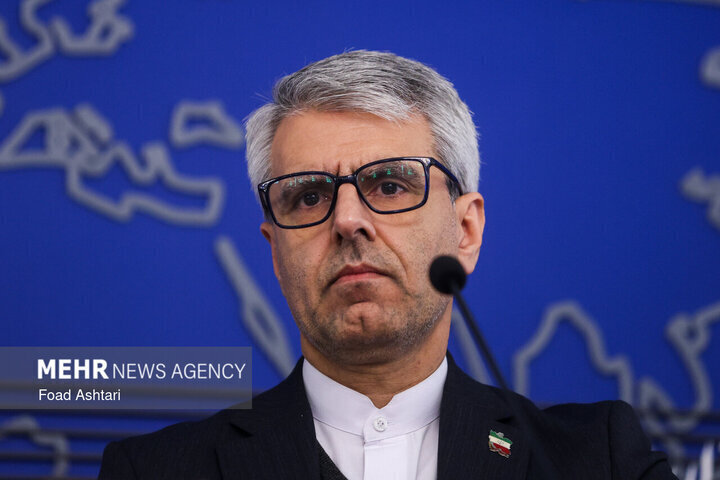
TEHRAN, Mar. 09 (MNA) – Iranian Foreign Ministry Spokesman Esmaeil Baghaei has lashed out at the anti-Iran remarks raised by US Senator Lindsy Graham on partnership of the US government in Iran and Venezuela’s oil reserves.