News
12,736 articles from 50+ sources
Nato allies are ‘working collectively’ to reopen the Strait of Hormuz, says Rutte Nato allies are discussing how they can get the Strait of Hormuz reopened, Nato Secretary General Mark Rutte told reporters during a visit to Norway. “We all agree, of course, that trade has to open up again. And what I know is that allies are working together, discussing how to do that. They’re working on that collectively, to find a way forward,” Rutte said. This comes after comments from French President Emmanuel Macron on Tuesday that France will never take part in operations to unblock the Strait of Hormuz.
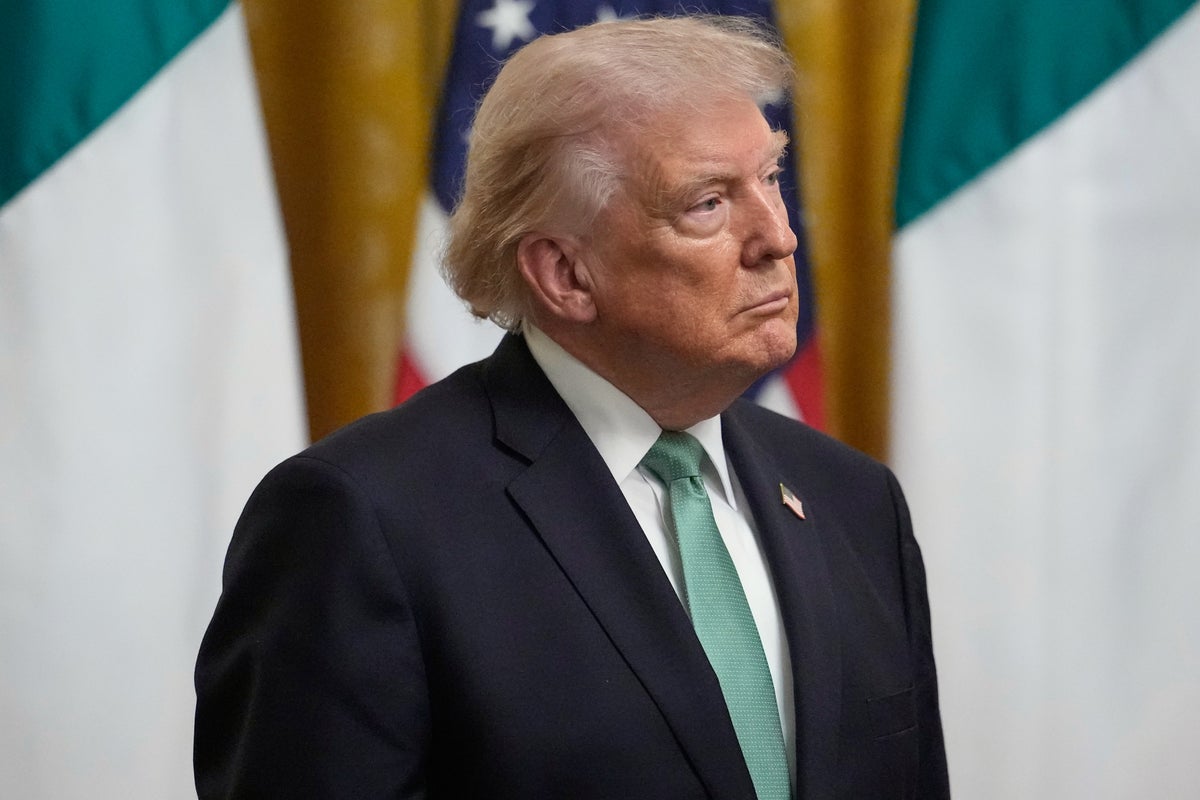
President lately has been fixated on whether it is Straits or Strait of Hormuz but either way, his Truth post botched the execution
TEHRAN, Mar. 18 (MNA) – After attack on Iranian gas facilities, the IRGC issued a warning to get away from oil and gas facilities in Saudi Arabia, UAE and Qatar.

Iran tells Saudi Arabia, Qatar and UAE to evacuate energy facilities after Israel hits gas plant MEE staff on Wed, 03/18/2026 - 13:22 Warning comes shortly after strike on natural gas field in Iran Off Iran has issued an order to Saudi Arabia, Qatar and the UAE to evacuate their petrochemical facilities, implying an impending attack. The warning, issued from state media, comes shortly after a US-Israeli attack on the South Pars gas field in Iran. More to follow... War on Iran News Post Date Override 0 Update Date Mon, 05/04/2020 - 21:19 Update Date Override 0

Experts tell The Independent that mine clearance is a ‘slow and grinding business’

The sea channel has become perilous for oil tankers since Iran claimed control of it during the war. But experts tell Bryony Gooch that Tehran may be willing to grant safe passage to countries willing to engage in diplomacy
How Iran defied Trump threats to emerge as Strait of Hormuz gatekeeper Al Jazeera

submitted by /u/kwentongskyblue to r/worldnews [link] [comments]
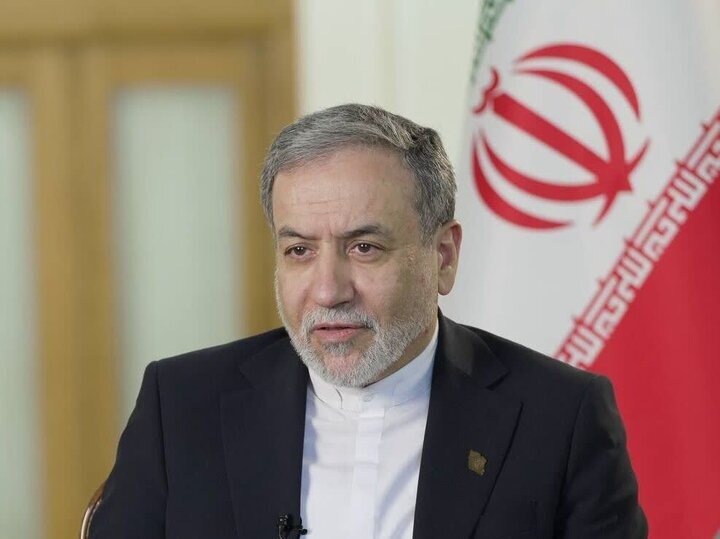
TEHRAN, Mar. 18 (MNA) – Foreign Minister Abbas Araghchi says Iran will outline a new mechanism for the Strait of Hormuz after the termination of war, stressing peaceful transit of ships should be carried out permanently.
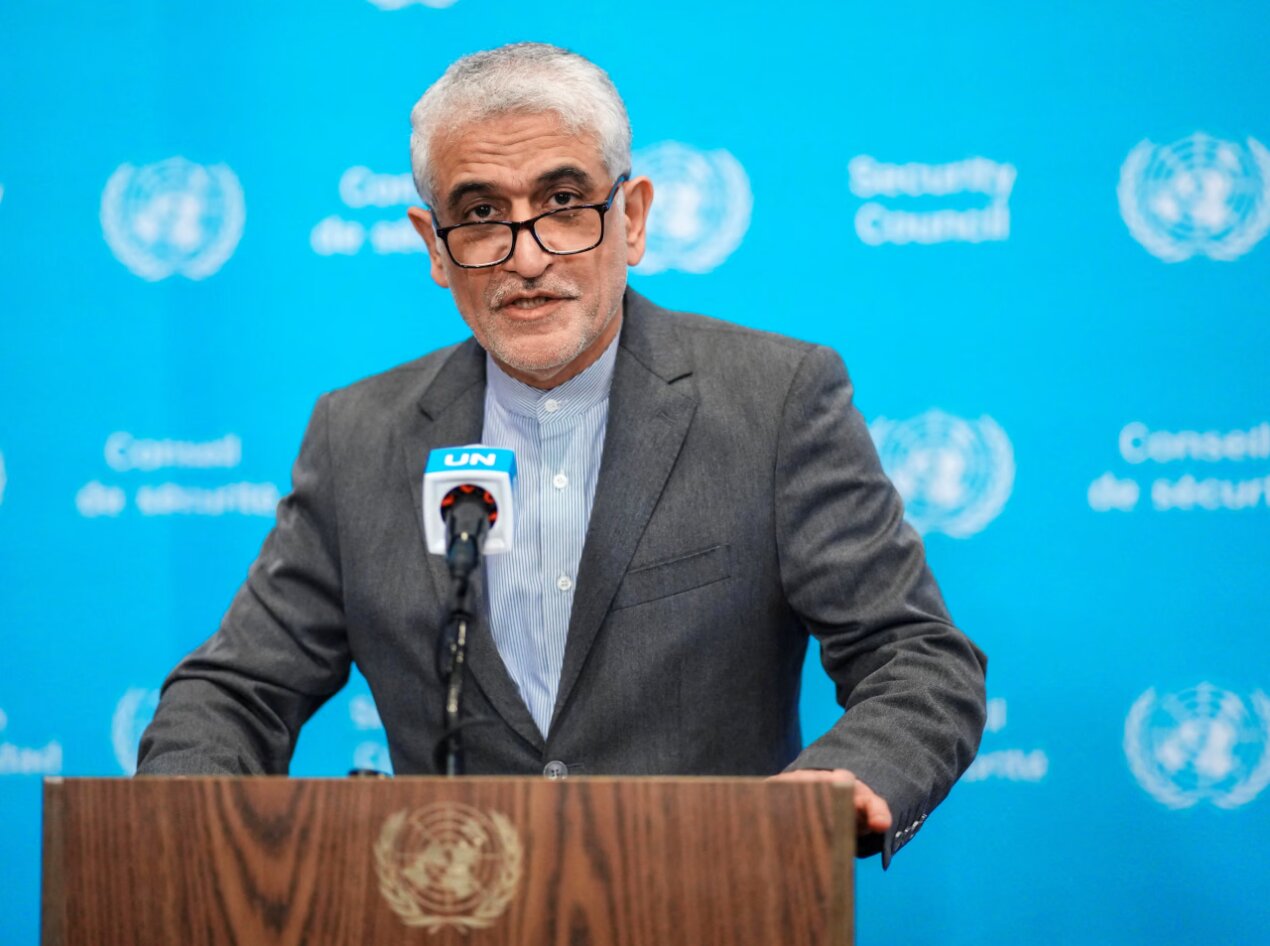
TEHRAN, Mar. 18 (MNA) – Iran has sent seven separate letters to the United Nations and the UN Security Council (UNSC) regarding the US assaults on the country through regional countries.
By Tamiyuki Kihara, Tim Kelly and John Geddie TOKYO, March 18 (Reuters) - Japanese Prime Minister Sanae Takaichi visits the White House on Thursday for meetings that offer U.S. President Donald Trump a chance to lean on a key security partner for support in his Iran war, threatening to strain a decades-old alliance. Takaichi is the first major ally set for face-to-face talks with Trump since he demanded that Japan, among a coalition of nations, send ships to escort tankers through the Strait of Hormuz waterway, largely closed by Iran in the conflict.

Global flights halted as Middle East conflict shuts hubs Airlines around the world have cancelled or suspended flights as the Middle East conflict forces the closure of key aviation hubs, including Dubai, Doha and Abu Dhabi, stranding tens of thousands of passengers. Major carriers, including Air France-KLM, Lufthansa, British Airways, Emirates and Qatar Airways have either halted routes or reduced operations, while others extended suspensions on flights to cities across the Gulf and Israel. The widespread disruption reflects ongoing security concerns and restricted airspace across the region, with airlines continuing to reroute or cancel services as the conflict shows no sign of easing. An aircraft takes off from the airport in Beirut as smoke rises from the site of an Israeli air strike in Lebanese capital on 17 March 2026. ibrahim amro / AFP
Trump says Japan support to secure Strait of Hormuz no longer needed Japan Wire by Kyodo News
Araghchi: US responsible for regional escalation, Iran defending itself Iran’s foreign minister said the United States was responsible for escalating the conflict, adding that Tehran was acting in self-defence. “I accept that our friendly countries are upset and that the people of the region have been harmed,” Abbas Araghchi said in an interview with Al Jazeera, noting that President Masoud Pezeshkian had apologised to regional populations. “But all of this is America’s fault. We did not start this war; we are only defending ourselves,” he added.
Opinion | Why Trump can’t get other countries to help him reopen the Strait of Hormuz MS NOW
Rebuffed by allies, Trump now says U.S. doesn't need help defending the Strait of Hormuz NBC News

By wresting control of the Strait of Hormuz, Iran has turned the tables on US Sean Mathews on Tue, 03/17/2026 - 20:08 If the US fails to push Iran out of Hormuz or washes its hands of the waterway, the repercussions will ripple across global trade and finance, experts say This frame grab, taken on 12 March 2026, shows smoke emerging from the Source Blessing cargo vessel, filmed from another vessel in the Gulf, north of Dubai (Wang Shang/Handout/UGC/AFP) Off Iran spent a decade building up a shadow fleet of tankers untouched by western finance and insurance to evade US sanctions. Now, those vessels are snaking through the Strait of Hormuz while their western-affiliated counterparts are locked out of the key chokepoint. Whereas the US used its heft as the underwriter of the world’s finance system to box out foes like Iran and Russia, the Islamic Republic is using missiles and drones to do the same. At least 17 vessels have been attacked by Iran in the Gulf since the war started on 28 February. Ship owners and operators in the West willing to transit the Strait of Hormuz must now face sky-high insurance premiums. Traffic through the passage has plunged, but more than 20 long-range tankers have exited the waterway since the war on Iran began, according to data shared with Middle East Eye by analytics firm Kepler. (adsbygoogle = window.adsbygoogle || []).push({}); At least six of those vessels are sanctioned by the US or part of the so-called shadow fleet. “Because Iran has been under sanction for such a long time, it has developed coping mechanisms for evasion that now make it less vulnerable to some of the blowback from its own economic weapon: which is the Strait of Hormuz’s closure,” Nicholas Mulder, an assistant professor of history at Cornell University and author of The Economic Weapon: the rise of sanctions as a tool of modern war, told MEE. “Iran has been artificially insulated from the fallout of this war by the US sanctions,” he added. Is the shadow fleet outdated? Look no further than its shadow fleet, which does not rely on western insurance. Iran has been able to export 1.02 million barrels per day (bpd) of oil since the war started, with most of it going to China, Samir Madani, co-founder of TankerTrackers.com, told MEE. Iran averaged 1.69 million bpd last year. (adsbygoogle = window.adsbygoogle || []).push({}); “Given the war, Iran’s exports are impressive,” Matthew Wright, a shipping specialist at Kpler, told MEE. 'The question is whether new coalitions will emerge to provide the global public good of maintaining open sea lanes' - Parag Khanna, author “It is the shadow fleet that is moving through with more freedom,” Wright added. “The fact that Iran is able to move more crude out than any other country is only adding insult to injury to the US.” Iran’s shadow fleet rose in full force in 2018, after the US unilaterally withdrew from a nuclear agreement with Iran and global powers, officially titled the Joint Comprehensive Plan of Action. The US imposed debilitating sanctions on Iran, and has honed in on its oil industry. Any country can impose sanctions on another. For example, Iran imposed sanctions on US President Donald Trump and his former Secretary of State Mike Pompeo in 2021. After Russia invaded Ukraine, it imposed sanctions on 398 members of the US Congress. If US lawmakers had a home in Moscow, those penalties could sting. But sanctions from Iran and Russia on US officials are meaningless, unlike the ones Washington imposes on its foes. US sanctions matter because the US dollar is still the bedrock of global transactions. The key levers of global trade are also based in the West. For example, Belgium is home to Swift, the global messaging network that enables bank-to-bank transfers. The international group of P&I Clubs, which provides 90 percent of the world's ocean-going tonnage with protection and indemnity insurance, is based in the US and allied countries. But new ways of trade are emerging. Western sanctions imposed on Russia over its war on Ukraine pushed it into deeper trade relations with China. The latter buys Russian gas and oil in a combination of Chinese Yuan and Russian Rubles. Likewise, 90 percent of Iran’s oil is exported to China. They have also sidestepped the US dollar and western trade institutions. MEE revealed that Iran paid for Chinese air defence systems with oil. The Wall Street Journal reported that China has an arrangement to pay for Iranian oil through building infrastructure. Some experts say that the US has sanctioned so much of the world’s economy that the term "shadow fleet" is obsolete. “Sanctions are just a political instrument. There is nothing inherently illegal about transporting Iranian crude oil to China. It is only illegal for western companies to facilitate those transports, to provide the ship, insurance etc,” Dirk Siebels, a senior analyst at Risk Intelligence, covering maritime security, told MEE. 'All sanctions have done is create this alternative network' - Nicholas Mulder, author Mulder, at Cornell University, said the US-Israeli war on Iran has underscored that “all sanctions have done is create this alternative network”. But what’s catching the attention of maritime analysts, financiers and diplomats is not just the Iranian vessels moving through the Strait of Hormuz. This week, the Pakistan-flagged ship, the Karachi, also known as the Lorax, became the first vessel carrying non-Iranian crude to transit through Hormuz, with its ship-tracking data, called the Automatic Identification System or AIS, on. The vessel belongs to Pakistan’s state-owned National Shipping Corporation, and its oil was from the UAE. Analysts say Pakistan likely negotiated transit with Iran’s government. According to AIS data, the Lorax hugged Iran’s coast as it transited through the Strait of Hormuz. On Monday, Iranian Foreign Minister Abbas Araghchi thanked Pakistan for its "solidarity" with the Islamic Republic. And Pakistan is not the only country. (adsbygoogle = window.adsbygoogle || []).push({}); The 'Houthi playbook' Two Indian-flagged tankers carrying liquefied petroleum gas reached Indian ports after sailing through the strait over the weekend. India’s foreign minister, Subrahmanyam Jaishankar, told The Financial Times this week that his country was in direct talks with Iran for transit. Other vessels have been broadcasting that they are Chinese-owned or manned by Chinese crews in an attempt to secure safe passage, Michelle Wiese Bockmann, a shipping and commodities analyst, told MEE. It’s still early days, but Iran’s decision to selectively filter vessels through Hormuz recalls how its allies, the Houthis in Yemen, attempted to write their own trading system in the Red Sea. 'Swinging into action:' The Saudi Arabian pipeline designed to bypass Hormuz Read More » After Israel’s attack on Gaza, MEE reported that the Houthis used a combination of open-source data and Iranian intelligence to target vessels linked to the US, Europe and Israel, while allowing those with ties to China and Russia safe passage. That proved hard in a global economy. For example, a Chinese-owned Cosco bulk carrier can bring Chinese goods to a customer in France or the UK. The Houthis had lots of friendly fire, but their system caught the attention of Russian President Vladimir Putin, who mulled providing them anti-ship cruise missiles, MEE revealed first. Bockmann said Iran is taking the Houthis ' game plan and ramping it up a notch with superior intelligence and technology. “The Iranians have the Houthi playbook out, and it’s very, very useful,” she told MEE. “It works well keeping western-affiliated vessels out of the area.” “The Houthis had a virtual corridor system in which ship owners emailed them for permission to transit,” she said. “The Houthis weren’t the best at hitting what they were aiming at, but they tried.” Iran has had direct hits on US military bases and pounded gleaming cities in the UAE, Qatar, Kuwait, and Bahrain. But the closure of the Strait of Hormuz is shaping up to be the nastiest setback for the Trump administration in the US-Israeli war. The US’s status as the world’s dominant superpower rests in large part on its ability to police global trade and finance. Securing sea lanes is as foundational as being a dependable debt issuer. The Trump administration has struggled to come up with a solution or an answer to Iran’s control of the waterway. Can the US control the world's sea lanes? Treasury Secretary Scott Bessent said on Monday that the US is allowing Iranian oil tankers to transit the Strait of Hormuz. Practically speaking, he is right. The US has pummelled Iran with air strikes and has the ability to blow Iranian boats out of the water. But that would likely invite more reciprocal Iranian strikes and anger China, whose refiners have purchased the oil. It would also drive energy prices higher, experts say. Some analysts say Trump may feel pressured to launch a ground-invasion of Iran in an attempt to take back control. At least 2,500 Marines are sailing from East Asia to the Middle East and could be used in the operation. 'Suez moment': US missteps in Iran echo across East Asia to the Gulf and Europe Read More » This week, Trump demanded help to reopen the waterway but also questioned why the US should even bother. Trump called on the US’s Nato allies to help Washington secure the area. After being rebuffed by the alliance’s European members, Trump lashed out on social media on Tuesday, saying: “We no longer ‘need,’ or desire, the Nato Countries’ assistance _ WE NEVER DID!” “Why are we maintaining the Hormuz Strait when it’s really there for China and many other countries? Why aren’t they doing it?” Trump lamented to reporters earlier this week. “You could make the case that maybe we shouldn't even be there at all. We have a lot of oil,” Trump said. While it’s true the US produces most of the oil and gas it consumes, energy prices are determined by global markets, experts say. That’s why US gasoline prices have risen over 25 percent since the war started. The Arab Gulf countries that export through Hormuz also sell their oil and natural gas in US dollars, giving heft to the currency. They buy US debt and American stocks. Parag Khanna, a geopolitical analyst based in Singapore and author of The Future is Asian: Commerce, Conflict and Culture in the 21st Century, told MEE that the deals India and Pakistan have cut with Iran to transit the waterway are already proof that the US has lost control. “What you are seeing is evidence of a bottom-up alternative [to the US] that is episodic, but could become structural,” he told MEE “The question is whether new coalitions will emerge to provide the global public good of maintaining open sea lanes. That is the public good the US purported to provide until it decided to undermine it by bombing anyone it wants to.” War on Iran News Post Date Override 0 Update Date Mon, 05/04/2020 - 21:19 Update Date Override 0

submitted by /u/Sysipho to r/worldnews [link] [comments]
Trump says US does not need Nato after being rebuffed over strait of Hormuz The Guardian
UAE could join international effort to secure Strait of Hormuz, says adviser Anwar Gargash, a diplomatic adviser to the president of the UAE, said on Tuesday that his country could join an international effort led by the US to ensure the safety and security of the Strait of Hormuz. Speaking in an online event organised by American think tank the Council on Foreign Relations (CFR), Gargash said that the UAE does not currently have active talks with Iran. Iran moved to close the strait last week in response to Israel and US attacks on the country, blocking a passage where more than 20 percent of the world’s oil and gas supply moves through.