News
12,736 articles from 50+ sources
Live Updates: Iran war keeps gas prices up, with Strait of Hormuz paralyzed despite Trump's demands CBS News
Cuba has not received oil shipments since early January amid US pressure, worsening humanitarian crisis on the island.

Trump clashes with Nato countries over refusal to help reopen Strait of Hormuz Yasmine El-Sabawi on Mon, 03/16/2026 - 17:45 The US president has been pleading with international powers to step in, but has so far been rebuffed by major western allies US President Donald Trump speaks during a lunch with the Kennedy Center board members in the East Room of the White House in Washington, DC, on 16 March 2026 (Jonathan Ernst/Reuters) Off President Donald Trump has expressed his anger at a lack of help from Nato countries cooperating with the US to reopen the Strait of Hormuz, a narrow waterway through which more than 20 percent of the world's crude oil is normally transported. On Monday, he announced that "numerous countries have told me they're on the way", without naming any publicly. "Some are very enthusiastic about it, and some countries that we've helped for many, many years, we've protected them from horrible outside sources, and they weren't that enthusiastic. And the level of enthusiasm matters to me," he said. Experts have warned that escorting tankers or undertaking any mission in the strait would be a "very dangerous mission". European leaders in particular have made it clear they do not want to risk moves that would drag them into the wider war with Iran - particularly as they view the US-Israeli attacks on the Islamic Republic as illegal and without a United Nations mandate in the first place. (adsbygoogle = window.adsbygoogle || []).push({}); Germany, France and the UK are among the countries that have already rejected getting involved. Trump said he was "surprised" and "not happy" with the UK, in particular. Trump also suggested that because the US funds the bulk of Nato, and has also been funding the bulk of Ukraine's defences against Russia, Brussels owes Washington. "You can ask [Russian President Vladimir] Putin. Putin fears us. He has no fear of Europe whatsoever," Trump said. When asked by a reporter whether he had discussed the matter with French President Emmanuel Macron, Trump said he had done so but that he did not "do a hard sell on them". (adsbygoogle = window.adsbygoogle || []).push({}); "Because my attitude is, we don't need anybody," Trump said, seemingly walking back his remarks from moments earlier. "We're the strongest nation in the world. We have the strongest military by far. We don't need them. But it's interesting. I'm almost doing it in some cases, not because we need them, because I want to find out how they react, because I've been saying for years that [if] we ever did need them, they won't be there." 'It's their territory' Two weeks into the US-Israeli war on Iran, Iran has effectively choked off the maritime passage, barring a few select vessels from friendly nations. European allies refuse US request to help open Strait of Hormuz Read More » The strait is home to anywhere from 20-25 percent of the global seaborne oil trade, amounting to around $600bn annually. It also transports about 20 percent of the global liquefied natural gas supply. For days, Trump has pleaded with international powers to send warships to the strait to escort commercial tankers, after oil shot up well past $100 a barrel, creating ripple effects at petrol pumps around the world. But any such move by any country would undoubtedly be perceived by the Iranians as a provocation. "I’m demanding that these countries come in and protect their own territory - because it is their territory," Trump told reporters on Sunday aboard Air Force One. "They should come and they should help us protect it. You could make the case that maybe we shouldn’t even be there at all, because we don’t need it. We have a lot of oil. We’re the number one producer anywhere in the world, times two," he said. 'Make your own decision' Trump recounted another conversation with UK Prime Minister Keir Starmer, slamming him for consulting with his advisers on whether to assist US efforts. "I said, 'You don't need to meet with a team. You're the prime minister, you can make your own decision. Why do you have to meet with your team to find out whether or not you're gonna send some minesweepers to us or to step up?'" "There are no policy solutions to a prolonged closure of the Strait of Hormuz," former White House energy adviser Bob McNally told the CBS News programme "60 Minutes" on Sunday. (adsbygoogle = window.adsbygoogle || []).push({}); "The tools range from marginal, through symbolic, to deeply unwise," he added. US senator says Trump has ‘lost control’ of war on Iran Read More » Oil-rich Gulf states, which are bearing the brunt of Iran's retaliatory attacks, given they host a plethora of US assets, have pointed to the Trump administration's lack of planning and preparedness for a weeks-long, if not months-long, war. Trump on Monday said he predicted Hormuz would be shut down by Iran, even though he also insisted that its navy has been "obliterated" and thereby ineffective. "I knew the strait would be a weapon," he told reporters. He offered no explanation for failing to take steps to prevent such an outcome, particularly as Americans are hit with soaring energy prices that will likely be reflected on the midterm election ballots in November. At the same time, Trump seemingly did not predict how aggressively his Gulf partners would be targeted. "[Iran] hit Qatar, Saudi Arabia, UAE, Bahrain, Kuwait. Nobody expected that. We were shocked," he said. Kuwait has so far had the most fatalities on its territory - a total of 11, including six American soldiers, four Kuwaiti soldiers, and one Iranian child. Trump also insisted on Monday that the Iranians were talking to the Americans, and that they want to make a deal, but so far Iran has publicly denied any negotiations, going so far as to say they will not negotiate with the US until certain preconditions are met. War on Iran Washington News Post Date Override 0 Update Date Mon, 05/04/2020 - 21:19 Update Date Override 0
Trump calls on allies to help guard the Strait of Hormuz. Most have refused Los Angeles Times
President Donald Trump is pressuring allies to help secure the Strait of Hormuz, a key maritime choke point that has effectively been closed by Iran in response to the US-Israeli war launched last month. Trump highlighted the dangers in remarks on Monday, noting that a "single terrorist" could "put something in the water" or shoot a missile at ships transiting the narrow waterway bordering the Islamic republic. Trump said a number of countries that he did not specify had committed to help, while taking aim at others that were not "enthusiastic" about doing so.

submitted by /u/Creamy_Frosting_2436 to r/worldnews [link] [comments]
Trump's 'Art of the Deal' can't reopen the Strait of Hormuz — and it's threatening a recession Fortune

Effective closure of strait of Hormuz also affecting Bangladesh, India and Pakistan, which have brought in crisis measures Sri Lanka is introducing a shorter four-day working week to preserve its shrinking fuel and gas reserves, as the Middle East conflict continues to severely disrupt energy supplies in the region. Countries across south Asia are facing crippling shortages of fuel and LPG gas, which are used for everything from home cooking to cremating bodies, as most supplies have been held up in the Gulf since the US and Israel began bombing Iran. Continue reading...
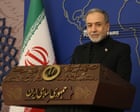
Abbas Araghchi demands clarification on reports Saudi crown prince had urged Donald Trump to ‘hit the Iranians hard’ Middle East crisis – live updates Some Gulf states hosting US forces may be covertly encouraging the slaughter of Iranians, Iran’s foreign minister has claimed in a thinly-veiled attack on Saudi Arabia. Abbas Araghchi demanded clarification on reports that Mohammed bin Salman was in regular private conversations with Donald Trump urging the US president “to continue hitting the Iranians hard”. Continue reading...
US allies reject Trump’s request for help in Strait of Hormuz Straight Arrow News - SAN
Tensions are soaring in the Strait of Hormuz as Iranian attacks disrupt global oil flows, prompting Trump to push allies and major economies to help reopen the vital waterway. Here’s how different countries are responding. #dwcurrentaffairs facebook.com

White House seems to have failed to anticipate that Tehran would fight back by trying to impose costs on the west Middle East crisis – live updates If there was a moment when the absence of a US strategy on Iran was exposed, then this was it. Donald Trump demanded on Saturday that the UK, China, France, Japan and others participate in a naval escort for oil tankers through the strait of Hormuz. Despite launching the attack on Iran, with Israel, the White House does not seem to have fully anticipated what was likely to follow. Iran had few good military options for fighting back, but attacking US bases, US allies and merchant shipping in the Gulf was the most obvious response – to try to impose costs on the west. Continue reading...
European countries reject Trump’s call for help to reopen strait of Hormuz The Guardian
Iran turns Strait of Hormuz into strategic pressure tool Peoples Dispatch
Trump slams some allies for not helping US reopen Strait of Hormuz ایران اینترنشنال
Governments remain silent or reject Trump's proposed naval coalition Donald Trump's suggested multinational naval coalition to reopen the Strait of Hormuz has still not had any volunteers, with governments rejecting the idea outright or refusing to engage with the US president on the subject. The proposal consisted of sending warships to the strait to get trade up and running again, as 20 percent of the world's oil normally passes through it. In Europe, some leaders were unequivocal. German Foreign Minister Johann Wadephul said Berlin had no intention of joining military operations. Beyond Europe, both Japan and Australia have said they do not intend to send ships to the region. Donald Trump asked the world to join a multinational naval coalition to keep the Strait of Hormuz open. March 16, 2026
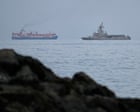
By imposing costs on the global economy, the Iranian government is ensuring that further attacks are not contemplated The US and Israeli decision to attack Iran has sent economic shockwaves around the world. About 20% of global oil supplies have been effectively blocked from transiting the strait of Hormuz since Iran began attacking ships, resulting in a huge jump in oil prices. Militarily, while the United States has the firepower to significantly reduce Iran’s capacity to use the strait as leverage, it is unlikely to be able to eliminate the threat entirely. Reopening the strait, therefore, is not only a question of military capabilities but of diplomacy, and to negotiate it is necessary to understand what each party to the conflict is trying to achieve. Continue reading...
Oil Crisis: US Allowing Iranian Tankers Through Strait of Hormuz Asia Financial
Sri Lanka declares shorter work week over fuel scarcity Fears over the scarcity of fuel and the war on Iran's uncertain future has forced Sri Lanka to declare a shorter work week. The move, it is hoped, will conserve its limited fuel reserves as transportation of fuel and other goods through the Strait of Hormuz - which normally carries 20 percent of world exports - remains blocked. In 2024 In 2024 around 84 percent of the 2o million barrels a day crude oil and other condensate shipments moving through the strait went to Asia.

European allies refuse US request to help open Strait of Hormuz MEE staff on Mon, 03/16/2026 - 13:18 UK, Germany, Spain and France among those unwilling to send navy to re-open crucial waterway Smoke rises from the Thai bulk carrier 'Mayuree Naree' near the Strait of Hormuz after an attack, on 11 March 2026 (Handout/Royal Thai Navy/AFP) Off European allies have pushed back on a US request to help re-open the Strait of Hormuz, with Germany stating outright that the conflict with Iran was "not Nato's war". Iran moved to close the strait last week in response to Israel and US attacks on the country, blocking a passage where more than 20 percent of the world’s oil and gas supply moves through. Despite a call from US President Donald Trump over the weekend for allied assistance, there has been widespread reluctance to get involved in the war. German Chancellor Friedrich Merz's spokesman said the conflict has "nothing to do with Nato". "Nato is an alliance for the defence of territory," said Stefan Kornelius. "The mandate to deploy Nato is lacking" in the current situation, he told reporters. (adsbygoogle = window.adsbygoogle || []).push({}); German Defence Minister Boris Pistorius added that while there would be "no military participation", they would seek a diplomatic solution to the crisis. For his part, UK Prime Minister Keir Starmer also ruled out a Nato mission, but said he was working with allies to come up with a "viable" plan to reopen the waterway. "We're working with all of our allies, including our European partners, to bring together a viable collective plan that can restore freedom of navigation in the region as quickly as possible and ease the economic impacts," he said in Downing Street. "Let me be clear: that won't be, and it's never been envisioned to be, a Nato mission." Energy Secretary Ed Miliband said on Sunday that the British government was considering sending minesweeping drones rather than warships to Hormuz. (adsbygoogle = window.adsbygoogle || []).push({}); The French foreign ministry also confirmed that France would not send ships to the Strait, writing on X that its naval mission is in the Eastern Mediterranean and remains "defensive". 'Very bad for the future of Nato' Spain, which has been the most vocal critic of the war on Iran in Europe, also ruled it out, with Defence Minister Margarita Robles saying Madrid was "absolutely not" mulling a military contribution. Poland, likewise, dismissed any involvement in a naval operation to open the strait. The lukewarm response from European capitals came after Japan and Australia voiced similar sentiments earlier on Monday, with Canberra noting it would not be sending a navy ship to the Strait of Hormuz. Britain drawn closer to Iran war as a reluctant Starmer moves to appease Trump Read More » Trump has warned that the refusal of allied countries to help open up the strait would be "very bad for the future of Nato", without elaborating. A number of Scandinavian and Baltic countries, which have been keen to ensure US support over Russia's activities near their borders, suggested they were not closing the door on the issue. "We did not want this war. From day one, we have called for de-escalation," Denmark's foreign minister, Lars Lokke Rasmussen, told Danish media in Brussels before an EU foreign ministers' meeting. "That said, I believe we need to keep an open mind and look at how we can contribute." Lithuanian Foreign Minister Kestutis Budrys told reporters in Brussels: "Nato countries should consider" a US request for help but said they would "need to see the entire operational environment and the capabilities with which we could contribute". His Estonian counterpart said his country was "always ready for discussions with the US, including now regarding the situation in the Strait of Hormuz". War on Iran News Post Date Override 0 Update Date Mon, 05/04/2020 - 21:19 Update Date Override 0