News
12,736 articles from 50+ sources
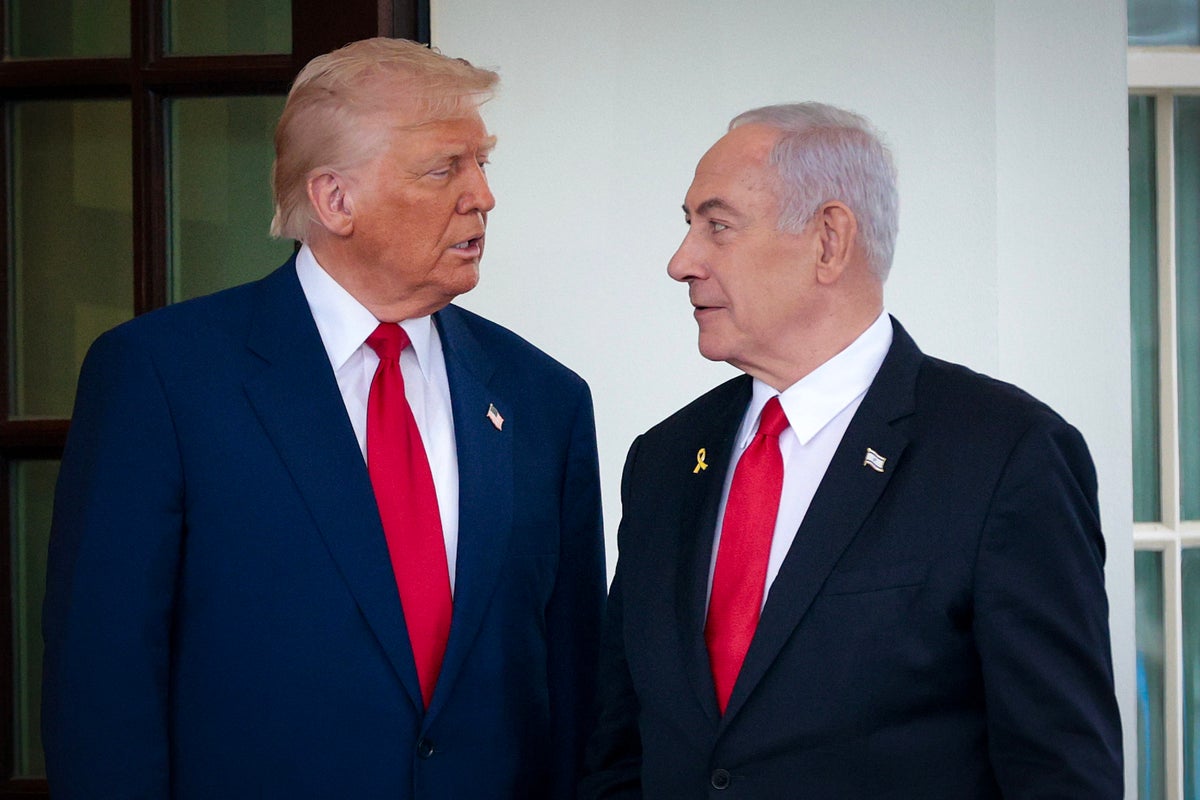
the war with Iran has a very different meaning for Israel and the US

TEHRAN, Mar. 18 (MNA) – The Palestinian Islamic Resistance Movement, Hamas, has expressed its condolences on the martyrdom of Secretary of Iran’s Supreme National Security Council (SNSC) Ali Larijani.

'We are crazy radicals': Israel's anti-war protesters struggle against ruling consensus Jared Hillel on Wed, 03/18/2026 - 12:21 Israel's political and media class back the war on Iran, with the public following suit Protesters hold placards during a Stop The War demonstration, amid the US-Israel war on Iran, in central Tel Aviv, Israel, 7 March 2026 (Dylan Martinez/Reuters) Off On Saturday night, as the war on Iran entered its third week, a small group of Israelis assembled in central Jerusalem. “One, two, three four, we don’t want your fucking war,” chanted protesters, some dressed in orange jumpsuits and donning masks bearing the face of Israeli Prime Minister Benjamin Netanyahu. Earlier that day, a protest with similar aims had been held in Tel Aviv. Neither demonstration gathered more than a hundred people. One of the protesters was Lawrence Shenkin, a 23-year-old Orthodox Jew. “My God does not want the state, that claims to be in his name, to be waging wars and consistently killing thousands of people,” he told Middle East Eye. Despite a civilian death toll that continues to mount, both domestically and across the Middle East, Shenkin knows his opinion places him in the minority. (adsbygoogle = window.adsbygoogle || []).push({}); As it stands, 15 people have died in Israel, including nine on the second day after a direct strike on a building in Beit Shemesh, just west of Jerusalem. These figures pale in comparison to the carnage unleashed by Israel in both Iran and Lebanon, where thousands are dead and millions displaced. Despite the rising casualties, calling for an end to the violence is a fringe position in Israel. “We are viewed as crazy radicals,” says Mitan, a 46-year-old woman who attended the protest in Tel Aviv earlier that day, before making her way north to Jerusalem. “Trump and Bibi [Netanyahu] dragged us into another pointless war. They try to keep us quiet but we can't sit at home anymore.” Israel’s anti war-coalition While there is an elite consensus in Israeli society that this war will bring safety to the country, a few civil society voices have offered dissent. As well as a handful of protests, 80 Jewish and Arab organisations recently signed an open letter to US President Donald Trump and Netanyahu. Put together by It’s Time, a coalition of peacebuilding groups, the letter calls to “stop the war with Iran - a war whose goals are unattainable and that lacks a clear exit strategy”. (adsbygoogle = window.adsbygoogle || []).push({}); For Mika Almog, creative director for It’s Time and granddaughter of former Israeli prime minister Shimon Peres, the war has caused Israeli society more harm than good. Schools are closed, the economy is hit and, she says, “our children are in constant danger of getting killed”. 'We are viewed as crazy radicals... Trump and Bibi dragged us into another pointless war' - Mitan, Israeli anti-war protester Almog says the current war did not begin in a vacuum. She traces regional instability back to the Israeli-Palestinian conflict, something Netanyahu has shown no willingness to solve through diplomatic means. “There are seven million Palestinians who are living under occupation, who don’t have a future to look forward to,” Almog says. “This idea that you can keep them in this situation and it's not going to deteriorate is ludicrous.” On top of pushing for diplomacy instead of never-ending military campaigns, Almog emphasises that one of the coalition's main objectives is to bring the idea of peace back into Israeli discourse. She stresses that since the assassination of then-Israeli prime minister Yitzhak Rabin in 1995, “peace and negotiations have not been presented to the public as realistic options”. Almog notes that when the public is offered a realistic option of peace, willingness grows significantly. “When the only thing we have is war, then people end up supporting war,” she says. Political class lines up for war While studies show that support for peace in Israeli society does increase when concrete diplomatic options are presented, voices presenting such an alternative are nowhere to be found in the current political establishment. While Netanyahu declared a “historic victory” over Iran a mere eight months ago, the prime minister has made clear that this new war against Iran is once again essential, proclaiming that “we are in a fateful campaign for our very existence”. For Haaretz columnist Gideon Levy, this war has been Netanyahu's “life project”. The veteran Israeli journalist, who also writes for Middle East Eye, says that even if fearmongering about Iran serves Netanyahu politically, “he really does believe that Iran is an existential danger”. 'There are seven million Palestinians who are living under occupation, who don’t have a future to look forward to' - Mika Almog, It's Time coalition Opposition parties have cemented this consensus. Rather than push for peaceful alternatives, many have outflanked Netanyahu, pushing even more hawkish, right-wing positions. On the first day of the war, leading political rival Naftali Bennett backed the army and prime minister, writing on X that, “The entire nation of Israel stands behind you until the destruction of the Iranian threat.” Opposition Leader Yair Lapid, who is often described as a centrist, has called on the army to “destroy all the oil fields and energy industry” on Kharg Island, Tehran’s main oil export hub. But it's not only politicians who have rallied round the attacks on Iran. Israel’s media, much of which has portrayed the genocide in Gaza as an act of self-defence, has once again uncritically touted the views of the political establishment. Levy notes that within the mainstream, “raising doubts about the war is not legitimate, you will not hear it or see it”. One of the few Knesset members to speak out, Ofer Cassif of the communist-led Hadash-Ta'al coalition, has called the war “an imperialist aggression against the Iranian people”. But inside a united parliament, his calls for a diplomatic resolution are almost invisible. Israeli public supports war on Iran Given the rabid support from mainstream media and politicians, it’s not surprising that Israel’s public is heavily in favour of the war. According to the latest polls from the Israel Democracy Institute, 92.5 percent of Israelis support Operation Roaring Lion, the codename for this war. The picture is different among Palestinian citizens of Israel, with 65 percent voicing opposition. (adsbygoogle = window.adsbygoogle || []).push({}); A large part of this support stems from the belief that Iran poses the single largest threat to Israel’s security. Ofer Shelah, former Knesset member and researcher at the Institute for National Security Studies (INSS), explains that for over a decade, Israelis have come to see Iran as “the source of all evil”. Shelah argues that this perceived danger legitimises each military campaign, even if the death toll domestically continues to rise. “It's a rationale for almost everything we do, because if we don't do it, we will be faced with more October 7ths.” A protester in central Tel Aviv, Israel, 7 March 2026 (Dylan Martinez/Reuters) And yet, despite facing a prevailing consensus that a continued war is what’s right for the country, Israel’s pacifist movement perseveres. For Shenkin, the small recent protests are an opportunity to call for a new government, one that can potentially effect change. “I hope we see a government that includes Arab, moderate and left-wing voices, and that they're given some political power that we see put into action,” he says. While some activists express optimism, the circumstances under which they are operating are undeniably difficult. Demonstrations are small, and while some passersby honk to show support, others roll down their windows to hurl insults at protesters. They have also had to contend with an aggressive police force. A recent demonstration in Tel Aviv was broken up within 20 minutes, and activists in both Haifa and Tel Aviv have been arrested. Levy points out that if the war continues to drag on, further resistance may begin to spring up. “Right now, the price is reasonable,” he says. “Let's wait, if it really becomes a war of months, criticism will get stronger.” For now, the movement remains small, with a message that doesn’t resonate with the broader public. “War is a temporary measure with temporary solutions,” says Shenkin, “but another head will rear itself until we make peace.” Inside Israel Jerusalem News Post Date Override 0 Update Date Mon, 05/04/2020 - 21:19 Update Date Override 0
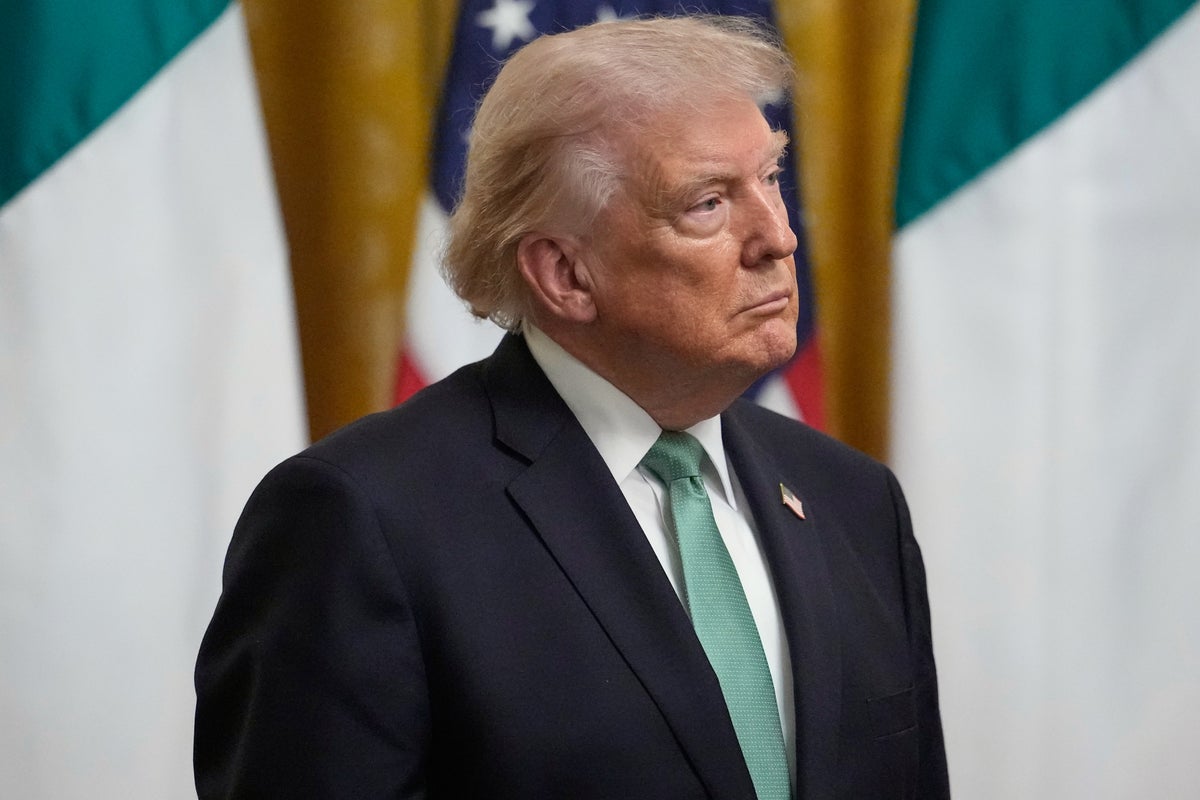
President lately has been fixated on whether it is Straits or Strait of Hormuz but either way, his Truth post botched the execution
Iran orders evacuation of Gulf energy faculties in response to Israel strike Fars News Agency reports that Iran intends to respond to strikes on its gas faculties by targeting “enemy infrastructure that was previously thought to be safe”, citing Iranian military sources. The Iran Revolutionary Guard Corps (IRGC) has posted an “urgent warning” for people to evacuate five energy facilities in the Gulf. Its targets include: the Samref refinery, the al-Jubail petrochemical complex and Masaiid Holding Company in Saudi Arabia, the al-Hosn gas field in the United Arab Emirates and the Ras Laffan refinery in Qatar. The statement has said that "these centres have become direct and legitimate targets and will be targeted in the coming hours”, calling the attack on their gas faculty by Israel a “war crime”.
CAIRO/GAZA, March 18 (Reuters) - Israel has killed nearly a dozen Gaza police officers this week as it steps up attacks on a Hamas-run force that the militants have used to re-establish governance in areas under their control, Gaza authorities say. Hamas' nearly 10,000 police officers have emerged as a sticking point in talks to advance U.S. President Donald Trump's plan for Gaza. Hamas wants them included in a new police force envisioned under the plan. Israel rejects involvement of any officers with Hamas affiliations.
Israeli air force hits Iranian gas infrastructure Israeli jets hit natural gas facilties in Iran, according to Israeli officials and Iranian state media. South Pars is the world’s largest natural gas field and is located in the Bushehr province, southern Iran. The facility is now on fire and rescue and fire departments have arrived at the scene, according to Fars News Agency.

Israeli strikes on Lebanon leave a classroom of children dead or wounded every day, UN says Fleur Hargreaves on Wed, 03/18/2026 - 11:58 Unicef says Israeli attacks killing or wounding 30 children daily, the equivalent of a classroom A child sleeps alongside family belongings in a makeshift encampment along the waterfront in Beirut on 10 March 2026 (AFP) Off Israel’s war on Lebanon has killed or wounded the equivalent of an entire classroom of children daily, according to a top official of the UN children’s agency. Lebanon’s health ministry reported that Israeli strikes have killed at least 111 children and wounded 334 since Israel expanded its attacks on Lebanon two weeks ago. “That’s a classroom of children every day since the beginning of the war that’s either killed or injured in Lebanon,” Unicef deputy executive director, Ted Chaiban, told Reuters in Beirut on Tuesday. “They’ve paid a terrible price. And the first thing we’re calling for is a de-escalation, a political way forward to this war.” Israeli strikes have killed more than 900 people since 2 March and displaced more than one million, including 350,000 children. (adsbygoogle = window.adsbygoogle || []).push({}); “It’s completely disrupting children’s lives. No home, no school, no sense of normalcy,” Chaiban said. Displaced families interviewed by Reuters said the shelters they are taking refuge in have limited electricity, no heating and not enough bathrooms or running water. At least 38 health workers have also been killed in Israeli strikes in the last two weeks, and civilian infrastructure has been targeted. “There is no place for attacking health infrastructure, water infrastructure, schools. They all need to be places that are protected,” Chaiban said. Save the Children’s director for Lebanon, Nora Ingdal, called these air strikes “devastating” and emphasised that “these are not just numbers – these are young lives cut short and children whose futures have been forever scarred by war.” (adsbygoogle = window.adsbygoogle || []).push({}); 'This is only the beginning' The Israeli army relaunched its attacks on Lebanon following strikes by Hezbollah on 28 February in retaliation for the killing of the Iranian supreme leader in a joint US-Israeli bombing campaign on Iran. Before that, Israel had violated a November 2024 ceasefire with Hezbollah hundreds of times through near-daily attacks on Lebanon and the military occupation of territories in the south. Israel’s Finance Minister Bezalel Smotrich said on 5 March that Beirut’s southern suburbs “will look like Khan Younis” in reference to the destroyed city in southern Gaza. Israeli defence minister threatens to take Lebanese territory and keep razing infrastructure Read More » About 14 percent of Lebanon’s territory is currently under Israeli orders for residents to leave their homes, according to the Norwegian Refugee Council. The Israeil military on Friday destroyed a bridge over the Litani River, which bisects southern Lebanon from east to west. On Wednesday, the military said it would target bridges and crossings over the Litani, essentially cutting off a large part of the south from the rest of the country. Israeli Defence Minister Israel Katz threatened the Lebanese government that Israel will continue attacks on the region until Hezbollah is disarmed. “This is only the beginning, and the Lebanese government and the Lebanese state will pay an increasing price through damage to Lebanese national infrastructure that is used by Hezbollah terrorists,” Katz warned. However, France’s special envoy for Lebanon has said it is unrealistic to expect Beirut to disarm Hezbollah, a goal which Israel's long occupation of southern Lebanon from 1982 to 2000 failed to achieve, in such a short time whilst under bombardment. The leaders of Canada, France, Germany, Italy and the UK issued a joint statement on Monday, warning that “a significant Israeli ground offensive would have devastating humanitarian consequences” and “must be averted”. Hezbollah has insisted that it cannot disarm as long as Israel poses a threat to the region. Israel's war on Lebanon News Post Date Override 0 Update Date Mon, 05/04/2020 - 21:19 Update Date Override 0
TEHRAN, Mar. 18 (MNA) – After attack on Iranian gas facilities, the IRGC issued a warning to get away from oil and gas facilities in Saudi Arabia, UAE and Qatar.

Iran tells Saudi Arabia, Qatar and UAE to evacuate energy facilities after Israel hits gas plant MEE staff on Wed, 03/18/2026 - 13:22 Warning comes shortly after strike on natural gas field in Iran Off Iran has issued an order to Saudi Arabia, Qatar and the UAE to evacuate their petrochemical facilities, implying an impending attack. The warning, issued from state media, comes shortly after a US-Israeli attack on the South Pars gas field in Iran. More to follow... War on Iran News Post Date Override 0 Update Date Mon, 05/04/2020 - 21:19 Update Date Override 0

Rising energy costs caused by the Iran war have forced Egypt to hike fuel and cooking gas prices, hitting the country's already struggling poor and middle classes hard
How Dubai and UAE are being affected by Iran attacks and US-Israeli war

Sky News 'to end ties with UAE-based Sky News Arabia' over Sudan war Alex MacDonald on Wed, 03/18/2026 - 11:33 Sky staff say outlet became 'mouthpiece' for UAE and whitewashed RSF atrocities in Darfur Emiratis stand in front of the Sky News Arabia logo during the launch of the network in Abu Dhabi on 6 May 2012 (AFP/Marwan Naamani) Off Sky News is set to sever ties with its UAE-based Arabic sister channel over the broadcaster's coverage of the war in Sudan. According to the Daily Telegraph, the company will withdraw Sky News Arabia’s licence to use its brand next year after it was accused of whitewashing human rights abuses carried out by the paramilitary Rapid Support Forces (RSF) in Sudan. The group has been accused of genocide and mass sexual violence in Darfur. Mounting evidence shows the UAE is supporting the paramilitaries, despite Emirati denials. Sky executives told the UAE’s state media business IMI of its decision late last year, according to the Telegraph. However, an agreement to salvage the partnership could reportedly still be reached. A major new report last week by Yale’s Humanitarian Research Lab (HRL) with Nasa’s Harvest programme revealed that the RSF waged a campaign of starvation against the people of el-Fasher in Darfur, razing dozens of farming villages and devastating crop production around the city. (adsbygoogle = window.adsbygoogle || []).push({}); The report used satellite imagery and other data to identify 41 agricultural communities attacked between March and June 2024, the first months of a siege that went on for more than 500 days. Over the following months, two-thirds of those communities showed “no visible pattern of life”, suggesting residents had been displaced or killed. During the same period, the area of land being farmed declined by more than 80 percent. El-Fasher, the capital of North Darfur in western Sudan, was finally taken from the Sudanese Armed Forces (SAF) by the RSF in October 2025, following a lengthy siege that saw the paramilitary construct a network of earth walls around the city, trapping hundreds of thousands of residents inside a “kill box”. While the UAE continues to deny the allegations, Middle East Eye has reported extensively on its support for the RSF, citing evidence including satellite imagery, flight logs, weapons serial numbers and multiple sources. UK-based former Sky executives told the Telegraph in November that Sky News Arabia had become a mouthpiece for the UAE’s rulers and had not accurately reported atrocities carried out by the RSF. (adsbygoogle = window.adsbygoogle || []).push({}); One told the outlet that an editorial board meant to monitor coverage had “no real power” as the channel was “owned by [UAE vice-president] Sheikh Mansour bin Zayed”. In February, following a UN report suggesting genocide had been carried out in el-Fasher, Sky News Arabia sent a reporter to the city who is married to a senior official in the RSF. Tsabih Mubarak Khatir was filmed hugging a female RSF commander who had previously urged fighters to rape Darfuri women and telling her “we are with you”. Sky news presenter Tsabih Mubarak poses with an RSF officer in El-Fasher, Sudan, 9 November 2025 (Screengrab/TikTok) Reports filed by Khatir claimed there was no evidence of the atrocities documented by satellite imagery or media reports gathered from those displaced, while other articles on the Sky News Arabia suggested that satellite imagery showing the devastation in el-Fasher was fake. (adsbygoogle = window.adsbygoogle || []).push({}); The war in Sudan between the RSF and SAF began in April 2023. More than 11 million people are currently displaced from their homes as a result of the war. While the UAE and its regional allies, including Ethiopia, Kenya, Chad and eastern Libyan general Khalifa Haftar, back the RSF, the SAF is backed by Egypt, Turkey and now Saudi Arabia, which is embroiled in an ongoing feud with its neighbour and erstwhile ally, the UAE. Sudan war News Post Date Override 0 Update Date Mon, 05/04/2020 - 21:19 Update Date Override 0
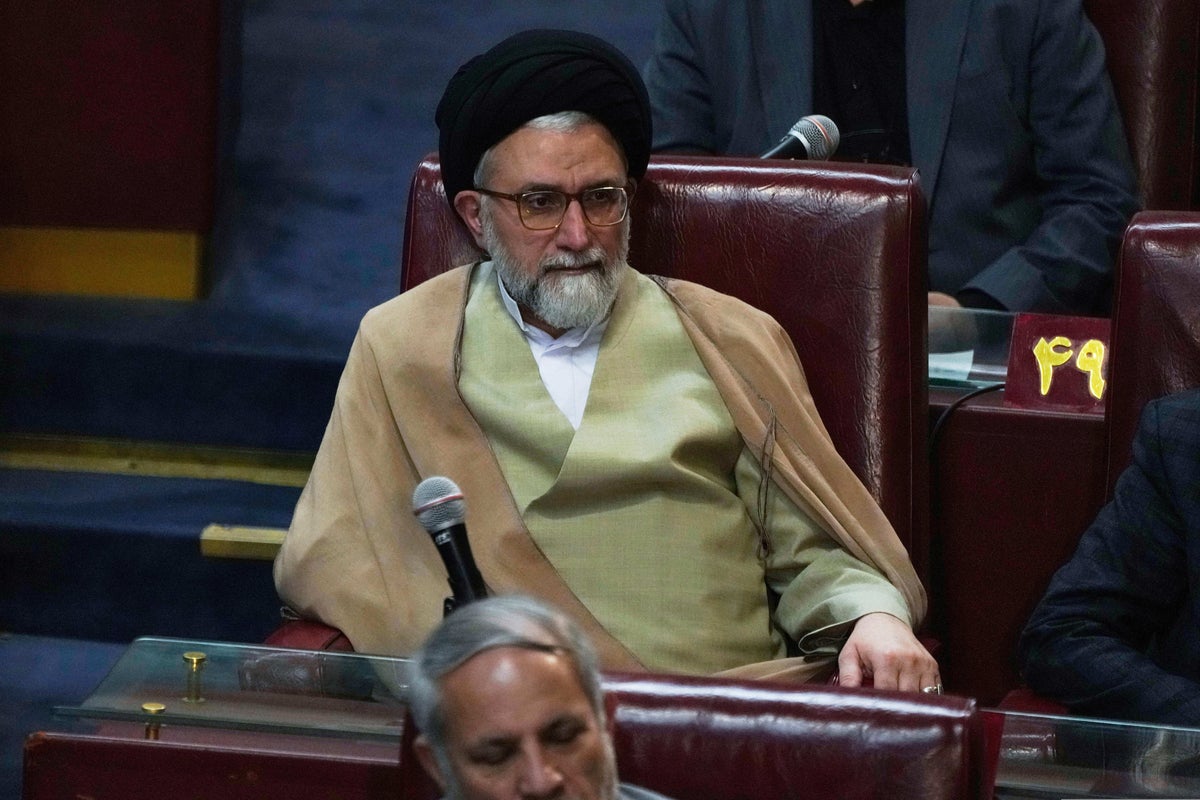
Hundreds have been arrested as Iran cracks down on 'traitors' following killing of Larijani, Soleimani.

Experts tell The Independent that mine clearance is a ‘slow and grinding business’
Iranians have attended funeral processions for senior security officials Ali Larijani and Gholamreza Soleimani.
TEHRAN, Mar. 18 (MNA) – Amnesty International has blamed the United States military for the deadly attack on a school in Iran's Minab earlier this month.

Will Israel and Trump force the ICC to drop the Netanyahu arrest warrant? Sondos Asem on Mon, 02/16/2026 - 22:32 In a wide-ranging interview, Professor Kevin Jon Heller explains the turbulent 15-year history of the Palestine probe, Israel’s challenge to Netanyahu's arrest warrant, and what US sanctions mean for the court's future Off The arrest warrants for Israeli Prime Minister Benjamin Netanyahu and then-Defence Minister Yoav Gallant issued by the International Criminal Court (ICC) in 2024 have unleashed a ferocious campaign of threats and sanctions against the court by Israel and the United States, primarily aimed at pressuring it to drop the war crimes investigation. To unpack the 15-year process that led to the warrants, Middle East Eye sat down with ICC expert Kevin Jon Heller for the latest episode of the Expert Witness podcast, filmed on 5 February. Heller also discussed Israel's ongoing attempts to invalidate the warrants, as well as the existential threat posed by the sanctions now bearing down on the court. Since February 2025, US President Donald Trump's administration has imposed financial and visa sanctions on the court's chief prosecutor, Karim Khan, his two deputy prosecutors, nine judges, the UN’s special rapporteur on Palestine, and three Palestinian NGOs in connection with the Israel-Palestine investigation. The US has also threatened sanctions against the court itself, which ICC officials consider a "doomsday scenario". (adsbygoogle = window.adsbygoogle || []).push({}); ICC judges are currently examining an Israeli challenge to its jurisdiction over the Palestine situation, and a separate Israeli complaint, filed on 17 November, which seeks to disqualify the prosecutor over an alleged lack of impartiality. The court is currently in a state of limbo as Khan has been on a voluntary leave of absence since last year pending a UN-led misconduct probe. Heller, who has served as Special Adviser on War Crimes to the ICC's prosecutor since 2021, is Professor of International Law and Security at the University of Copenhagen's Centre for Military Studies. He spoke to MEE in his academic capacity and not on behalf of the Office of the Prosecutor. Below are excerpts from the interview, slightly edited for length and clarity. (adsbygoogle = window.adsbygoogle || []).push({}); Why the ICC issued warrants only after 7 October MEE: Speaking of the Israel-Palestine investigation, you started your role as a special adviser in 2021, which was [shortly after] the investigation was launched. Heller: Yes. If you look at the overall scope of Palestine's interactions with the court it goes actually all the way back to 2011. But in terms of opening a formal investigation, that did not happen until three months before Prosecutor Khan assumed office. So very much at the end of her tenure, [Prosecutor] Fatou Bensouda formally opened the Palestine investigation [in March 2021]. So when Prosecutor Khan took it over, it was really in its infancy. MEE: Why has it taken 15 years to bring arrest warrants against Israeli or Hamas leaders, even though the State of Palestine acceded to the Rome Statute in 2015 and they had been trying to trigger a serious investigation for many years? Heller: Well, I need to preface the answer, of course, by saying that I was not working in the OTP prior to Prosecutor Khan. I just want to make clear that my knowledge of what happened before 2021 comes from the fact that I'm an academic, and that I spent a lot of time following the court, particularly in this situation. So I don't have any insider information about what happened before 2021. As you noted, it is long and I think one would say torturous process. Two referrals; joining the court; a self referral; we could go all the way back to Luis Moreno-Ocampo, the ICC’s first prosecutor, and he could have opened the investigation very early on. He ultimately decided that it was not for the office of the prosecutor to decide whether Palestine qualified as a state for purposes of membership in the ICC. He said that was for the Assembly of States Parties or probably more likely for the United Nations. So he basically just punted. But he punted after essentially sitting on the investigation for three years. Exclusive: UK confirms phone call between Cameron and ICC’s Karim Khan Read More » I don't know what was going on behind the scenes, but certainly it didn't seem like very much was going on from the time that Palestine asked the court to investigate to him finally announcing he was closing the preliminary examination. So you lost that three years. Then you had the second prosecutor, Fatou Bensouda. She also could have quite quickly opened the investigation. For whatever reason, she did not. The analysis of whether the statutory criteria under article 53 are satisfied took them about five years. Eventually they did conclude that those criteria were satisfied. And many of us on the outside thought, okay, now she's going to open the investigation because the preliminary examination has been concluded. She has found the statutory criteria satisfied. But then again erring on the side of caution and in my academic capacity, I very much described it as an error. She decided that instead of opening the investigation, she would ask the pre-trial chamber to essentially render an advisory opinion on whether or not there was jurisdiction in the situation. Was Palestine properly a member of the court? They had obviously acceded to the Rome Statute in 2015. We're now in 2019. And if so, what was the territorial scope of Palestine for the investigation itself? That took another year. I very strongly, in my academic capacity, criticised that decision. My perspective –and I still think that I was right– was that she didn't need to do that, that that would have been for a suspect to ultimately challenge. I mean, the suspects have every right to challenge the court's jurisdiction. So why do the defense's job for it? Just open the investigation, eventually bring charges against somebody, and then know that you're going to have to fight over the membership and the jurisdictional issue. She didn't do that. But we still have to fight over the membership and the jurisdictional issue. It didn't go away. But ultimately, after a year of litigation, the Pre-Trial Chamber said yes, for purposes of the Rome Statute, Palestine is a member in good standing. Now, they wanted to be very clear that their decision was not for any other purpose than membership in the court. They were not saying that Palestine was a state under general international law. They were saying that Palestine was a state for purposes of the Rome Statute. I'm not sure how many people really bought that distinction. I certainly don't buy it, but that was their decision. So ultimately they said, yes, they're a member in good standing. Ultimately, they said that the territorial jurisdiction of the court extends to the entire occupied Palestinian territories, including East Jerusalem. And at that point, having concluded that the statutory criteria were satisfied –having an advisory opinion from the Pre-Trial Chamber– that they were members in good standing and that there was territorial jurisdiction in those areas. Then again, right before the end of her term, she finally said, okay I'm going to formally open the investigation and then essentially bequeathed it to Prosecutor Khan. MEE: Arguably, the post 7 October context or events have contributed to accelerating the arrest warrant applications. Would you argue that we would have seen arrest warrant applications without the events of 7 October? Heller: Yes, I think we would have. I definitely don't disagree with you that 7 October gave new impetus to the whole process, but it's also very important to understand that, having been bequeathed the investigation, Prosecutor Khan really made it one of his first real commitments when he was given the investigation. There were no staff assigned to the Palestine investigation. There was no money allocated to the Palestine investigation. The next year's budget for 2022 had already been prepared by Prosecutor Bensouda, and it didn't ask for any money for the Palestine investigation. And at that point it was too late essentially to try to redo that entire budget. (adsbygoogle = window.adsbygoogle || []).push({}); So he inherited the investigation with nothing. But despite that, he immediately made it a priority to push that investigation forward. He started assigning staff to the investigation. They started the recruitment process, anticipating that they would, in fact, have funds to hire people to strengthen the team when the 2023 budget was coming. He even told the Assembly of States Parties in New York that he was essentially stealing resources from other investigations to fill out the Palestine team because he didn't have any dedicated budget. So he pushed it forward immediately. And this, again, was almost two years before 7 October. So it was a priority for him long before the actions on 7 October. And then the actions that Israel took in the wake of 7 October. So I think it still would have gotten to the point where there would have been arrest warrants. October 7th and its aftermath definitely did contribute to a sense of urgency. Counterfactuals are impossible to prove. But I feel pretty confident saying that that train had left the station and it would eventually have led to something similar to what we've seen. Legal process of seeking applications MEE: Can you talk us through the legal process of seeking arrest warrants? Heller: Obviously, there’re some things I can't discuss. But I can talk about the process in general. And the first thing to emphasise is that the investigation didn't start on 7 October. It didn't even start in 2021. The preliminary examination process, which lasted an embarrassingly long time, was still also an investigative step– not a formal investigation under the Rome Statute. ICC governing body set to rule on prosecutor Karim Khan misconduct claims Read More » But when you're conducting a preliminary examination, what you're doing is you're looking at evidence and you're trying to decide, if I open this investigation, are there concrete suspects? Is there enough evidence that I think I can eventually get a conviction? So it is a long, slow process of building up the evidence. It does matter when a formal investigation is opened, because the OTP then has a whole bunch of statutory powers that it doesn't have prior to that moment. But it is still a continuation of that work. So again, before 7 October, it would have been receiving information from NGOs, open source intelligence, talking to the families of victims who didn't survive and victims who did survive, talking to witnesses, all the things that you do when you were building a criminal case and trying to identify first who are the suspects that we think are the most responsible that we think we have enough evidence to eventually convict? Although you don't actually have to reach that standard initially. But ultimately, the point is to get somebody in the dock and convict them of international crimes. And then there's also a very difficult process of what do we actually charge the suspects, which war crimes, which crimes against humanity, and that's an endlessly recursive process where you have hypotheses and you develop an evidence and then maybe you charge one suspect and it doesn't seem like it's going to be possible to prove their guilt. So you move on to another suspect, or this is the suspect but we don't think these charges are going to pan out. So we're going to shift to another one. And you just build up the case. And at a certain point in time you feel like you have a reasonable set of suspects, you have a reasonable set of charges, and you're ready to actually submit an application for an arrest warrant to the Pre-Trial Chamber. That is the first stage in the investigative process. MEE: The prosecutor also brought in the external expert panel. What was the rationale for that? Heller: It's unquestionably the case that that kind of panel had never been used at the ICC. They had been used at the International Criminal Tribunal for the former Yugoslavia (ICTY). It was essentially another set of highly skilled eyes. Everybody was aware of the scrutiny that was being paid to this investigation. Everybody was aware of the potential consequences for seeking arrest warrants. There is an endless amount of internal vetting of applications that go on. But we all know there is no substitute for a fresh set of eyes. And so at a certain point in time, very, very far into the investigative a process, he decided that he would bring in a panel of experts who have no preconceptions, who have not seen any of the evidence, who have not seen any of the 50 earlier drafts of the applications, to just sit down and spend a very significant amount of time being shown the evidence and being asked to read the applications and asked for their feedback. They're a red team, essentially, to poke holes in what the applications contain, tell the prosecutor where the evidence isn't strong enough, tell the prosecutor where there needs to be more investigation, tell the prosecutor if you think these charges are not the best charges, or there should be different charges. And then that triggers yet another round of drafting; invaluable feedback from some of the best attorneys in the world. It only makes the application stronger. MEE: Were you surprised when the judges eventually issued the warrants, despite the immense political pressure and the threat of sanctions? Heller: I wasn't surprised at all. Obviously, no one's naive. Everybody understands the pressure put on the court and on the judge, in particular in this [Palestine] situation, although not only this situation. But I trust the judges to be professional and do their job and make a decision based on the evidence that is presented in the application for the arrest warrants, and having been involved in the preparation of those applications, I had no doubt that we would get the arrest warrants for all of the suspects, and I suspected that we would get the arrest warrants for an overwhelming majority of the specific charges. And that's exactly what we saw. We saw complete unanimity by the Pre-Trial Chamber. There was no dissenting judge, and they issued the arrest warrants on probably 90 to 95 percent of the charges that they were asked for. I can't talk about why they didn't issue it on the crime against humanity of extermination charges and why they rejected the application on a couple of what we would call conduct of hostility charges– actual attacks on civilians. But it was an overwhelmingly successful set of applications, again on both sides, for the Hamas leaders and also for the Israeli leaders. And that was the right decision because it's a fairly low standard to get an arrest warrant. It just has to be reasonable grounds to believe that the suspect is responsible for the crimes. Prosecutor Khan, as a matter of policy, not as a matter of law, actually holds everyone to a higher standard. He says, unless there's a reasonable prospect of conviction, I'm not going to move forward even at the arrest warrant stage. So not only did the evidence satisfy the statutory standard, it also satisfied his policy-based higher standard. It was overwhelming. I wish that people could see the applications for arrest warrants. I think there's this perception out there that the OTP or a prosecutor just wanders over to the judges and says, ‘hey, you know, can I have an arrest warrant for suspect X?’ It's not the way it works. These are incredibly long, detailed documents supported by massive amounts of evidence. As low of a standard as it is, you don't want judges to be rejecting your applications, even though you have the right to go back and supplement them and submit them again. It's still embarrassing. You want to get the arrest warrant the first time. And these applications were long, complicated and supported by massive amounts of evidence that was collected from a whole variety of sources. It would have been nice if Israel had allowed the prosecutor into Gaza to actually do an investigation on the ground. He asked innumerable times, and every time was refused. But, months and months of investigation and analysis went into these applications, and they involved everything from testimony of victims and witnesses and NGO workers and doctors and lawyers who were actually on the ground in Gaza. The investigation relied on a massive amount of audio visual evidence, recordings, video recordings, mobile phones, all of which were uploaded to the OTP via the secure encrypted link that allows anyone in the world to submit evidence of any crime. All of that was then processed by really cutting edge artificial intelligence and machine learning technology, open source information, satellite imagery, statistics from NGOs working on the ground in Gaza and in Israel and in the West Bank, international organisations who have a presence there or who study and focus on Israel-Palestine. And then, of course, the big one on both sides of the situation was inculpatory statements from the suspects, when suspects say things that make it clear that they have committed crimes. Of course that becomes incorporated into an application as well. So all this evidence collected over many months then leads to a very comprehensive, very well documented application for an arrest warrant. And I was totally unsurprised when the warrants were issued. I would have been shocked if they were not issued because there was no legal basis for not issuing them. Secret applications MEE: In April of last year, judges at the ICC decided that all new arrest warrant applications would be filed under seal, or without being publicised, as had previously been the case under the leadership of Prosecutor Khan. How do you feel about this decision, and is it in the interest of victims and the transparency of the process? Heller: It's an excellent question. I have to preface my answer by saying this was within the rights of the judges to do; it's not a lawless decision. I understand why they might do it. I do think it is unfortunate. It does also need to be said that it was not unprecedented for Prosecutor Khan to announce the applications for the arrest warrants in the Palestine situation. He had done so previously in Georgia. Luis Moreno Ocampo, the first ICC prosecutor, had publicly announced at least a couple of applications for arrest warrants, but it wasn't normally done. It was more common to not discuss publicly the filing of applications and really only discuss particular arrest warrants once the Pre-Trial Chamber did in fact issue the arrest warrants. Exclusive: ICC arrest warrant applications ready for Israel's Ben Gvir and Smotrich on apartheid charges Read More » But I do still think that there are times in which the office of the prosecutor should be able to announce applications, particularly in situations of ongoing conflict. I'm putting my academic hat on. I don't think that the ICC has a massive deterrent effect on the parties to a conflict, but it doesn't have none. I think there is a time and a place in the middle of atrocities for the office of the prosecutor to say, ‘hey, you should know that I'm not just monitoring the situation’, which is what they always say. ‘I'm not just monitoring. I am actually seeking arrest warrants for high ranking officials in your government or your organised armed group and just be aware that you could be next.’ I think that does potentially have a deterrent effect in certain circumstances. And I think losing that possibility is unfortunate. I do agree in general that applications should be filed confidentially. MEE: Why so? Heller: Because if there really isn't a concrete reason to announce them, such as trying to deter ongoing atrocities, I do think that it's best to let the Pre-Trial Chamber judges work in peace. The ICC's decisions in any situation are high stakes and often quite controversial. It is a difficult situation to put judges in, to let the world know that those judges, at that very moment, are considering issuing an arrest warrant for maybe a sitting head of state in a powerful government. I am very sympathetic to the situation the judges find themselves in, so I have no problem with the presumption of confidentiality. I do think it goes a little too far, even though it's within their rights to say never, because again, I think there's a time and a place for trying to get some deterrent effect by announcing applications. MEE: Isn't it unfair for the victims and witnesses not to have these applications public? Heller: I think that might be a little too simple. If the applications are going to be granted and the arrest warrants are going to be issued, and the arrest warrants are going to be issued on all or mostly all of the charges that would have been announced publicly by the prosecutor, then sure, that kind of transparency is good. It is good for victims to know that the office is not just sitting, twiddling its thumbs. And it often gets criticised for not acting when really what's going on is that there's actually a lot going on. It's just behind the scenes that people can't see. So I totally get and I don't want to dismiss the transparency argument, but you can never be certain that the chamber is going to issue the arrest warrant. You can never be certain that they're going to issue the arrest warrant on all the charges that are sought. And I think the ICC has a fairly long and ignoble history of unfairly raising the expectations of victims to then dash them. The court has had its successes, but it's also had a lot of failures. And I think it could be truly devastating to announce that an application for arrest warrants have been filed. Getting the hopes up of all of the victims again, whatever the side, whoever the suspects or charges, are only for in the end, the judges just say no. Sorry, there's not enough evidence here. I think that's often worse than them not knowing what's going on behind the scenes. So yeah, I think that's probably the best answer I can give. You can't ever be certain that you're going to win any stage of the process at the ICC. MEE: But don't you think that not publicising the warrants actually is a missed opportunity somehow to put pressure on judges to issue the decisions quickly? Heller: I'm very sympathetic to the ends. I'm not sympathetic to the means. I have written innumerable times over the years as an academic that the ICC moves too slowly, that the judges take too long to issue decisions, that things need to happen more quickly. I would love nothing more than the judges to speed up the process. I think public shaming is the wrong way to go about it. I think a much better way would be for interested NGOs, activists and states to really lobby the judges to amend their own internal rules, to impose deadlines perhaps extendable for emergency situations or incredibly complicated cases, but internal regulations that say the judges have to issue a decision on an arrest warrant within X amount of days, or they have X amount of months to complete the judgment in a particular trial, that kind of reform is extremely healthy. I think that's a better way to do it than the public shaming, because it's not easy being a judge of an international criminal tribunal. You know what the global consequences are of your actions. Nobody in that Pre-Trial Chamber wasn’t aware that their lives were not going to be the same if they decided to issue the arrest warrants for Netanyahu and Gallant. And so I think the job is tough enough without trying to shame them into acting more quickly. They should act more quickly, but they should act more quickly because they have decided they have to act more quickly, not because they've gotten pressure from the outside. Three claims against the process MEE: There are a number of allegations that Prosecutor Khan rushed the applications. But on the other hand, there are accusations that he actually acted too slowly. And of course, there is the claim that the move was partly an attempt to divert attention from the sexual misconduct allegations. Can you address these claims and whether you find them plausible or unfounded? Heller: You won't be terribly surprised to learn that I reject them all. But let's separate them for a second. It's not terribly surprising that some people wanted him to move quicker, and it's not terribly surprising that some people wanted him to move more slowly. I have a certain sympathy for the people who say that they should have acted quicker. Obviously, this had been going on for 15 years– this entire situation. There were plenty of times when his predecessors could have moved forward more quickly and brought charges themselves. I think the fact that he inherited nothing in June of 2021 and ended up bringing charges in May of 2024, again following a massive tragedy involving criminality on both sides. These things take a while. If you could have taken October 7th and the reaction to October 7th out of the equation, you probably could have fairly expected arrest warrants more quickly than that. But once that happened, you do have to give enough time to carefully investigate a very complex set of international crimes. So I don't think realistically it could have happened any more quickly. It wasn't like anybody was sitting around twiddling their thumbs instead of investigating. I can assure you, the entire Palestine team worked Godawful hours for months, not taking vacations, not going home to see their family, working weekends. I've never seen people work so hard. So, it's an unanswerable question, right? What does it mean to move more quickly? More slowly? Again, I don't think there's a way to judge that you move forward when you have enough evidence to move forward. You can always investigate more. You're a journalist. You can always keep editing your story. There is never a natural stopping point. If you want, you can keep researching. You can do another draft. You can expand it. You can contract it. At a certain point in time, you have to say, this is as good as it's going to be in a realistic time frame. And that's ultimately what the prosecutor decided at a certain point in time. He felt comfortable saying that the evidence against the three Hamas officials and the evidence against the two Israeli officials had been developed to the point where the applications were strong enough to go to the judges. And again, not to the lower standard, but to the reasonable prospect of conviction that he imposes as a matter of policy. He could have kept going forever. He could still have been investigating today. But at a certain point in time –and this is why you're elected to be the prosecutor– you have to make that difficult decision to say, this is it, we're going to file on this date. And it's very easy to second guess that, or as we would say in the United States, to be a Monday morning quarterback of those decisions. But that was the decision he made. He said, now we're ready and we're not going to do anymore. And that made sense because of the strength of the applications. I've had journalists tell me over time, ‘well, you know, there's allegations that the investigation was rushed, that the evidence analysis was shoddy and he should have taken more time.’ And my response is, well, the warrants were issued unanimously by the Pre-Trial Chamber on 90 to 95 percent of all of the allegations. What other criterion to judge whether there was enough investigation is there, other than the judges approving it? If the judges had rejected the warrants or if they had said, we're going to issue the warrants, but only on two out of ten charges or allegations, then I would say, okay, you've got a pretty strong case to say that this was rushed. That didn't happen in the most politically heated situation in the history of the ICC, at least with the Israeli defendants, the most momentous decision that judges would ever have to make in their nine years on the bench. They all unanimously agreed that the evidence supported the arrest warrant on almost everything that it was asked for. What other way to judge there is that? The proof of the pudding is in the eating. We got the arrest warrants. That's, to me, the end of the story for claims that he moved too quickly. So that's those two claims. Exclusive: How Karim Khan’s Israel war crimes probe was derailed by threats, leaks and sex claims Read More » [Thirdly], I think the most ridiculous claim of all, and I choose my terms very carefully, is the allegation that somehow he filed these applications to distract from the sexual misconduct allegations. That is simply irreconcilable with the timeline. A timeline that, not coincidentally, Middle East Eye has helped establish in the public domain. There's two fundamental problems with that argument. The first one is that –and this is public knowledge, I'm not giving away state secrets– these applications were being worked on long before there was any inkling of any misconduct allegations against him. This team didn't start working in whatever March or April [2024] on these applications. It was months before that. So that part of it is just silly. The equally ridiculous, but at least artificially plausible claim is that he chose the specific date to file the applications, or he brought the process to a close to distract from the sexual misconduct allegations, because obviously he was aware that there were allegations before 20 May 2024 when he filed the applications. But what's ridiculous about the claim is, again, look at the timeline on 20 May 2024, when he filed the applications, there was no active investigation of any misconduct allegations. The independent oversight mechanism (IOM), the statutory office that investigates all allegations of misconduct, had informed the prosecutor that the investigation was closed. The complainant did not want to cooperate with IOM. So because they're a victim centered organisation, they closed the investigation. That's what happened before 20 May. All he knew was that these allegations had been made. IOM had looked at them and IOM was not proceeding. There was nothing to indicate that there would be leaks to the press about the misconduct allegations that eventually the Assembly of States Parties, through the president, would outsource the investigation to the UN's Office of Investigative Services. None of that was live when he made the decision. That wasn't actually for another four or five months. So he could not have been distracting from allegations by filing the warrants because there were no active allegations against him, no misconduct investigation when he made that decision. So it just doesn't stand up to really even a cursory look at how all of these events unfolded. Israeli challenges MEE: I'm going to turn to the three challenges that Israel has lodged against the warrants, attempting to invalidate them. One was rejected by the appeals chamber in December. Can you outline Israel's main arguments? Heller: So that particular challenge was about the principle of complementarity. The principle of complementarity is really central to the court. It basically says that the ICC is designed to be a court of last resort. It is not designed to supplant national jurisdictions when those national jurisdictions are genuinely investigating the right suspects for the right conduct. So the essence of the argument is that the office of the prosecutor should have deferred to Israel to allow Israel to pursue national investigations. ICC rejects Israel's appeal that sought to invalidate Netanyahu arrest warrant Read More » The actual challenge itself is quite complicated. Let me see if I can lay it out. When the office of the prosecutor makes a decision to open a formal investigation, the preliminary examination is complete and the prosecutor announces ‘I have completed my preliminary examination, I am going to formally open an investigation into situation X’, at that point in time, the prosecutor sends a letter to all of the concerned states, particularly the state whose nationals are being investigated or on whose territory the crimes were committed, sends them a letter basically saying, these are the results of my preliminary examination. These are the types of cases that I am going to investigate. You don't necessarily have specific suspects at that point in time. You might have a vague idea that these are the kinds of crimes that I think have been committed in this situation, and these are the kinds of crimes that I'm going to be looking into. When the prosecutor does that, it's called an Article 18 notification. The state who receives that letter has one month to actually formally ask the office of the prosecutor to defer the investigation. They're entitled to ask the OTP to defer the investigation on the ground that they are already themselves investigating the kinds of suspects and the kinds of crimes that the OTP has identified in this letter as the objects of the investigation. And we've seen a number of states do this. Venezuela did it. Afghanistan did it. The Philippines did it. When a state receiving an Article 18 notification asks the OTP to defer, the OTP has to defer. They have to put down their pens. They can't do anything. They're statutorily barred from proceeding in any way until such time as the prosecutor goes to the Pre-Trial Chamber and says this was a ruse. This was a sham. They're not really genuinely investigating the kinds of cases and kinds of crimes that we're looking at. They're just stalling, essentially. And to date, no Article 18 deferral has lasted all that long because they weren't actually intended to allow national processes to go. But that is a formal part of the process. Israel had every right in 2021 when Prosecutor Bensouda sent them an Article 18 letter to say, ‘hey, we're going to handle this domestically.’ Maybe eventually the investigation would have restarted, but the OTP would have had to stop doing anything in the Palestine situation. Israel never did that. They never took advantage of that opportunity. MEE: Why not? Heller: Two aspects. At the time, they had a no-interaction with the court policy. The only answer that they would ever give to any communication from the court and the office of the prosecutor had been reaching out to Israel for years, not just under Prosecutor Khan before 7 October, but under Prosecutor Bensouda before the formal investigation was opened. They had always had the same answer: ‘You don't have jurisdiction. We're not going to interact with you.’ So the main reason was they stuck to their position that they don't have to engage under Article 18 because there's no jurisdiction. I mean, the office of the prosecutor went so far as on the final day of the one month period that Israel had to ask it to defer it actually sent another letter saying, ‘are you sure you don't want us to defer? Are you sure you don't want to invoke your Article 18 rights?’ Silence. No response. So they didn't take advantage of this opportunity to invoke the principle of complementarity. The stated reason was: ‘we don't think you have jurisdiction’, and to be fair, they don't. Israel clearly wasn't making that up. They did believe that there was no jurisdiction. But I also think very strongly –and this is my own particular interpretation, not an official position or a stated fact– I believe they never invoked Article 18 because they never thought that a prosecutor, Bensouda or Khan or whomever would be elected after Bensouda stepped down, they never believed that they would actually have the temerity to bring an application for arrest warrants against any Israeli official, much less the high ranking ones that were ultimately the object of the investigation. They said, we don't think you have jurisdiction and we're not going to engage because we don't think this is going anywhere. Well, they tragically miscalculated. They underestimated Prosecutor Khan's commitment to bringing justice in the Palestine situation to both sides, and his willingness to seek arrest warrants for high ranking Israeli officials, even though he was fully aware what the consequences could potentially be. So that's the background. You can't understand what's happening in the current challenges without understanding that background. What Israel has said –and this is the appeal that they lost– was that 7 October changed everything; the investigation that the office of the prosecutor launched after 7 October is so fundamentally different from the investigation that Bensouda had been conducting and Moreno Ocampo before her, that the original Article 18 notification in 2021 wasn't enough. They said that this was a new situation. Yes, it was still Israel-Palestine, but it was a new situation and that Prosecutor Khan should have issued another Article 18 notification saying ‘these are the kinds of cases and these are the kinds of charges I'm going to look at in the wake of 7 October.’ And they said, because he didn't do that, they were deprived of their right under Article 18 to invoke complementarity and ask the office of the prosecutor to defer the investigation. And because of that deprivation, [Israel argued] the arrest warrants should be canceled. That was never going to succeed. And it didn't succeed. It is clear that some of the crimes committed on 7 October and after were different than the crimes that were under investigation when Bensouda issued the Article 18 notification when she first opened the investigation. But they're not fundamentally different. It's still Israel-Palestine. It's the same geographic location of the crimes. It's still the IDF, Hamas and Palestinian armed groups. Many of the actual charges were being investigated long before 7 October. So what both the Pre-Trial Chamber and the Appeals Chamber said was this is still the same situation: Israel certainly knew enough about the kinds of suspects and kinds of crimes that the office of the prosecutor was looking at before 7 October, that if they had wanted to invoke the principle of complementarity, they could have started their own investigations even of 7 October and post 7 October conduct. So the judges just rejected that particular appeal completely. MEE: And how about the two other challenges? Heller: So the two other ones are still ongoing. Let me start with the really frivolous one. The most recent and the most frivolous one is about disqualification of the prosecutor, which is a little ironic because, of course, he has temporarily stepped aside and has not been the actual functioning prosecutor for more than 8 months now. I have a hard time even summarising the allegations because they just make absolutely no sense. What they said was that somehow because he rushed to judgment and because he ignored what Israel thinks is exculpatory evidence that somehow he was biased against Israel, and because he's biased against Israel, he should be disqualified from any future interaction with the case. And because he didn't disqualify himself somehow the arrest warrants should be invalidated. We could talk forever about the problems with that appeal. There is no basis to disqualify him. There's no conflict of interest. He's a prosecutor who believes in the charges that he brought and believes in the investigation that he and his team conducted. And he has been disqualified from other situations, but based on very concrete conflicts of interest about previous work on issues related to the situation or a family connection that the the judges thought was too close, concrete reasons to disqualify him. I don't agree with those decisions, but they have a plausibility to them. There's nothing equivalent here. Basically, what they're saying is he wants to convict people. He thinks the evidence supports the charges against too much, so he should be kicked off the case. That doesn't make any sense. Even in the unlikely event that judges thought that there was some kind of conflict or some appearance of bias and disqualified him, that still has nothing to do with the arrest warrants. The arrest warrants would still be completely valid. It would just be that whoever was in charge of the office of the prosecutor at the time that he was disqualified they would be the ones responsible for conducting the ongoing investigation. There's no connection between those two things. To use an American football term, it's a Hail Mary. They're just trying to throw stuff against the wall, and maybe they'll get lucky and invalidate the warrants. So that one has zero chance of success. The other one that is still pending, I also think has no prospect of success, but it is a much more serious appeal, and it is the jurisdictional challenge. As I said before, the Pre-Trial Chamber in 2020 issued a judgment saying that Palestine was properly a member of the court and that the court had territorial jurisdiction over the entire occupied Palestinian territory, including East Jerusalem. But the Pre-Trial Chamber doesn't have the final say, and they made clear that there would be time in the future where these issues could be litigated again. And that's where we are. Even though I may not think that these are powerful pieces of legal argumentation, I may not think that they have a prospect of success, Israel has every right under the statute to particularly bring this appeal. They're like any other state whose officials are being investigated. They have the right to challenge jurisdiction, and that's what they have done. They've basically asked the Appeals Chamber to disagree with what the Pre-Trial Chamber had decided in 2020. Again, I think it is extremely unlikely that the judges are going to find that there is no jurisdiction. I don't know exactly what the reasoning will be to get them there, whether they will do the ‘We're not talking about Palestine as a state under general international law. We're only going to talk about it for the purposes of the Rome Statute.’ I don't know how they're going to get there, but I will be profoundly shocked if they throw everything out. And it's important to understand that if the appeals chamber were to rule for Israel and conclude there was no jurisdiction in the Palestine situation, that really has to be based on the conclusion that Palestine is not properly a member of the court, that they had no right to join the ICC. So if Israel wins the appeal, Palestine essentially has to be kicked out of the court, a court that they have been a functioning member of for 11 years. They've been paying dues. They've been participating in the Assembly of States Parties. They've had their nationals elected to positions within the Assembly of States Parties. The Appeals Chamber would have to say all that was a mistake. You never should have been allowed a seat at the table, and we're kicking you out and presumably giving you all of your money that you paid in dues back to you. I don't see them doing that. I also think (my speculation) that it's a sign and a bad sign for Israel that the judges on the Appeals Chamber issued the Article 18 decision. First, if the judges were to conclude that Israel's jurisdictional challenge was valid, (particularly in article 19) there was no reason to decide the Article 18 appeal. Complementarity is irrelevant if Palestine is not properly a member of the court, and the court doesn't have jurisdiction over the crimes in Palestine. The fact that they went to the trouble of rejecting the Article 18 challenge first is a pretty strong sign. I think that Israel is going to lose their jurisdictional challenge as well. Why waste all that time on an issue that is moot if the jurisdictional challenge has merit? So I don't know when we will see the appeal judgment issued. It is, I think, frustrating that it has taken so long. It's been pending, I think, for at least 7 or 8 months. But I am quite confident that it will not lead to the annulment of the arrest warrants and the kicking out of Palestine from the ICC. Why does the US oppose the ICC? MEE: At the beginning of our interview, you mentioned that part of your work as a special adviser included working on Afghanistan. Relatedly, the Afghanistan investigation has been one of the main causes of the US attacks and sanctions on the court. So I want to hear from you on the history of that, the roots of this turbulent relationship between the United States government and the International Criminal Court. Why is the US so opposed to the ICC, even though it was supportive of its early development? Heller: It is a unique kind of American schizophrenia. The US has been one of the driving forces behind the literal existence and evolution of international criminal justice, from Nuremberg on. It was very active in the negotiations over the International Criminal Court. The US likes to get its way. The US likes international institutions to acknowledge, accept, recognise, reflect US preferences for how international criminal justice is carried out. US sanctions two ICC judges for rejecting Israel's appeal against Gaza investigation Read More » All the previous courts and tribunals from Nuremberg on, they were all about one conflict, ones that the US was not involved in. They were all about one side to a conflict. They were not courts that ever had any prospect of prosecuting Americans. The Yugoslav tribunals, the prosecutor briefly looked into actions of Nato, but I don't think anybody thought that that was ever going to really lead anywhere. The ICC is different. The ICC is a court of general jurisdiction. It, in theory, could have jurisdiction over every international crime committed by any human being anywhere in the world. It doesn't, of course, but that's the underlying idea. That's its potential. There are plenty of situations in which the US has engaged in acts that could be credibly described as international crimes in areas that are subject to ICC jurisdiction. It's not just an abstract possibility of the ICC ever prosecuting an American, and it's that possibility that is just completely unacceptable to the US. They will not support an institution that could ever conceivably hold an American to account. And I'd love to give you a big, fancy, long, complicated answer about the US's relationship to the court. And there are obviously specific provisions in the Rome Statute it didn't like and so on and so forth. But really, it ultimately boils down to that they just don't want one of these foreign institutions to ever have an American soldier or an American political official in the dock. And insofar as that becomes even a remote possibility, the US will act to neutralise that institution. And that's exactly what we've seen, different levels of hostility to the court over the court's existence. Democrats usually a little bit more willing to work with the court when interests align, Republicans usually less willing. Although even in the second Bush term there was a lot of cooperation with the court, once it gets to the possibility of Americans ending up in the dock, it's a truly bipartisan position to oppose the court. That's different, of course, than actually issuing sanctions against individuals at the court. That is really a uniquely Republican phenomenon. And it's not just a Republican phenomenon. It's a Trump phenomenon. Not even in the worst days of the Bush administration's relationship to the court was there ever really a serious prospect of seeing this kind of attack on the court. This is about the people in the Trump administration and the president himself. But that's ultimately what it boils down to. MEE: And yet the US has actually supported a number of investigations like Sudan (Darfur) and Libya. Heller: Absolutely. Darfur is a really good example. They were very supportive of Darfur. They've been very supportive of the investigation into the Lord's Resistance Army in Uganda. It was kind of like enlightened opposition, other than Trump, to different degrees, when the interests of the court overlapped with the interests of the US, the US was generally willing to help the investigation. The most dramatic example of that, of course, is the arrest warrant for Vladimir Putin. The US was over the moon when Prosecutor Khan issued or filed that application and that those arrest warrants were issued. Lindsey Graham, who is like the leading attack dog against the court, couldn't say enough good things about the ICC when it went after Putin. The US Congress actually allocated money for the Ukraine investigation, the first time that had ever happened in the history of the court. But of course, Putin is, except for our current president, widely seen as an enemy of the United States, that the Russian interests are opposed to American interests and America generally on the side of the Ukrainians. And that was a perfectly safe investigation for the US to support. When it comes to Afghanistan, when it comes to Palestine, the situation is very different. And that's why we've seen really what can only be described as the blatant hypocrisy of the US in falling all over themselves to praise the court with Putin and then falling all over themselves to try to destroy the ICC when it comes to Netanyahu, and the completely abstract and unrealistic prospect of any actual prosecution of an American in Afghanistan. ICC states resisting US pressure MEE: What did you make of the Assembly of States Parties position to resist or shun the Trump administration's pressures for the court's states parties to drop the Israel investigation, to end the Afghanistan investigation and even to amend the Rome Statute to prevent the prosecution of nationals of non-member states? I wrote about this during the latest ASP in December. The diplomats I spoke to mentioned that the vast majority of members of the Rome Statute had rejected US pressures. So what do you make of that? And is it an indicator that states parties are going to stand up to the Trump administration in the future? Heller: I would be loathe to make predictions about what will happen in the future. I do think we have to separate the response. Exclusive: ICC shuns US demands to drop Israel war crimes probe and amend treaty Read More » The Rome Statute is not impossible to amend, but very difficult to amend. The Assembly of States Parties can adopt new amendments, but the amendments only become in force through a very cumbersome process that isn't about the Assembly as a whole, but about individual states. And we haven't seen a lot of willingness of states to ratify new amendments to the Rome Statute, like the [crime of] aggression amendments or the amendments about biological weapons. So that was never going to go anywhere: this idea that we're going to keep attacking you until you amend the Rome Statute to exclude non-state parties from jurisdiction. The territorial jurisdiction of the court is one of the fundamental cornerstones of the ICC. It was one of the things that was very carefully discussed, negotiated, incorporated into the Rome Statute that was never going to go anywhere. In terms of just the rhetorical response, of course it's easy to second guess and say, gosh, I wish the ASP had acted more quickly or had used more strident language to reject the United States. But the Assembly of States parties, their states, their diplomats I do think that they made the statements that they had to make to assert the independence, the autonomy of the court as a whole. I think they've done, in general, a pretty good job of condemning the sanctions. Again, we could always wish for more, stronger language. But I think they made clear that US attempts to get their way through blackmail were not going to succeed. The US can harm the court, clearly. But they're going to harm the court over the objections of many of their traditional allies. And so it was good to see so many Western Europeans, so many Nato states that are members of the court, denounce the sanctions and assert the independence and autonomy of the judges and the prosecutor. So, on balance, I think they did primarily the right thing. Sanctions on the court MEE: Concerning sanctions on the court itself, you've previously described it, and I'm aware that other people working at the ICC describe it as a ‘doomsday scenario.’ What do you think would be the impact of the US taking the extraordinary step of sanctioning the court as an institution? Heller: I don't know. The sanctions on individuals are terrible. They're terrible for those individuals. It dramatically transforms the life of a sanctioned person. And Judge Guillou and others have spoken publicly about the effect it's had on them from a systemic standpoint. Those are survivable, those take those people out, essentially. But the court can still function. It’s more difficult. You lose the input of some of the best people. But it can be compensated for. I don't know whether the court would survive institutional sanctions. It would require really an unprecedented level of cooperation and commitment from ICC member states, particularly the ones in Europe who are traditional allies of the US, who are members of the EU, who are members of Nato. Essentially, if they didn't step up and take really dramatic action to protect the court, I don't see how the court could function. Institutional sanctions could literally lead to all the electricity being turned off at the ICC. If the companies that provide electricity felt that they were in legal jeopardy for facilitating the work of a sanctioned institution, they might say, ‘nope, sorry, we're not going to give you electricity anymore.’ Internet providers may very well say, ‘nope, sorry, we're not going to provide you with internet.’ The water supply, like you might not have working toilets because somebody has to provide the water. They may say, ‘sorry, the jeopardy is too great for us.’ How do you function as a court without electricity and toilets and internet? So I hope I never find out whether the court can survive that. But I cannot sit here and say that it could be compensated for. The court itself could not function without external assistance, it would not have the ability to to overcome those sanctions. It would really depend on ICC member states stepping up and making sure that the lights stay on. MEE: And yet, the leadership of the ICC, including the president and also the deputy prosecutors, have said that they do have measures in place to counter the impact of sanctions. And they seem to be confident that the court will survive. Heller: I don't believe that they've actually said that about institutional sanctions, though. They definitely have taken measures to alleviate the worst of the individual sanctions. But I don't think anybody has really publicly discussed the doomsday scenario because there’s no sense in publicly discussing it until it becomes real and hopefully it never will. So my own personal view is no matter what the court did by itself, it would not be enough to overcome institutional sanctions. And it would depend on other states stepping up. Is the ICC indispensable? MEE: Are you concerned about the future of international criminal justice, given the unprecedented attacks on the court, the sanctions on court officials, and the threat of sanctioning the court as an institution? Is the ICC indispensable for international criminal justice? Heller: Is it indispensable? No. States have the right to prosecute international crimes in their domestic courts. Even the weakest states have resources judicially that dwarf the resources of the ICC. We could imagine a world in which states were the ones that really did take the lead in prosecuting these kinds of crimes, and we see some of that via universal jurisdiction. There have been Libyans prosecuted, Syrians prosecuted, Russians prosecuted. That can continue and it should continue. And I think there is a general arc toward universal jurisdiction becoming more and more widely used and not just by states in northern Europe or Western Europe, but even in states like Argentina. That will continue. And it should continue. The ICJ, Gaza genocide, and future of international law: Interview with William Schabas Read More » And if you ask me as an academic, that is the future of international criminal justice. It is at the domestic level, not at the international level. We have to acknowledge that the proliferation of international courts and tribunals that we have seen was very much a product of the end of the Cold War, the crumbling of communism, the dissolution of the Soviet Union, the Security Council, for the first time in 50, 60 years, actually starting to function. You would never have the Yugoslav Tribunal or the Rwanda Tribunal, or even probably the Special Court for Sierra Leone created today. You certainly would never have the ICC created today. The world is too fractured. States, even the ones that are the members, would not support a court like the ICC. It was very much the product of a more optimistic time. So I do not in any way want to suggest that the ICC isn't important. It is. It's really the only game in town at the international level these days. It will always have important cases. It will always have the potential to be the universal court that its founders dreamed that it would be. But it is not an easy environment for the ICC to function. I would like to say that this is just a blip and the next Democratic administration, the next Russian administration, the next Israeli government, will somehow fundamentally change the relationship between the court and states. I think that's overly optimistic. It will probably not always be as bad as it is now. But when you have an international tribunal that is not just trying to prosecute rebels and warlords in Africa, but are actually going after sitting heads of state of powerful countries you're never going to be in a politics free environment. You're never going to be in a coercion free environment. It's always going to be a challenge. It will always have the Medvedevs threatening to launch a hypersonic missile at ICC headquarters. It will always have Lindsey Graham talking about –in Mafia terms– going after the families of prosecutors at the ICC. You're never going to get beyond that. So I hope the ICC long outlives me. I hope the ICC will always have important cases to pursue. But it isn't the be all and end all of international criminal justice. It really is a court of last resort and not a court of first resort. And as an academic, I despair often of how every conflict is initially viewed through the lens of the ICC. What's the ICC going to do? How is it going to get involved? When is it going to investigate? When is it going to bring charges? Of course it will in a number of situations, but it is just one international tribunal. Understaffed, under-resourced, constantly threatened, facing much more powerful adversaries. We need to get beyond looking at it as the court of first resort, and we really need to emphasise the role of states in pursuing international criminal justice. So I don't think international criminal justice is going anywhere. I don't think the ICC is going anywhere, but we really do weigh down the ICC in particular, with expectations that it just simply is not structurally capable of accomplishing. So as long as we are modest in our expectations, as long as we don't expect the ICC to be plucking heads of state out of their domestic situations, right and left, as long as we don't expect it to fundamentally transform societies and bring peace and promote reconciliation, as long as we don't think it is going to do those things, we can celebrate the things that it is able to do and put it in a much more realistic light and then be cautiously optimistic about the future of international criminal justice. So the future of international criminal justice really depends on what we expect international criminal justice to do. Expert Witness Podcast London Will Israel and Trump force the ICC to drop the Netanyahu arrest warrant? Video Post Date Override 0 Update Date Mon, 05/04/2020 - 21:19 Update Date Override 0
Russia condemns the 'murder' of Ali Larijani Russia has condemned the killing of Iranian officials including security chief Ali Larijani, following Israeli strikes that targeted Tehran’s leadership. Speaking on Wednesday, Kremlin spokesman Dmitry Peskov condemned the attacks a day after Iran confirmed the death of the Supreme National Security Council secretary, Ali Larijani. “We strongly condemn actions aimed at causing harm to the health, or especially the murder and liquidation, of representatives of the leadership of sovereign Iran … as well as other countries. We condemn such actions,” Peskov said in reference to a question about the killing of Larijani.