News
12,736 articles from 50+ sources

War on Iran: These are the heritage sites devastated by US and Israeli attacks Rayhan Uddin on Mon, 03/16/2026 - 15:37 From Isfahan to Tehran to Khorramabad, Israeli and American strikes have damaged landmarks, including some inscribed by Unesco Debris at the historical monument Golestan Palace after it was damaged in strikes, Tehran, Iran, on 3 March (Majid Asgaripour/West Asia News Agency via Reuters) Off Iran’s history is layered with conquest, cultural renewal and craftsmanship - all of which can be seen in its remarkable heritage sites. The iconic turquoise domes of Isfahan and the intricate interiors of mosques and palaces across the country are internationally renowned. Iran's architectural heritage can be divided roughly into two eras. The first is the pre-Islamic period, which included Iranian empires such as the Achaemenids and Sassanids, and the second involves a succession of Islamic empires and states, starting with the Rashidun caliphate and ending with the Qajar state until the early 20th century. Iran has 29 sites recognised as World Heritage Sites by Unesco - the tenth most sites in the world. But these sites have come under attack over the past two and a half weeks by Israel and the US. From Isfahan to Tehran to Khorramabad, Israeli and US strikes have devastated Iranian landmarks, including several inscribed by Unesco. (adsbygoogle = window.adsbygoogle || []).push({}); As the war drags on and the precedent is set, more heritage sites are at risk, with one Iranian official describing the attacks as a “declaration of war on a civilisation”. Middle East Eye takes a look at the sites that have been damaged so far. Golestan Palace On 1 March, a day into the conflict, a strike damaged Golestan Palace - the only Unesco World Heritage Site in Tehran. The blast from a missile strike nearby blew out the palace’s windows and damaged the iconic mirrors and glasswork in the complex, according to images published by Iranian media. Seyyed Ahmad Alavi, head of Tehran’s tourism and heritage committee, said the blast had also damaged historic Orsi doors and lifted sections of tarmac within the grounds. Israel is bombing Iranian historical monuments dating as far back as the 14th century. Multiple UNESCO World Heritage Sites have been struck. pic.twitter.com/7eu09Cjiyf March 12, 2026 Golestan Palace was originally built during the Safavid period in the 14th century. (adsbygoogle = window.adsbygoogle || []).push({}); Most of its current features and ornaments date from the 19th century during the Qajar era, when it became the seat of the dynasty’s government. The Qajars made Tehran the country’s capital in 1786. It consists of eight palace structures, most of which now serve as museums, as well as a garden complex surrounded by a gated wall. Chehel Sotoun Palace A string of key heritage sites in Isfahan were damaged by US-Israeli attacks, including the Chehel Sotoun Palace (Forty Columns). Pictures published by Iranian media showed broken doors, smashed windows and debris scattered throughout the palace. The site, commissioned by Abbas I, the Safavid shah often known as Abbas the Great, is famed for its frescoes depicting battle scenes and royal receptions. Iran - US and Israel war https://t.co/dsM1sksxSg@GeoConfirmed pic.twitter.com/ONHmSiARrQ March 9, 2026 Footage online showed a large crack down the middle of a 17th-century fresco depicting Safavid Shah Tahmasp welcoming Mughal ruler Humayun to Iran. (adsbygoogle = window.adsbygoogle || []).push({}); The gardens of the palace are part of nine historic gardens in Iran that have together been inscribed as a Unesco World Heritage Site. Ali Qapu Palace Near Chehel Sotoun, the Ali Qapu palace was also damaged. Local media reported that the doors and windows of the complex had been shattered. Ali Qapu is inscribed as a Unesco World Heritage site as part of a collection of sites in the Naqsh-e Jahan Square in Isfahan. The palace was first opened in 1597. The six-storey building has elaborate ceilings with intricate inlay work, as well as a number of paintings and frescoes. Jameh Mosque A historic mosque in Isfahan was damaged too. A blast on 9 March sent turquoise tiles in the Jameh Mosque crashing to the ground, The New York Times reported. It cited photographs from Iran’s ministry of culture and heritage, which showed plumes of smoke rising behind the mosque. US-Israeli strikes within the boundaries of the Naqsh-e-Jahan Square Unseco World Heritage Site in Isfahan damaged the historic Jameh Mosque (Tasnim News Agency) A mosque was first built on the site in the late eighth century during the Abbasid era. It was rebuilt a century later, with new additions and renovations over more than a millennium. It is considered to be one of the most important examples of Persian and Islamic architecture. Royal Precinct (Dawlat Khaneh) As well as the two palaces and the historic mosque, several other sites in the Royal Precinct, known as Dawlat Khaneh, were reportedly damaged too. According to an art newspaper, citing local media, the 17th-century Rakeb-Khaneh pavilion (House of the Jockey) was also damaged. Ashraf Hall, a residential structure from the Safavid court, was also impacted. As was Teymouri Hall, a building from the Timurid-era which later became Iran’s Natural History Museum. Falak-ol-Aflak castle The Falak ol-Aflak citadel in the Khorramabad area of Lorestan province was also damaged. The site dates back to the Sassanian period (between the third and seventh centuries). Iranian authorities said that Israeli air strikes struck the vicinity of the hilltop castle on 8 March. The strikes targeted Lorestan’s cultural heritage department, destroying the building. The Falak-ol-Aflak hilltop castle in Khorramabad, in the Lorestan province (Wikimedia/Flickr/Leoboudv) The blast also damaged the site’s archaeology and anthropology museums, a local official said, as well as the citadel’s barracks, regimental buildings and other structures. “Fortunately, the main structure of Falak-ol-Aflak Castle was not damaged,” said Ata Hassanpour, the head of Lorestan’s cultural heritage department. War on Iran These are the heritage sites devastated by US and Israeli attacks in Iran News Post Date Override 0 Update Date Mon, 05/04/2020 - 21:19 Update Date Override 0
At least 886 deaths in Lebanon, says health ministry The number now understood to have been killed in Lebanon since the start of the war has reached at least 886 with more than 2,000 injured, according the Lebanon's health ministry. As Israel announces widening its assault into southern Lebanon which began after Hezbollah began launching attacks against Israel in response to the death of Ayatollah Ali Khamenei, the number of casualties in Lebanon continues to rise rapidly. Around a million people have also been displaced in the country since the war began. Israel’s ambassador to the United Nations, Danny Danon, has said in a news briefing on Monday that it intends to continue its attacks.

Reza Pahlavi’s supporters in Iran are turning against him MEE correspondent on Mon, 03/16/2026 - 16:06 The son of Iran’s last monarch has encouraged protesters to risk their lives and stayed silent on civilians killed by the US and Israel A protester holds an image of Reza Pahlavi during a demonstration against the Iranian government, in New York City, 15 March 2026 (Reuters/Adam Gray) Off Two weeks into the US-Israeli war on Iran, a growing number of Iranians who saw Reza Pahlavi as an alternative to the ruling establishment say they are losing faith in the exiled opposition figure. For some, the turning point came before the war broke out, when Pahlavi urged Iranians to rise up against their rulers despite the dangers of a ferocious crackdown. For others, it is his latest call for demonstrations during the traditional Persian festival of Chaharshanbe Suri, set to be held on Tuesday. Dina, a 39-year-old resident of Tehran, said she once believed the son of Iran’s last monarch might be able to unite the country’s fragmented opposition. Now she no longer feels that way. “I wish he had even a fraction of his father’s political judgment,” she said. (adsbygoogle = window.adsbygoogle || []).push({}); “Or even the wisdom of his mother. If he did, he would know how to use the enormous energy among people who oppose this government.” Dina and all other Iranians Middle East Eye spoke to are identified by pseudonyms for security reasons. She was among those who took part in the nationwide protests in January, which were encouraged by Pahlavi and the Israeli and US governments. “At that time I hoped he could lead the movement,” she said. “But now I think differently.” Dina witnessed the violent crackdown on the protests firsthand. While authorities said more than 3,000 were killed when security forces confronted protesters, human rights groups have put that number at 7,000 people and even higher. (adsbygoogle = window.adsbygoogle || []).push({}); “Two months ago thousands of people listened to him and went to the streets,” Dina said. “What did they get? Bullets.” A call for protest during wartime Pahlavi took to X on Sunday to once again urge Iranians to take to the streets, using Chaharshanbe Suri - an ancient celebration ahead of the Persian new year – to mobilise the public. He suggested that the traditional festival is hated by the Islamic Republic, and so celebrating it would challenge the authorities. Notably, reports have suggested that Israel and the United States hoped their attacks on Iran’s leadership - including the killing of Supreme Leader Ali Khamenei on 28 February - would prompt a popular revolution. Yet there is no sign of that materialising. Normally, Chaharshanbe Suri fills Iranian cities with crowds celebrating on the streets, accompanied by bonfires and fireworks. (adsbygoogle = window.adsbygoogle || []).push({}); But this year the situation is very different. 'Two months ago thousands of people listened to him and went to the streets. What did they get? Bullets' - Dina, Tehran resident For more than two weeks, Iranian cities have been subjected to Israeli and US air strikes. According to the Red Crescent, more than 1,500 civilians have been killed. In such circumstances, many Iranians say the call for street celebrations feels detached from the fear dominating daily life. Majid, a 21-year-old student in Tehran, says he no longer sees Pahlavi as a leader. During the January protests, Majid says he watched a close friend die after security forces opened fire. “My friend was shot right in front of my eyes,” he said quietly. “I still cannot process it.” While he blames the Iranian authorities for the killing, he also believes opposition figures raised expectations that never materialised. “Now he tells people to go celebrate in the streets,” Majid said. “Does he even know what life is like here? People go to sleep not knowing if they will wake up alive in the morning.” “We are afraid every time we step outside that another air strike might hit somewhere nearby. And in this situation he says we should celebrate?” he added. Expectations that never materialised Pahlavi, Israeli Prime Minister Benjamin Netanyahu and US President Donald Trump have all been accused of misleading the Iranian public. During the January protests, which were sparked by economic woes and spiralled into calls for the fall of the Islamic Republic, the three men hinted that help was on the way for demonstrators. Yet, other than rumours of Israeli agents encouraging and even arming demonstrators on the ground, the protesters were left high and dry as the security forces moved in. Morteza, 24, once strongly supported Pahlavi. He believed the opposition figure had a concrete plan to remove the authorities and unite the people. “For many of us who were exhausted by the Islamic Republic, he looked like the only possible alternative,” he said. Amid holy war on Iran, will the West examine the roots of Christian and Jewish rage? Read More » During the protests, Morteza recalls, Pahlavi repeatedly encouraged people to take to the streets. “He said help was on the way,” Morteza said. “He said he was preparing to return to Iran.” At the time, Morteza said, some people genuinely believed Pahlavi might soon appear in Tehran - much as Ayatollah Ruhollah Khomeini returned from exile shortly before the 1979 revolution that removed Pahlavi’s father. “We thought maybe his plane would land in Tehran in a few days,” he said. “We believed it.” Shirin, a 43-year-old mother in Tehran, said she similarly initially believed Pahlavi must have had some kind of strategy. “We were desperate,” she said. “We were tired of the Islamic Republic.” She says many Iranians had already placed their hopes in different political alternatives over the years: reformists, former President Hassan Rouhani and even the current administration of Masoud Pezeshkian. “All of it led nowhere,” she said. So when Pahlavi spoke confidently about his plans and called on people to protest, she assumed he had a serious strategy. “I even argued with my friends about it,” she said. Some of those friends warned her not to trust him. “They told me: ‘Don’t you see the government kills people? Don’t you see he has no real understanding of Iran?’” At the time, Shirin dismissed those warnings. “Now I realise they were right,” she said. “I was wrong.” Long-time critics speak more openly For others, the recent developments have reinforced doubts they always had about Pahlavi’s political leadership. Amir, a 40-year-old resident of Gorgan in northern Iran, said critics of Pahlavi are now speaking more openly. “In the past, if you criticised him, his supporters would immediately accuse you of being an agent of the Islamic Republic,” he said. “Now that atmosphere has changed.” Amir believes Pahlavi’s political positions have often appeared inconsistent. In recent months, the exiled opposition figure has at times urged the United States to support the Iranian people, while in other statements insisted that Iranians do not need foreign help. Amir says such shifts reflect uncertainty about how international powers view Iran’s future. “Whenever Donald Trump says something that suggests he does not take Pahlavi seriously, suddenly Pahlavi says Iranians do not need foreign support,” Amir said. “But when he fears that foreign powers might negotiate with the current government or choose another option for Iran, he starts praising Israel and the United States again.” Silence over civilian deaths Pahlavi’s reaction to casualties during the war has also drawn controversy. Since the beginning of the US-Israeli strikes, Pahlavi has posted condolences for American soldiers killed in attacks. But critics say he did not publicly react to the deaths of civilians in Iran, including the scores of children killed when a school in the southern city of Minab was hit by a double-tap strike. For Dina, the contrast was painful. “How can someone claim to represent the Iranian people and stay silent when children are killed?” she said. “Yet he quickly sends condolences for foreign soldiers.” 'How can someone claim to represent the Iranian people and stay silent when children are killed?' - Dina, Tehran resident The debate over Pahlavi’s leadership is unfolding in an increasingly tense atmosphere inside Iran. Iranian authorities have issued explicit warnings against new street protests. Ahmad Reza Radan, the commander of Iran’s national police force, said on 11 March that security forces were “ready to pull the trigger” if people took to the streets at what he described as the enemy’s request. He warned that anyone participating in such protests would be treated “like an enemy”. Many Iranians say such threats make the idea of public demonstrations even more dangerous. Despite the criticism, Pahlavi still retains support among some Iranians who see him as a possible figure for a transitional government if the Islamic Republic collapses. But the mood among critics of the Islamic Republic appears increasingly divided. Two trends seem to be emerging: Some who once saw him as the only alternative are becoming disillusioned. Others who always doubted his leadership now feel more comfortable expressing their criticism. Amir says the debate around Pahlavi has changed dramatically. “He has made so many mistakes that criticising him no longer carries the same cost,” he said, pausing. “Still, that doesn’t mean things are better. We are just stuck. Trapped in a dead end.” War on Iran Tehran News Post Date Override 0 Update Date Mon, 05/04/2020 - 21:19 Update Date Override 0

submitted by /u/EsperaDeus to r/worldnews [link] [comments]
The Iran war 'is not NATO’s war:' EU allies demand clarity from Trump after he asked for their help Fortune

Greene left Congress after public blow-up with Trump over Epstein files
Trump slams some allies for not helping US reopen Strait of Hormuz ایران اینترنشنال
Governments remain silent or reject Trump's proposed naval coalition Donald Trump's suggested multinational naval coalition to reopen the Strait of Hormuz has still not had any volunteers, with governments rejecting the idea outright or refusing to engage with the US president on the subject. The proposal consisted of sending warships to the strait to get trade up and running again, as 20 percent of the world's oil normally passes through it. In Europe, some leaders were unequivocal. German Foreign Minister Johann Wadephul said Berlin had no intention of joining military operations. Beyond Europe, both Japan and Australia have said they do not intend to send ships to the region. Donald Trump asked the world to join a multinational naval coalition to keep the Strait of Hormuz open. March 16, 2026
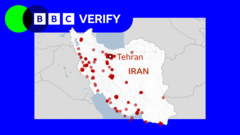
The US-Israeli war with Iran has seen sustained attacks on Tehran and Beirut as retaliatory strikes are felt in Israel and Gulf states
‘Iran Is Defending Itself’ – Lavrov Says US-Israel Made a Major Miscalculation Palestine Chronicle
Iran’s Foreign Minister Abbas Araghchi says his country has shown it is ready to take the war “as far as necessary".
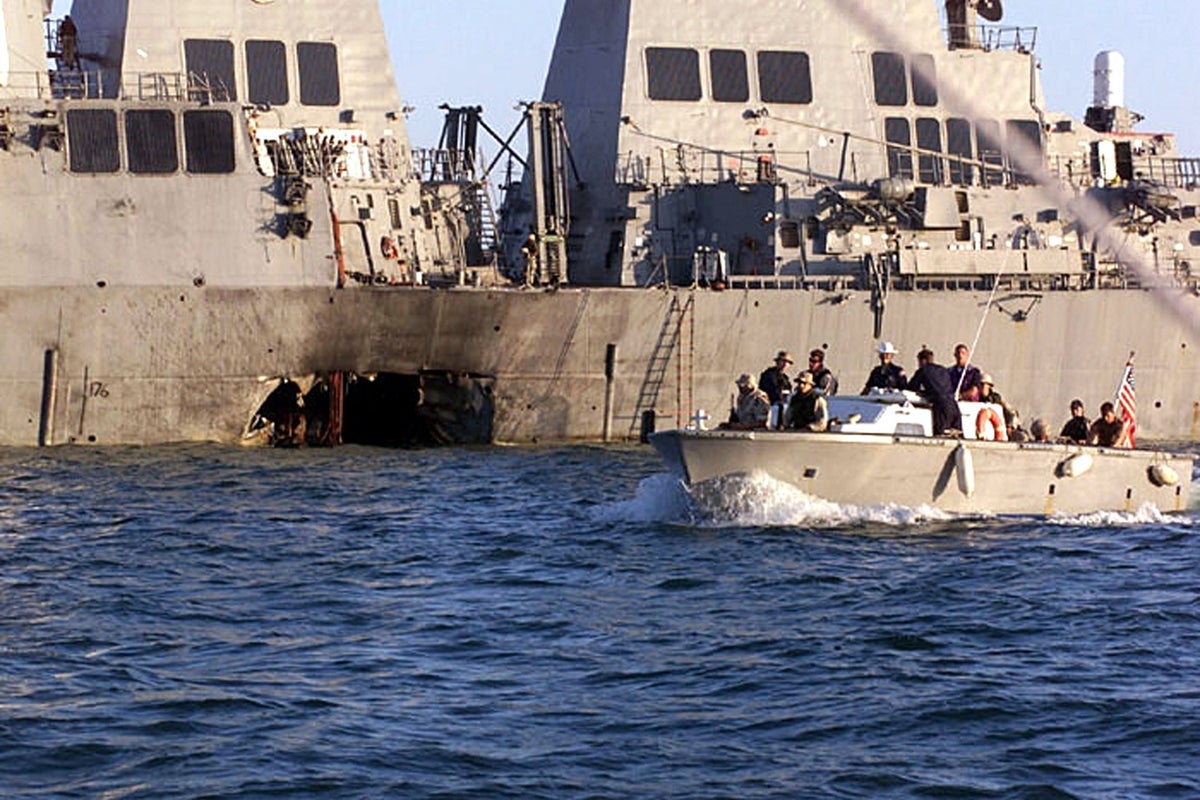
One of the president’s justifications for going to war with Iran could throw a wrench into a long-awaited trial for a top lieutenant of the 9/11 terror mastermind, Andrew Feinberg reports
Six dead in strike on PMF in western Iraq A strike on Popular Mobilisation Forces (PMF) in Iraq has left six dead near the Syrian border, according to the group. The group has said the "Zionist bombing" had left another four fighters injured in the latest of recent attacks against the group in Iraq. Parts of the umbrella group of paramilitaries that was founded in 2014 are known to be Iran-backed. Another three were killed on Saturday with a further ten in al-Qaim on Thursday.

By imposing costs on the global economy, the Iranian government is ensuring that further attacks are not contemplated The US and Israeli decision to attack Iran has sent economic shockwaves around the world. About 20% of global oil supplies have been effectively blocked from transiting the strait of Hormuz since Iran began attacking ships, resulting in a huge jump in oil prices. Militarily, while the United States has the firepower to significantly reduce Iran’s capacity to use the strait as leverage, it is unlikely to be able to eliminate the threat entirely. Reopening the strait, therefore, is not only a question of military capabilities but of diplomacy, and to negotiate it is necessary to understand what each party to the conflict is trying to achieve. Continue reading...
Trump Floats Treason Charges Against Media Outlets Over Iran War Coverage Truthout

submitted by /u/theipaper to r/geopolitics [link] [comments]
Glimpsing Victory in Iran The Atlantic
Oil Crisis: US Allowing Iranian Tankers Through Strait of Hormuz Asia Financial
Sri Lanka declares shorter work week over fuel scarcity Fears over the scarcity of fuel and the war on Iran's uncertain future has forced Sri Lanka to declare a shorter work week. The move, it is hoped, will conserve its limited fuel reserves as transportation of fuel and other goods through the Strait of Hormuz - which normally carries 20 percent of world exports - remains blocked. In 2024 In 2024 around 84 percent of the 2o million barrels a day crude oil and other condensate shipments moving through the strait went to Asia.

ICC governing body set to rule on prosecutor Karim Khan misconduct claims Sondos Asem on Mon, 03/16/2026 - 10:34 The 21-member Bureau of the Assembly of States Parties meets in The Hague to discuss a judicial panel report on allegations of sexual misconduct facing the chief prosecutor ICC Chief Prosecutor Karim Khan has been on leave since May 2024 pending a sexual misconduct probe (AFP/file photo) Off The International Criminal Court’s executive body is meeting on Monday to discuss its response to a judicial report on allegations of sexual misconduct facing the court’s chief prosecutor Karim Khan. The report, by an independent panel of three judges, is understood to advise the 21-member Bureau of the Assembly of States Parties (ASP) whether Khan has committed serious misconduct, less serious misconduct, or no misconduct at all. The judges have followed the standard of "beyond reasonable doubt", the highest standard of proof in criminal law. Khan has strenuously denied all allegations of sexual misconduct. The report, which was sent to the ASP bureau last week, will not be made publicly available, and has not been seen by the prosecutor or the majority of the court's 125 member states. (adsbygoogle = window.adsbygoogle || []).push({}); Only members of the bureau have been handed copies of the highly confidential report, diplomatic sources told Middle East Eye. Since December, the panel has been examining an external report conducted by the UN Office of Internal Oversight Services (OIOS) into the allegations against Khan. The OIOS investigation was commissioned by the ASP presidency in November 2024 following media reports that a member of Khan's office had accused him of sexual assault, and after the complainant refused to cooperate with the ICC’s own investigative body. The judges' report provides non-binding advice to the ASP's leadership regarding whether a finding of misconduct has been established. According to an internal ASP document seen by MEE, in the event of a finding of serious misconduct or misconduct of a less serious nature, the bureau may decide to suspend Khan pending a final resolution of the case. Exclusive: UK confirms phone call between Cameron and ICC’s Karim Khan Read More » In either case, Khan would be given 30 days to respond to the report and to attend a hearing. If the bureau approves a finding of serious misconduct, and following the hearing, the 125 members of the court must vote by an absolute majority (63 states) to remove Khan from office. It remains unclear whether bureau members will reach a decision during Monday's meeting. "The bureau will either form a view or agree on a process," a member of the ASP told MEE on condition of anonymity. "The issues are complex. Delegates take instructions from capitals," said the diplomat. "It’s an adjudicative responsibility. We need to compare notes and try to convince each other. It’s a diverse matter. (adsbygoogle = window.adsbygoogle || []).push({}); "Some states parties might come ready to make a decision," added the source. "There will be an attempt to do this today." Khan has been on a voluntary leave of absence since May last year. His deputy prosecutors have been in charge of his office in his absence. The investigation has cast a long shadow over the court’s leadership, with prolonged uncertainty over the future of the prosecutor raising concerns among diplomats and staff about the court’s ability to fulfil its mandate during the transitional state of limbo. Before he was placed on leave, Khan and his deputies had been busy investigating atrocity crimes in a dozen situations, including Palestine, Ukraine, Sudan, Afghanistan, Libya, the Democratic Republic of the Congo, and the Philippines. Sanctions and threats Since Khan's decision to apply for arrest warrants for Israel's Prime Minister Benjamin Netanyahu and then defence minister Yoav Gallant in May 2024, the court has faced a ferocious campaign by Israel and its allies, primarily the US, attempting to pressure him to drop the investigation into alleged war crimes by Israeli leaders. (adsbygoogle = window.adsbygoogle || []).push({}); Since February 2025, US President Donald Trump's administration has imposed financial and visa sanctions on Khan, his two deputy prosecutors, six judges, the UN’s special rapporteur on Palestine, and three Palestinian NGOs in connection with the Israel-Palestine investigation. Exclusive: How Karim Khan’s Israel war crimes probe was derailed by threats, leaks and sex claims Read More » The US has also threatened sanctions against the court itself, which ICC officials consider a "doomsday scenario". ICC judges are currently examining an Israeli challenge to its jurisdiction over the Palestine situation, and a separate Israeli complaint, filed on 17 November, which seeks to disqualify the prosecutor over alleged lack of impartiality. MEE revealed last summer that on 23 April 2024, as Khan was preparing to apply for warrants for Netanyahu and Gallant, the then British foreign secretary David Cameron threatened in a phone call with the prosecutor that the UK would defund and withdraw from the ICC if the court issued the warrants. The UK's foreign office in January confirmed the call took place but has declined to comment on Cameron's threats. In his first comment on the matter, Khan in December filed a submission to the ICC's appeal chamber in response to an Israeli request for him to be removed from the investigation and for the warrants to be dropped, corroborating MEE's previous reporting, which uncovered many details of efforts to undermine Khan, including Cameron's explosive phone call. His statement sets out in detail the chronology of events that led his office to apply for warrants against the two Israelis, as well as Hamas leaders, on 20 May 2024, after months of what he described as “a meticulous process” by his office. The allegations of sexual misconduct were first revealed to Khan in person by members of his team on 2 May 2024, the same day he was planning to announce the Netanyahu and Gallant arrest warrants, according to the timeline of events outlined in the document. Israel alleges that Khan rushed the warrants after he was made aware of sexual misconduct allegations against him. But Khan's statement rejected Israel's case, describing it as being based on “a haze of ends-oriented conjecture and misleading or false assertions”, and “a miasma of speculative reporting”. International law News Post Date Override 0 Update Date Mon, 05/04/2020 - 21:19 Update Date Override 0