News
12,736 articles from 50+ sources
Citibank to keep most UAE branches closed indefinitely due to Iran war Reuters
US is quickly exhausting tools to absorb Iran war oil shock Reuters
US-Israeli air strike hits school in Iran, local media reports A US-Israeli air strike hit the Shahid Khomeini Boys’ School in the city of Khomein early Monday, Fars news reported, publishing photos showing heavy damage to part of the building. Mehr news agency quoted a deputy governor of Markazi province as saying the school was attacked without causing casualties, though several nearby houses were damaged. The Iranian Red Crescent also shared the images, describing them as an “airstrike on a school in Khomein.”
Strait of Hormuz coalition 'won't work': Expert says it's impossible without Iran's assurance CNBC

submitted by /u/Head_Oven_3671 to r/worldnews [link] [comments]
Report: US fighter jets strike military targets near Chabahar American fighter jets struck military targets on a mountain near the Chabahar Free Trade Zone in southeastern Iran, according to a report by Voice of America’s Persian-language service. The report said intense explosions were heard in the area behind the zone following the strikes. The Chabahar Free Trade Zone is located in Iran’s Sistan and Baluchestan province near the border with Pakistan.
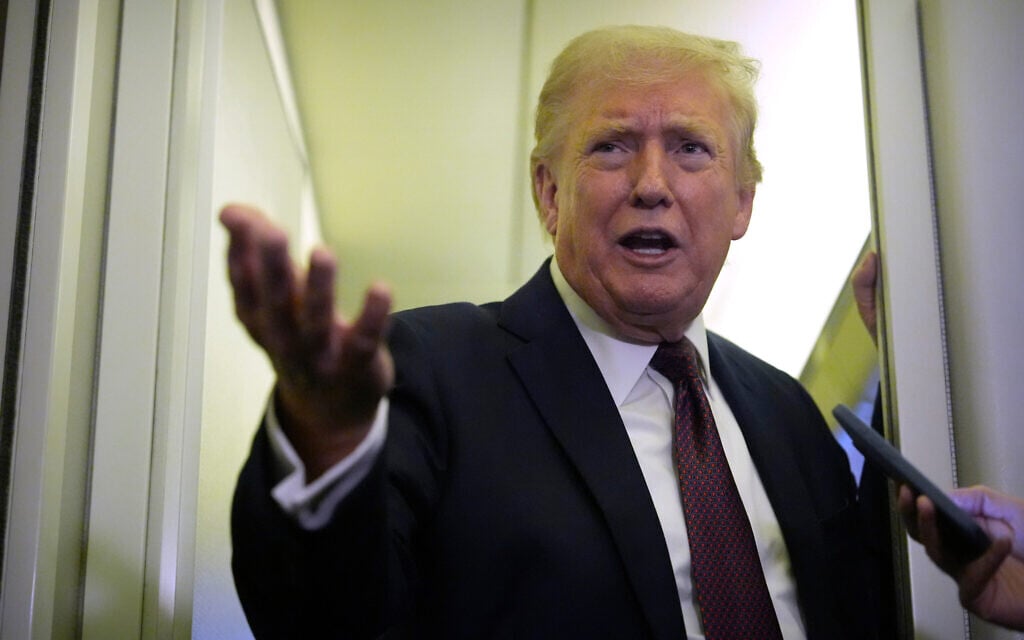
US president appears unable to explain why he launched conflict or how he plans to end it, to an American public that feels it's paying the price The post Two weeks into Iran war, Trump knocked back on his political heels as midterms loom appeared first on The Times of Israel.
Saudi Arabia reports drone interceptions over Riyadh, 55 shot down overnight Saudi Arabia’s Ministry of Defense said its air defences intercepted and destroyed 55 drones in the Eastern Province overnight. The ministry also said three drones were shot down over Riyadh and the Eastern regions. In a statement, the ministry’s official spokesperson said the drones were intercepted by Saudi air defences, adding that “all hostile targets were destroyed,” without providing further details. المتحدث الرسمي لـ #وزارة_الدفاع: اعتراض وتدمير 12 مسيّرة في المنطقة الشرقية. pic.twitter.com/hXs1YMRATD March 16, 2026
Israel army says begun 'limited targeted ground operations' in southern Lebanon The Israeli military said on Monday it had begun what it described as "limited ground operations" in southern Lebanon. The military claimed the operations were against "key Hezbollah strongholds" in the area. Israeli strikes have killed 826 people in Lebanon since the war began, according to official Lebanese figures.

Can this US-Israeli war of choice on Iran be stopped? Nelson Wong on Fri, 03/13/2026 - 18:54 Time is short. Every day the bombs fall, the risk of wider escalation grows, and the institutions preserving global peace are further eroded Members of Iran’s Red Crescent society walk near smoke plumes after an air strike on the Shahran oil refinery in northwestern Tehran on 8 March 2026 (AFP) On The bombs falling on Iran represent more than just another Middle Eastern conflict. They represent a fundamental assault on the international legal order, a deliberate escalation by powers that have chosen military force over diplomacy, and a dangerous gamble with global stability. As the United States and Israel prosecute their joint military operation against the Islamic Republic, we must ask ourselves: can this war of choice be stopped? And perhaps more urgently, what are its true objectives? This is not a war of necessity. Iran was not attacking the US or Israel. It was engaged in diplomatic negotiations when it was attacked. This is a war of choice, chosen by Washington and Tel Aviv, imposed on Tehran, and justified through claims that crumble under scrutiny. Article 2(4) of the UN Charter prohibits “the threat or use of force against the territorial integrity or political independence of any state”. Self-defence is permitted only “if an armed attack occurs”. (adsbygoogle = window.adsbygoogle || []).push({}); No such attack occurred. The “imminent threat” invoked by US officials has been a pretext for aggression throughout history, from the Gulf of Tonkin to the Iraq War. The US and Israel have bombed Iranian cities, killing Iran’s supreme leader, top officials and hundreds of civilians, including around 160 children at a girls’ school. This is not self-defence. This is blatant aggression. The hypocrisy is striking. The same powers that lecture others about the rules-based order are tearing that order apart. The message is clear: international law applies to everyone except the US and its closest allies. Iran's right to self-defence In response to the attacks that began in February, Iran has struck US military bases in neighbouring Gulf countries used as launching pads for strikes on its territory. Western media portrays this as escalation, but this portrayal is backwards. Iran’s strikes are acts of self-defence. A nation under attack has the right to strike back at the forces targeting it, including the bases from which attacks are launched. (adsbygoogle = window.adsbygoogle || []).push({}); What is remarkable is Iran’s restraint. It has targeted military installations, not civilians, and it has made clear that its strikes will cease when the aggression ceases. Contrast this with the US-Israeli operation, which has bombed schools, residential areas and civilian infrastructure, killing indiscriminately with no concern for the laws of war. Gulf countries could pressure the US, but they remain caught between dependence on American security guarantees and fear of Iranian retaliation Gulf countries hosting US bases - Saudi Arabia, the UAE, Kuwait, Qatar and Bahrain - find themselves in an impossible position. By allowing their territory to be used for attacks on Iran, they have made themselves legitimate targets under international law. The US could stop this war tomorrow. But the Trump administration shows no inclination to de-escalate. The influence of the Zionist lobby, acknowledged by Secretary of State Marco Rubio (though clumsily), appears decisive. Israel sets the pace; the US follows. Israel could stop this war. But Prime Minister Benjamin Netanyahu’s government has its own reasons to prolong the conflict, including domestic pressures, strategic ambitions, and a desire to eliminate what it sees as an existential threat. Gulf countries could pressure the US, but they remain caught between dependence on American security guarantees and fear of Iranian retaliation. European countries have diplomatic relationships and economic leverage, but they have shown themselves unwilling to act independently of Washington. This leaves Russia and China. Both have voiced disapproval of the unprovoked war and called for a return to negotiations. Both view Iran as a strategic partner. Russia, deeply engaged in the Middle East, views a weakened Iran as a strategic loss. China has even more at stake: Iran is a key node in the Belt and Road Initiative and a major oil supplier, and the neighbouring Gulf countries are home to substantial Chinese investments. A destabilised Iran threatens Chinese interests directly. But their influence is limited. They can provide diplomatic support, offer mediation, and use their UN Security Council positions. But ultimately, the decision to end this war lies with those who started it. The grand strategy Are we witnessing disconnected events, or a pattern aimed at containing Washington’s strategic competitors? Consider the record: a pressure campaign against Venezuela, which is aligned with Russia and China; threats over the Panama Canal, where serious Chinese investments rest; bombing Iran, a country integrated deeply with Russian and Chinese interests; and renewed threats against Cuba - all of this while the US has explicitly identified China as a “pacing challenge” and Russia as an “acute threat” in strategic documents. (adsbygoogle = window.adsbygoogle || []).push({}); Iran matters for its connections to Eurasia. Russia’s strategic alliance with Iran is no secret, and it has also relied on countries in the region for money transfers bypassing western systems, gold trade, and access to warm-water ports. Disrupting these connections weakens Russia. China imports substantial oil from the Middle East through the Strait of Hormuz, while Chinese goods flow along Belt and Road routes traversing Iran. A war destabilising this region threatens all these interests. By serving Israel's agenda, Trump betrayed Gulf allies Read More » If this is a coordinated strategy, the US is using military power not just for immediate objectives, but to disrupt the economic and strategic connections underpinning the rise of other powers, namely China and Russia. This war of choice can be stopped, but not easily. It requires sustained pressure from multiple directions: Russia and China coordinating diplomatic efforts, Gulf states asserting their interests, European countries acting independently, and the international community defending the UN Charter. Most of all, it requires the American people to demand that their government cease its aggression. The antiwar movements that helped end Vietnam, opposed the war in Iraq, and challenged endless wars over the last two decades must be revived. But time is short. Every day the bombs fall, the risk of wider escalation grows. Every day the fighting continues, the institutions preserving international peace are further eroded. We must act now. We must demand our governments choose diplomacy over war. The alternative is too terrible to contemplate. A widened war in the Middle East would destabilise the global economy. It would threaten energy supplies. It would displace millions. It could draw in other powers, including Russia and China, with consequences no one would be able to predict. And it would deal a lasting blow to the non-proliferation regime, opening the door to a nuclear-armed Middle East, and the collapse of the entire system of arms control built since the Cold War. This war of choice can be stopped. But only if we choose to stop it. The views expressed in this article belong to the author and do not necessarily reflect the editorial policy of Middle East Eye. War on Iran Opinion Post Date Override 0 Update Date Mon, 05/04/2020 - 21:29 Update Date Override 0
'Netanyahu wanted Tehran in smoke': Iran oil strikes highlight US-Israel disagreements on war ynetnews

Morning update Good morning, Middle East Eye readers, Here are some of the latest key updates from the Iran war: Japan has started to release strategic oil reserves to combat surging fuel prices amid the ongoing US-Israeli attack on Iran. The UAE’s defence ministry says its air defence systems are currently responding to incoming missile and drone threats from Iran. US President Donald Trump is working to assemble a coalition of countries to reopen the Strait of Hormuz and is planning the seizure of Iran's Kharg Island oil hub, Axios reported. All flights to and from Dubai were suspended following a fire near Dubai International Airport, according to Emirati authorities, who urged passengers not to travel to the airport. Saudi Arabia has intercepted more than 60 drones over its territory since Monday at midnight, according to figures released by its defence ministry. Israeli raids on several towns in the south of the country killed 10 people and wounded 13 others, Lebanon’s ministry of health said. The UK sait it will provide over 5 million pounds ($6.62 million) of emergency funding to support humanitarian work of the Lebanese government. Iran’s foreign minister, Abbas Araghchi, accused Israel of committing a crime against the environment after strikes hit fuel tanks in Tehran. A boy stands near a house that was damaged by a strike, amid the US-Israeli war with Iran, in Tehran, Iran, 15 March, 2026. (Majid Asgaripour/West Asia News Agency via REUTERS)
Thousands face worsening illness after closure of key crossing halts medical evacuations.
Imperial Decline in the Straits of Hormuz CounterPunch
Existential Attrition: Iran’s Closure of the Strait of Hormuz CounterPunch
Iran war an 'abject lesson' on fossil fuel dependence, UN climate chief says The disruption to energy markets caused by the Iran war is an "abject lesson" in the risks of relying on fossil fuels, and underscores the case for governments to wean their economies off oil and gas, the UN climate secretary will tell EU policymakers on Monday. While geographically far from the crisis in the Middle East, the European Union has felt its disruption through surging global energy prices. European gas prices have jumped by 50 percent during the two-week war. "Fossil fuel dependency is ripping away national security and sovereignty, and replacing it with subservience and rising costs," Simon Stiell, Executive Secretary of the UN climate change arm, will tell EU officials and government ministers at an event in Brussels. "Europe is more reliant on fossil fuel imports than almost any other major economy," Stiell will say, in prepared remarks that warned reliance on fossil fuels was leaving consumers "at the mercy of geopolitical shocks and price volatility". The EU imports more than 90% of its oil and 80% of its gas.
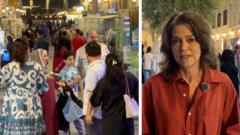
The BBC's International News correspondent, Barbara Plett Usher, visits Doha's Souq Waqif market as strikes in the region continue.
Japan not planning naval deployment to Hormuz, prime minister says Japanese Prime Minister Sanae Takaichi said that the country is not currently planning to send ships to help secure the Strait of Hormuz, after US president Donald Trump urged allies to deploy naval assets to the region. “We have not yet made any decisions whatsoever regarding the dispatch of naval vessels,” Takaichi told parliament. She added that the government is examining “what Japan can do independently within our legal framework” to protect Japanese-linked ships and their crews. In a social media post on Saturday, Trump said, “Hopefully China, France, Japan, South Korea, the UK, and others” will send ships to the region, but Takaichi said there was no formal request to Tokyo yet.
Iran Red Crescent clinic damaged in Tehran after Israeli air strikes The Iranian Red Crescent Society said one of its clinics and an aid relief post in Tehran were damaged during the latest wave of air strikes on the city. Footage released by the group showed broken glass and damaged equipment scattered inside the facility. The damage followed reports of several explosions in Tehran after Israel said it had launched a new round of attacks on the capital. آسیب به یکی از پایگاه های امدادی و درمانگاه هلال احمر در استان تهران به دنبال حملات هوایی pic.twitter.com/E0sKavhXwH March 15, 2026
Iran taking steps to prevent anti-establishment protests, Tehran residents tell BBC BBC