News
12,736 articles from 50+ sources

submitted by /u/Whole-Surround6878 to r/worldnews [link] [comments]
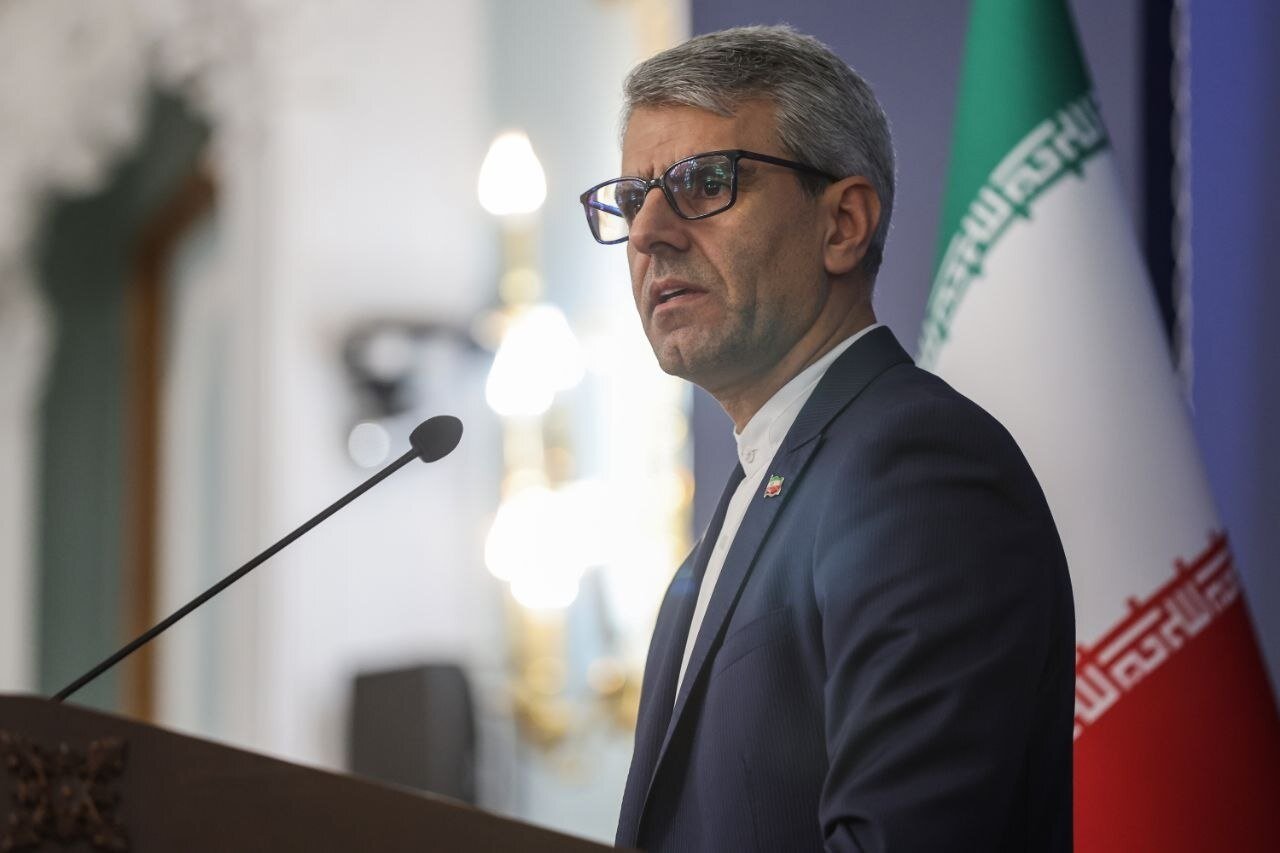
TEHRAN, Mar. 12 (MNA) – Iranian Foreign Ministry Spokesman Esmaeil Baghaei has reacted to a statement raised by US Senator Chris Murphy, emphasizing, “This is what the American people need to know.”
Questions mount for Hegseth over possible US involvement in strike on Iranian school BBC

Muslim nations criticise Israel for Al-Aqsa Mosque Ramadan closure Eight Islamic and Arab countries on Thursday condemned Israel for keeping the Al-Aqsa Mosque in Jerusalem closed during the Muslim holy month of Ramadan. The foreign ministers of Pakistan, Egypt, Jordan, the United Arab Emirates, Indonesia, Turkey, Saudi Arabia and Qatar called it "illegal and unjustified". In a joint statement, they said the continued closure of the mosque was "a flagrant violation to international law... and the principle of unrestricted access to places of worship". Palestinians warn that the move forms part of a broader Israeli strategy to exploit security tensions to impose further restrictions and consolidate control over al-Aqsa Mosque. The closure came under what Israeli authorities describe as a state of emergency following its launch of a war with Iran on February 28. Muslim devotees offer Friday noon prayers at the Al-Aqsa compound in the Old City of Jerusalem on 27 February, 2026, during the holy month of Ramadan. (Ahmad Gharabli / AFP)

Iranian press review: Larijani believed US was not seeking agreement before the war MEE correspondent on Thu, 03/12/2026 - 10:46 Meanwhile, historic sites are damaged in several cities, athletes raise funds to rebuild a school destroyed by the US and Israel, and civilians in Tehran say they have nowhere to flee US special envoy Steve Witkoff arriving at his hotel during talks with Iran on its nuclear programme, in Geneva on 26 February, before the US and Israel launched their war on Iran (Fabrice Coffrini/AFP) Off US was not seeking agreement in talks with Iran Saeed Laylaz, an economist and reformist activist, has revealed details about the last round of Iran–US negotiations that were underway before the US and Israel began the war in the Middle East. He said that no matter how many concessions the Iranian side offered, the US was not satisfied. In an interview with the Etemad daily, Laylaz said that in September, he and a group of political and economic experts were invited to a meeting with Ali Larijani, secretary of the Supreme National Security Council, to review the negotiations. According to Lailaz, Larijani updated the group about the talks with US special envoy Steve Witkoff. He said that during the negotiations, it became clear to the Iranian side that the US was not interested in reaching an agreement. “No matter how many concessions we made, Witkoff and the other American negotiators would first show interest,” Larijani said, according to Laylaz. “Then their team would return to the US to coordinate among themselves. When they came back to the negotiation table, they told the Iranian side: ‘That’s not enough.’” 'No matter how many concessions we made...when they came back to the negotiation table, they told the Iranian side: ‘That’s not enough' - Saeed Laylaz “This process was repeated until we realised that the US was not really looking for an agreement with Iran,” Laylaz quoted Larijani as saying. He added that Larijani also told those at the meeting that he expected a new military attack against Iran by the end of December 2025. Laylaz, a critic of Iran’s authoritarian system who has been arrested and imprisoned several times, also addressed claims that the Islamic Republic could have prevented the war. “No government in Iran could meet the Americans’ demands, because these demands would mean the collapse of Iran’s territorial integrity and independence, not just the collapse of the Islamic Republic,” he stressed. Ancient artefacts caught in bombings Photos and videos of US and Israeli attacks on Iran show damage to historic monuments across the country, while Cultural Heritage Organisation officials have been trying to protect millennia-old artefacts kept in museums. On Monday, strikes hit the historic city of Isfahan, damaging several well-known landmarks, some of which are listed as Unesco World Heritage sites. (adsbygoogle = window.adsbygoogle || []).push({}); According to a video released by cultural heritage groups, the attacks damaged Chehel Sotoun Palace, Rekib Khaneh Mansion, Timuri and Ashraf halls, as well as the historic building of Saadi high school. Windows at Ali Qapu Palace, located in Naqsh-e Jahan Square, were also shattered. Israel stages attack in Iran with explosions heard over Isfahan Read More » On Sunday, reports from Lorestan Province said provincial offices of the Cultural Heritage Organisation, located in a historic building, were destroyed in the attacks. The nearby Falak-ol-Aflak Castle also suffered damage. In Tehran, Golestan Palace, a World Heritage site, was also among the historical locations damaged during the first days of the war. Meanwhile, the Haft Sobh daily posted a photo on its official X account from inside the National Museum of Iran. The image shows the nearly 2,500-year-old statue of Darius I surrounded by protective barriers placed around the artefact. According to official sources, museum staff have removed many movable artefacts from exhibition halls and walls to protect them from the explosions. The attacks on historic sites also sparked reactions online. Hananeh Nabavi, an Iranian living in Sweden, recalled a 2020 message by Donald Trump in which he threatened to target Iran’s cultural sites. Reposting the message on X, she wrote: “Trump threatened to destroy Iran’s cultural monuments six years ago, and now he is carrying out his threats… Before this, ISIS and the Taliban had a record of attacking historical monuments in their dossier.” Athletes launch campaign to rebuild Minab school The killing of 175 people, most of them students, in an attack on the Shajareh Tayyibeh school in the city of Minab on the first day of the US-Israeli attacks remains a major topic in Iranian media. A group of athletes have now launched a campaign to raise money to rebuild the school. Iran says will hit economic targets in the region Read More » Ebrahim Shakuri, a former Iranian footballer and current coach of the Paykan football team, announced the campaign and described the Shajareh Tayyibeh school as a symbol of resistance. “Before we are athletes, we are human beings,” Shakuri said. “It hurts every person to see such events. For us, schools and sports venues have always been sacred and respected.” He added that a number of Iranian athletes have already expressed their readiness to join the campaign and help raise the necessary funds. Shakuri also criticised comments by President Masoud Pezeshkian, who had apologised to Arab countries after they were targeted during Iran’s response to Israeli and US attacks. “Some of our officials are apologising,” Shakuri said. “The Iranian people should not apologise. Regardless of their beliefs, religion or political views, the Iranian people were not responsible for this war. “If anyone should apologise, it is those who attacked our country and caused this,” he concluded. ‘Where can we go?’ Iranians ask as bombing continues Since the start of the second Israeli-American war on Iran in less than a year, much of the reporting in Iranian media has focused on war damage, the destruction of residential areas, and the deaths of civilians. Yet despite the heavy bombing, many people remain in Tehran because they have nowhere else to go. On Sunday, the Shargh daily reported on the destruction of residential buildings in the Shahin neighbourhood in northwest Tehran. 'The cost of finding accommodation outside Tehran is staggering. Everything is getting very expensive, and we can’t afford it' - Tehran resident The main target of the strike, which took place on the morning of 5 March, was the police headquarters in the area. But homes and shops within 300 meters of the police station were also damaged. Describing the aftermath of the bombing, Shargh wrote: “Broken windows, torn-off balcony screens, deep holes in the walls of houses, ripped curtains, doors blown off their hinges, and people still in shock from the explosion.” According to the daily, some residents are still living in half-destroyed buildings and fear the area could be hit again. Shargh quoted one resident as saying: “They say they hit everything twice.” Residents of the Shahin neighbourhood, despite living close to the police station, say they have nowhere to go. “Where can we go?” one resident said. “The cost of finding accommodation outside Tehran is staggering. Everything is getting very expensive, and we can’t afford it.” *Iranian press review is a digest of news reports not independently verified as accurate by MEE. Media News Post Date Override 0 Update Date Mon, 05/04/2020 - 21:19 Update Date Override 0
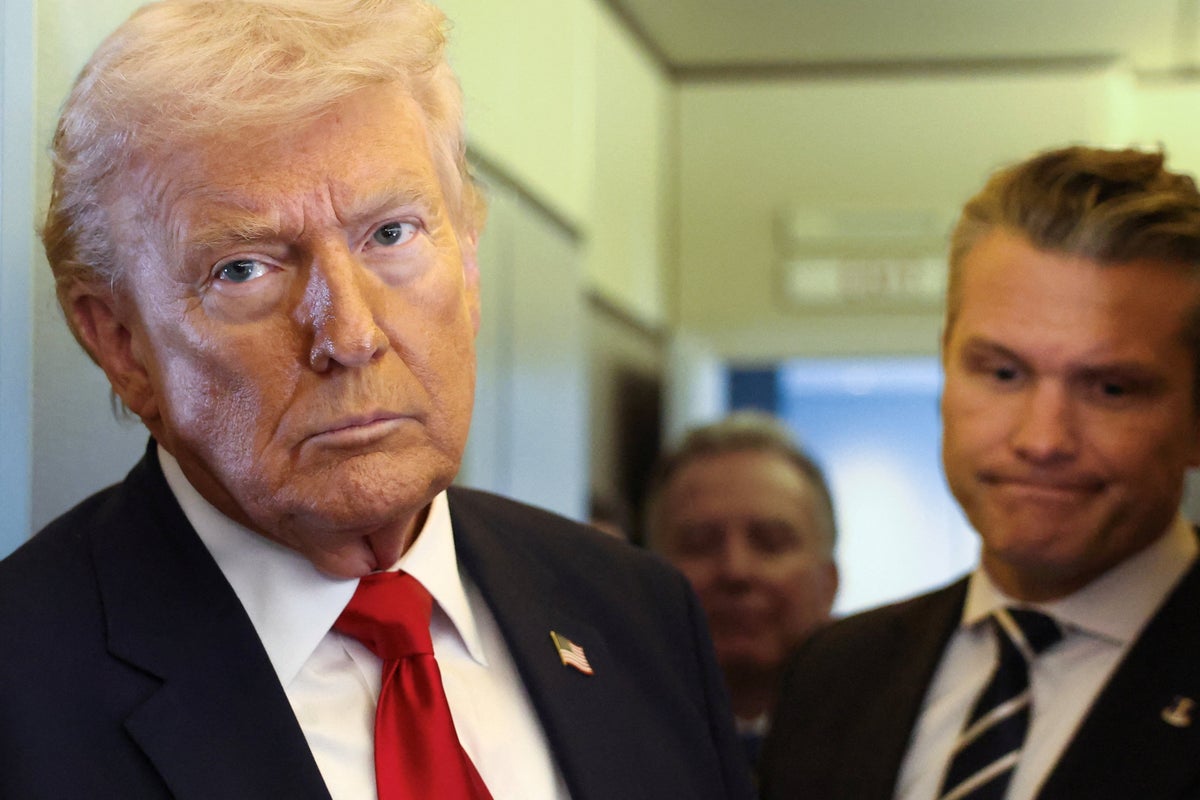
The most powerful nation in the world is now being led by a rogue president who rejects its longstanding values As we reach the 13th day of the war in Iran – with death and destruction rippling throughout the Middle East – it’s important to bear in mind where the real failure lies. So far, nearly 2,000 people have been killed, including 175 Iranian schoolchildren and seven US service members. At least 140 US service members have been wounded, several critically. The final tallies on both sides will almost certainly be far higher. Continue reading...
Death toll from Israeli strikes on Lebanon rises to 687 Israeli strikes on Lebanon have killed at least 687 people since 2 March, Lebanon's information minister said on Thursday, as Israel threatened to expand its operations as it fights Hezbollah in the country. In a statement following a cabinet meeting, Paul Marcos said that "the number of killed reached 687, including 98 children and 52 women".

Hacker group Handala claimed responsibility for attack that caused ‘global disruption’ to Stryker Corporation’s systems An Iran-linked group said it hacked a US medical company, causing “global disruption” to its systems, in retaliation for the bombing of the Minab school in Iran, in an attack seen as widening the Middle East into the cyber realm. Handala, a hacker group, claimed responsibility for the attack on Wednesday on the Stryker Corporation, which makes medical devices and is based in Michigan. It affected thousands of employees using the company’s Microsoft systems. Continue reading...
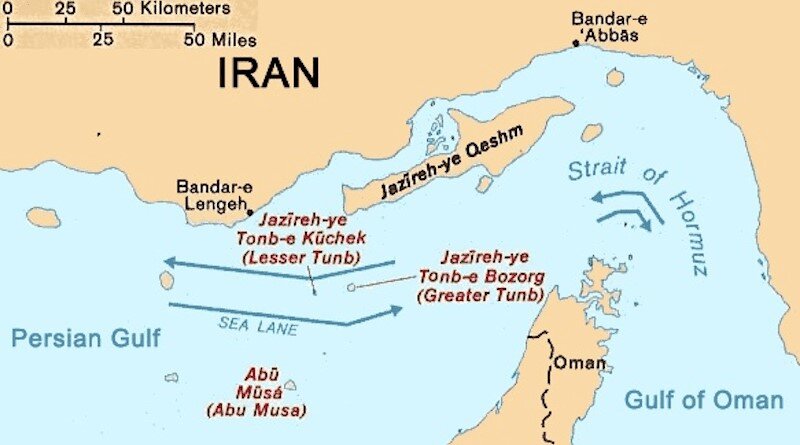
TEHRAN, Mar. 12 (MNA) – Speaker of Iranian parliament has warned that any attempts to invade the country's islands in the Persian Gulf will draw harsh response from Iran.

Israeli settlers in West Bank use cover of Iran war to attack and murder Palestinians Katherine Hearst on Thu, 03/12/2026 - 09:34 At least six Palestinians have been killed in the past week alone, as activists report unprecedented violence Mousa and Omar Hamayel, both 39, at the site where Thaer Hamayel was killed during an attack by Israeli settlers near Ramallah, in March 2026 (Reuters/Ammar Awad) Off Early on Sunday morning, residents of Abu Falah, a small town near Ramallah in the occupied West Bank, spotted a group of around 100 Israeli settlers gathered on a hill near their homes. The masked men then descended on the town, with the intention of razing Palestinian homes and evicting their residents. The residents are used to continuous harassment by settlers from outposts dotting the surrounding hills, but say they have never experienced this scale of violence before. They were panicked by the settlers, who were armed with M16 rifles, so they sent urgent messages via village WhatsApp groups. Other residents emerged from their homes to block the path of the attackers. “When the settlers realised they couldn’t burn our homes, they opened fire on us,” Omar Hamayel, an eyewitness, told Middle East Eye. (adsbygoogle = window.adsbygoogle || []).push({}); Two of Hamayel's relatives were killed by the settlers: Fare Jawdat Abu Nurah, 57, and Faruq Hamayel, 30, were both shot in the head. The attackers also left seven Palestinians injured. “One man was shot in the thigh. While he was lying wounded on the ground, settlers attacked him with rocks, attempting to kill him with their fists and stones. Other Palestinians tried to pull him away and save him,” Hamayel said. Teargas fired at medical centre An hour and a half later, the Israeli military arrived. They fired teargas at residents gathered outside the medical centre, who had come to check on their relatives. One of them, Muhammad Jawdat Abu Nurah, a 54-year-old father of four, who was asleep at the time of the attacks, emerged from his home only to suffer a cardiac arrest due to gas inhalation. He was rushed to hospital, where he was pronounced dead. (adsbygoogle = window.adsbygoogle || []).push({}); Following the attack, activists circulated footage on WhatsApp appearing to show a new settler outpost erected a few hundred metres away from the site of the killings. The three killed in Abu Falah are among six Palestinians killed in settler attacks across the West Bank in the past week, as violence surges under cover of the US-Israel military assault on Iran. The settler attacks were not concentrated in one area, but occurred in villages across the West Bank. Days after the launch of the strikes on Iran, in the early hours of 2 March, settlers shot dead brothers Muhammad and Fahim Azem in the village of Qaryut, in the Nablus governorate. A few days later, on the opposite end of the West Bank in Wadi a-Rahim, in the south Hebron hills, an armed settler killed 26-year-old Amir Muhammad Shanaran and severely injured his brother, Khaled. Malak Beirat, 26, smells the scent of her husband Thaer Hamayel on the jacket he left behind before he was killed by Israeli settlers in the village of Abu Falah (Supplied) (adsbygoogle = window.adsbygoogle || []).push({}); Ameen Shoman, a member of the Fatah regional committee in Ramallah and Bireh, said that the surge in attacks has been accompanied by an acceleration of the establishment of illegal outposts, particularly in Areas B and C. “Thousands of trees have been cut and hundreds of vehicles and tens of Palestinian homes have been burned,” Shoman told MEE. “They are taking advantage of the conditions on the ground to impose a fait accompli policy through geographical and demographic changes in the Palestinian territories,” he said. An ethnic cleansing 'opportunity' Rami Kukhun, advocacy and policy officer at the NGO Première Urgence Internationale, said the scale and severity of the violence is unprecedented. ‘I don't remember a week where six people would get killed by settlers, and in different areas all over the West Bank,” Kukhun told MEE. “It's much more common now to hear that somebody has been killed by settlers or injured badly. Israeli settlers attack Palestinian mosque in occupied West Bank during Ramadan Read More » Since October 2023, over 1,000 Palestinians have been killed by settlers and Israeli soldiers across the occupied West Bank. One in five of them were children. Yair Dvir, a spokesperson for B’Tselem, said the surge in killings is also due to the fact that settlers are increasingly deploying live ammunition, and targeting bigger villages in Area B, like Qaryut and Abu Falah. Settler attacks previously targeted smaller rural communities in Area C – which constitutes roughly 60 percent of the West Bank and is under Israeli control – but are now spreading to larger towns in Area B, which is administered by the Palestinian Authority. “We are seeing settlers talking about it openly, about the fact that they have the opportunity to increase the ethnic cleansing,” Dvir said. According to B’Tselem, some 57 communities have been forcibly displaced since 7 October 2023, four of them in the past week alone. Following Saturday’s attack on Abu Falah, the Israeli military issued a statement promising "zero tolerance for civilians taking the law into their own hands”. Settlers have long conducted raids in collaboration with the military. But now, the cooperation seems to be deepening, with settlers forming vigilante militias and being armed with military-grade weapons. On Monday, Israeli National Security Minister Itamar Ben Gvir authorised some 300,000 residents of Jewish neighbourhoods in Jerusalem to carry firearms. Jonathan Pollak, an anti-occupation activist, reported that in the past week, settlers in civilian clothing had been seen manning checkpoints, along with Israeli soldiers. He added that, also in the past week, armoured vehicles have been seen in villages. “This is not something we’ve seen since the Second Intifada,” Pollak said. “And even then it was rare: heavy armoured vehicles were mostly used in cities and refugee camps, not in villages. “The tactical reason for it is completely unclear, because they don’t do anything,” he said. “There seems to be no reason, other than to escalate.” A lawless land The Jordan Valley, which lies in Area C, offers a stark vision of where the rest of the West Bank is headed. The fertile strip of land, which runs along the West Bank’s eastern flank, was once dotted with Palestinian herding communities. It is earmarked to form part of a future Palestinian state. Now, it has largely been emptied of Palestinians by near daily settler attacks run from neighbouring illegal outposts. 'The daily harassment has become unbearable' – Amos Goldberg, Jordan Valley Activists Meanwhile, decades of Israeli policies have barred Palestinians from agricultural land by designating swathes of it “firing zones” and choking off water supplies. “They can gain huge chunks of land by evicting small communities,” Amos Goldberg, a member of a network of Israeli activists, Jordan Valley Activists, told MEE. “The daily harassment has become unbearable, it is completely lawless territory.” The campaign was turbo-charged in the wake of 7 October 2023. Now, the takeover is almost complete. In January, 12 families were forced to leave the last remaining Bedouin village in the southern Jordan Valley. The weeks since the launch of the war on Iran have seen a slew of attacks on communities in the north, where only a handful remain. On Tuesday night, activists reported that settlers stormed the last remaining homes in the community of Hammamat al-Maleh. The hamlet has suffered eight attacks in the last two weeks alone. Settlers reportedly assaulted 74-year-old Haj Abu al-Raed and two Israeli activists. Activists reported that the assailants “broke the elder’s glasses and beat him until he bled”. Days before, the commander of the Jordan Valley Brigade, Brigadier General Gilad Shriki, toured communities in the Northern Jordan Valley, including Hammamat al-Maleh, instructing them to leave. Shriki warned them that his troops were constructing a barrier, which would seal the annexation of the area, severing it from the rest of the West Bank and barring farmers from reaching their land. The separation barrier, which will run for 22km in the northern Jordan Valley, is the death knell for communities like Hammamat al-Maleh. Shriki told the remaining communities they should leave now, to spare themselves the heartbreak of seeing their homes demolished. "This is Area C," he said. "This land belongs to the Jews." Israel's genocide in Gaza Heba Nasser Ahmad Shoman London the occupied West Bank News Post Date Override 0 Update Date Mon, 05/04/2020 - 21:19 Update Date Override 0

UN Security Council condemns Iran attacks on Gulf without mentioning US and Israel Rayhan Uddin on Thu, 03/12/2026 - 10:29 Iran says resolution is 'blatant misuse' of Security Council, as Russian draft calling for all sides to de-escalate is rejected Mike Waltz, US Ambassador to the UN and president of the Security Council for the month of March, at UN headquarters in New York City on 11 March 2026 (Michael M. Santiago/Getty Images via AFP) Off The UN Security Council has voted to call for an end to Iranian attacks on the Gulf, in a resolution that did not mention US or Israeli attacks on Iran, prompting strong criticism from Tehran’s ambassador. The resolution was tabled by Iran's Gulf neighbour Bahrain and sponsored by 135 countries. It demanded “the immediate cessation of all attacks by the Islamic Republic of Iran against Bahrain, Kuwait, Oman, Qatar, Saudi Arabia, the United Arab Emirates, and Jordan”. It also condemned actions or threats by Iran “aimed at closing, obstructing, or otherwise interfering with international navigation through the Strait of Hormuz”. The resolution was passed by 13 votes to none against, with Russia and China abstaining. A second draft tabled by Russia, which called on all sides to cease hostilities, was rejected. (adsbygoogle = window.adsbygoogle || []).push({}); Jamal Fares Alrowaiei, Bahrain's UN envoy, said the vote reflected the Gulf’s key role in the global economy. “This is why ensuring the security of this region is not merely a regional matter, it is a common international responsibility that is closely linked to the stability of the global economy and energy security,” he told the Security Council. Amir Saeid Iravani, Iran’s ambassador to the UN, said the adoption of the text was a “blatant misuse” of the Security Council that leaves “a lasting stain on its record”. “Let me make it clear: this resolution is a manifest injustice against my country, the main victim of a clear act of aggression,” he said. 'Biased and one-sided' The war began on 28 February after the US and Israel launched strikes across Iran, killing Iranian Supreme Leader Ali Khamenei, senior officials and many civilians. (adsbygoogle = window.adsbygoogle || []).push({}); Iran has responded by launching drone and missile attacks on Israel, as well as every country in the Gulf. "Iran's strategy of sowing chaos, of trying to hold their neighbours hostage, trying to shake the resolve of the region, has clearly backfired, as shown by this vote today," said the US ambassador to the UN, Mike Waltz. US has ‘no plan’ for Iran war and Strait of Hormuz, senators say after briefing Read More » Beijing said that the US and Israel launched strikes without Security Council authorisation and must cease their actions immediately. While stressing that the sovereignty and security of Gulf states must be respected, Fu Cong, China’s representative, said the text “does not fully reflect the root cause and overall picture of the conflict in a balanced manner”. Vasily Nebenzya, Moscow’s representative, said the resolution was “biased and one-sided”. “The Council’s adoption could be interpreted by bad-faith actors, and first and foremost by those who started this war, to continue their acts of aggression against Iran,” he warned. Nebenzya then introduced a separate draft, which he said was an “impartial document aimed at urgently de-escalating the situation”. He said the text intentionally did not mention the names of any parties to the conflict. The Russian draft was rejected by a vote of four in favour (China, Pakistan, Russia and Somalia) to two against (Latvia and the US), with nine abstentions (Bahrain, Colombia, Democratic Republic of the Congo, Denmark, France, Greece, Liberia, Panama and the UK). War on Iran News Post Date Override 0 Update Date Mon, 05/04/2020 - 21:19 Update Date Override 0

It came as oil prices lifted higher again on Thursday as Iran continued to strike key energy and shipping infrastructure in the Middle East.

In photos: Aftermath of Israeli attacks on Lebanon Mourners attend the funeral of four family members killed overnight by Israeli air strikes that targeted the southern Lebanese coastal city of Tyre on 12 March, 2026. (AFP) A man stands on the rubble of a destroyed building as firefighters work at the site of overnight Israeli strikes in the Haret Hreik neighbourhood of Beirut’s southern suburbs on 12 March, 2026. (AFP) Firefighters work at the site of overnight Israeli airstrikes in the Haret Hreik neighbourhood of Beirut’s southern suburbs on 12 March, 2026. (AFP) People inspect a damaged car in the aftermath of an Israeli strike in Ramlet al-Baida at Corniche Beirut, where displaced people have been sleeping rough or in tents on the streets. (Reuters)
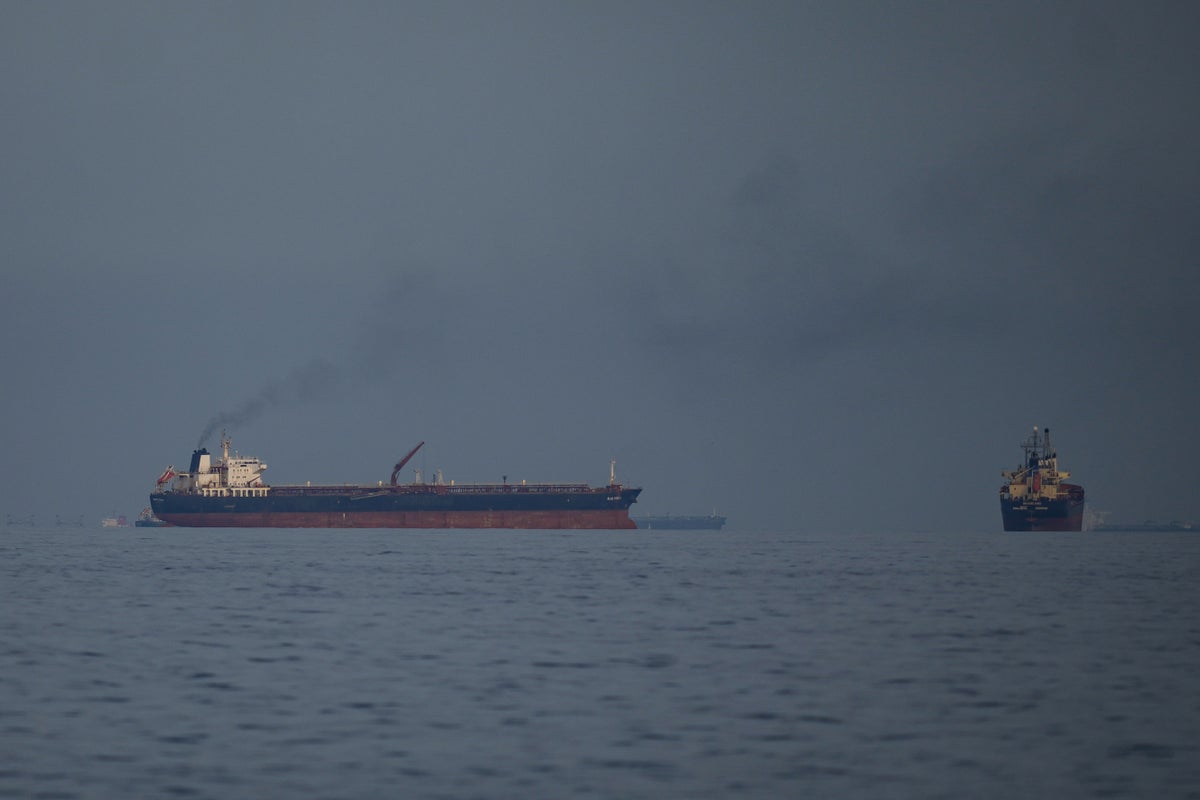
Some commercial ships near or in the Strait of Hormuz and in the Persian Gulf have declared themselves as China-linked since the Iran war began, marine traffic data show, as their operators try to reduce risks of being targeted in attacks

Iran continues to claim attacks on commercial ships and lay mines in an effort to squeeze international energy markets and pile pressure onto the US
Thailand seeks apology from Iran after vessel hit in Strait of Hormuz Thailand's foreign ministry has demanded an apology from Iran over damage caused to a Thai vessel that was hit by a projectile in the Strait of Hormuz on Wednesday, which led to a fire and forced the crew to abandon ship. The ministry said it was seeking clarity from Iran's ambassador on Thursday on the facts surrounding the incident. Iran's Revolutionary Guards said in a statement carried by the Tasnim news agency that the ship was "fired upon by Iranian fighters".

Russia calls on Israel and US to end the Iran war Russia on Thursday called on Israel and the United States to end their attacks on Iran and come to the negotiating table. Russian Foreign Ministry spokeswoman Maria Zakharova said the humanitarian situation in the region was extremely difficult and the escalation of the conflict was cause for deep concern. A woman sits with children wrapped in blankets in a makeshift encampment along the waterfront in Beirut on 10 March 2026 (Anwar Amro / AFP)

TEHRAN, Mar. 12 (MNA) – An adviser to the late Leader of the Islamic Revolution has said that US forces will certainly be defeated in the conflict with the powerful Armed Forces of the Islamic Republic of Iran.

Israel army says Hezbollah fired 200 rockets Wednesday night The Israeli military said on Thursday that Hezbollah had fired around 200 rockets at Israel the night before, in what it described as the Lebanese armed group's "biggest barrage" since the war began. "Last night, Hezbollah timed a simultaneous attack with Iran, firing rockets and drones at towns and communities across Israel. The numbers (are) about approximately 200 rockets, approximately 20 UAVs (drones) and combine those with ballistic missiles that were being fired from Iran in the same time," military spokesman Lieutenant Colonel Nadav Shoshani told journalists in a briefing. "This was Hezbollah's biggest barrage" since the start of the war, he said, but added "we had a good aerial defence and rapid response, resulting in minimal casualties, only two or three direct hits... and a few civilians that were lightly injured". The sky is illuminated as an Iranian missile lands in Israel, amid the US-Israeli war with Iran, as seen from Tel Aviv, Israel, 12 March 2026. (Reuters/Dylan Martinez)