News
12,736 articles from 50+ sources
UAE, an oasis for business and partying, faces war The Washington Post

Sudan's RSF waged starvation campaign in siege of el-Fasher Oscar Rickett on Tue, 03/10/2026 - 12:12 New report from Yale's Humanitarian Research Lab finds deliberate targeting of North Darfur agricultural communities Satellite imagery shows destruction to farming communities outside el-Fasher, North Darfur, by the Rapid Support Forces, between March and June 2024 (Yale HRL/Vantor) Off Sudan’s Rapid Support Forces (RSF) waged a campaign of starvation against the people of el-Fasher, razing dozens of farming villages and devastating crop production around the city, according to a major new report corroborating UN allegations of genocide. The report, produced by Yale’s Humanitarian Research Lab (HRL) with Nasa’s Harvest programme, used satellite imagery and other data to identify 41 agricultural communities attacked between March and June 2024, the first months of a siege that went on for more than 500 days. Over the following months, two-thirds of those communities showed “no visible pattern of life”, suggesting residents had been displaced or killed. During the same period, the area of land being farmed declined by more than 80 percent. Forensic analysis of the patterns of damage to the buildings based on remote sensing data showed that the communities were attacked deliberately, Yale’s HRL said. Ten of the 41 communities attacked were razed more than once, the report found, with at least six communities targeted for burning three or more times. One of these was razed to the ground at least seven times. (adsbygoogle = window.adsbygoogle || []).push({}); Twenty-eight of the communities appear to have no visible pattern of life. These findings, the report said, suggest the attacks displaced or killed residents of the farming communities, which led to decreased food production in the region. The communities around el-Fasher razed by the RSF (Yale HRL) The Yale HRL report follows one last month from the UN Fact-Finding Mission on Sudan, which found that the RSF’s takeover of el-Fasher bore all the “hallmarks of genocide”, including the destruction of the means of survival. The UN’s report found that the RSF had “deliberately imposed conditions of life calculated to bring about the physical destruction of non-Arab communities, in particular the Zaghawa and the Fur”, two Black African groups that have been targeted by the RSF throughout the war. Yale’s HRL said that the intentional razing of agricultural communities corroborated these findings. The report is the first study of its kind to use remotely sensed data to assess food insecurity in conflict settings to corroborate an alleged campaign of intentional starvation. UAE backing for RSF in Darfur El-Fasher, the capital of North Darfur in western Sudan, was finally taken from the Sudanese Armed Forces (SAF) by the RSF in October 2025, following a lengthy siege that saw the paramilitary construct a network of earth walls around the city, trapping hundreds of thousands of residents inside a “kill box”. (adsbygoogle = window.adsbygoogle || []).push({}); While the United Arab Emirates continues to deny the allegations, Middle East Eye has reported extensively on its support for the RSF, citing evidence including satellite imagery, flight logs, weapons serial numbers and multiple sources. Thermal scarring showing the razed communities (Yale HRL/Vantor) Once the RSF stormed into el-Fasher, its fighters raped, executed and extorted residents in large numbers, according to extensive interviews conducted by Middle East Eye and later reports from the UN and Yale’s HRL. Civilians fleeing the city were also apprehended by the RSF and taken to makeshift detention centres, where they had blood taken from them. The war in Sudan, between the RSF and SAF, began in April 2023. More than 11 million people are currently displaced from their homes as a result of the war. While the UAE and its regional allies, including Ethiopia, Kenya, Chad and eastern Libyan general Khalifa Haftar, back the RSF, the SAF is backed by Egypt, Turkey and now Saudi Arabia, which is embroiled in an ongoing feud with its neighbour and erstwhile ally, the UAE. Sudan war News Post Date Override 0 Update Date Mon, 05/04/2020 - 21:19 Update Date Override 0
At a market in Turkmenistan's capital Ashgabat, pensioner Shemshat Kurbanova always used to pick the "juiciest" Iranian fruit -- but 10 days of war across the border have sent prices soaring and she is now worried how to get by. The Middle East war has tumbled global markets, with the effects being felt almost immediately in some of Tehran's closest neighbours. Iran last week banned all goods and agricultural exports, triggering economic pressure on secretive Turkmenistan and the wider Central Asian region, where Tehran had a growing economic footprint in recent years.
Iran War Live Updates: Pete Hegseth Says ‘We Will Not Relent’ Until Iran Is Defeated WSJ
US vs Iran on Strait of Hormuz: Trump's '20 times harder’ strike warning gets ‘peace or suffering’ retort | World News Hindustan Times
US, Israel seem to have 'no common plan', German chancellor says German Chancellor Friedrich Merz has voiced concern that the US and Israel appear to have "no common plan" for ending the war against Iran. "The United States and Israel have been waging war against Iran for over a week. We share many of these goals, but with each day of the war, more questions arise," Merz said on Tuesday. "We are particularly concerned that there is apparently no common plan for how this war can be brought to a swift and convincing end."
Iran war shocks continue to ripple through the global economy Euronews.com
Hegseth indicates Trump will decide when Iran war is complete NBC News
Latest polling shows the war in Iran is already unpopular at a historic scale MS NOW
Trump says Iran war is 'very complete, pretty much' as US and Israel continue to pound Tehran Jewish Telegraphic Agency
Climate change fears grip Nuuk as winter temperatures reach record highs.
.png?width=1200&auto=webp&trim=0%2C0%2C0%2C0)
As the US-Iran war rumbles on, Keir Starmer will be spending his days dashing in and out of lots of important meetings, including Cobra (which actually stands for ‘cabinet office briefing rooms’ – the origins of the ‘A’ remains a bit of a mystery).

Iranian missiles might be testing Nato air defences in Turkey to target crucial radar base Ragip Soylu on Tue, 03/10/2026 - 11:21 Nato deploys advanced model of Patriots to guard Kurecik radar base after ballistic missiles downed entering Turkish airspace An US-made MIM-104 Patriot surface-to-air missile is launched during a live fire exercise at the Chiupeng missile base in Taiwan on 20 August 2024 (Sam Yeh/AFP) Off Iranian missiles may have been testing Turkish airspace over the past week to target a crucial Nato radar base in Malatya, Middle East Eye understands. An Iranian ballistic missile that was heading toward Turkish airspace last week was intercepted by Nato air defence systems near the southern city of Hatay, flying nearly 100 km east of Turkey’s Incirlik air base, which previously hosted US military troops. A second Iranian missile heading toward Turkey on Tuesday was also shot down by Nato systems via US destroyers, which used the RIM-161 Standard Missile-3 (SM-3). The missile was reportedly determined to be targeting Incirlik, according to open-source reports. Nato analysis suggests the Iranian missiles were fired from east of Tehran toward Turkey. Hursit Dingil, a Turkish expert on Iran’s military capabilities at the Ankara-based Centre for Area Studies, told MEE that open-source, data-based military scenarios suggest the missiles might have been launched from the Revolutionary Guard’s Damghan missile base, which has underground facilities in Semnan province. MEE could not independently verify those details. (adsbygoogle = window.adsbygoogle || []).push({}); Iran's leadership this week denied responsibility, saying the incidents could have been false-flag attacks by Israel intended to trigger a crisis between the two neighbours. However, after carefully reviewing the issue on Tuesday, Turkish Foreign Minister Hakan Fidan called his counterpart Abbas Araghchi, telling him that firing ballistic missiles into Turkey was unacceptable, according to sources in his ministry. Some Turkish sources based in Ankara believe Iran’s decentralised command structure, especially after the killing of dozens of high-ranking Iranian officials, might be resulting in these sporadic attacks. Araghchi earlier this month claimed that some missile command centres “were isolated”. However, other Ankara insiders believe the missiles fired from Iran toward Turkey were actually testing Nato air defence systems for another purpose: assessing how to target the Kurecik radar base in Malatya, southeastern Turkey. An illustration showing "Engage on Remote" system (Ian Williams/CSIS) (adsbygoogle = window.adsbygoogle || []).push({}); Nato’s decision to deploy a new batch of Patriot missile defence systems to Malatya on Tuesday strengthens this view. The radar base, part of the European Phased Adaptive Approach (EPAA), hosts a TPY-2 X-band radar tasked with tracking Iranian missiles bound for Europe. It has been described as the keystone of Nato’s entire air defence architecture. “Without it, the capability of the Aegis Ashore sites to defend Europe becomes crucially degraded,” a 2019 report by Washington-based Center for Strategic and International Studies (CSIS) on the system said. The radar enables Nato to intercept missiles above Earth's atmosphere. The CSIS report states that if the TPY-2 radar in Turkey were to fail, Nato would lose early tracking information on incoming Iranian missiles, leaving the European continent without proper coverage. (adsbygoogle = window.adsbygoogle || []).push({}); The radar is part of a broader tactic called “engage on remote”, which utilises satellites, a sensor positioned closer to the enemy missile’s launch point, and intercept systems based in Europe and the eastern Mediterranean. “Due to its position, it would be very difficult for a Europe-bound ballistic missile fired from Iran to avoid the TPY-2’s field of view,” the report said. “A TPY-2 is a very high-resolution sensor, producing data that command and control systems can use to determine the type, speed, course, and possible destination of the threat missile.” Arda Mevlutoglu, a prominent independent Turkish defence expert, told MEE that Iran had been targeting other radars in the Gulf, making it plausible that Tehran could target Kurecik as well. The Wall Street Journal reported that Iran struck radar, communications, and air defence systems in Qatar, the UAE, Jordan, Bahrain, Kuwait, and Saudi Arabia, including the AN/FPS-132 radar at Qatar’s al-Udeid base and a TPY-2 radar attached to a Thaad battery in Jordan. An illustration showing Nato's the European Phased Adaptive Approach (EPAA) missile defence system (Ian Williams/CSIS) Although Turkey has hosted Spanish-owned Patriot missile systems in the south of the country since 2015, the PAC-2 model is considered insufficient for intercepting Iranian ballistic missiles. The new Patriot systems deployed to Malatya have reportedly been moved from Nato’s Ramstein base in Germany. These are PAC-3 models, capable of intercepting Iranian missiles. Gursel Tokmakoglu, a retired chief of air force intelligence, told MEE that the systems would cover eastern Turkey and the eastern Mediterranean and would be integrated into Nato assets in the region, allowing them to autonomously intercept Iranian missiles. A source familiar with the issue said that US destroyers tasked with intercepting ballistic missile threats toward Turkey were more effective in the eastern Mediterranean, and the Patriot systems would extend coverage to the remaining areas of the country. War on Iran Ankara News Post Date Override 0 Update Date Mon, 05/04/2020 - 21:19 Update Date Override 0
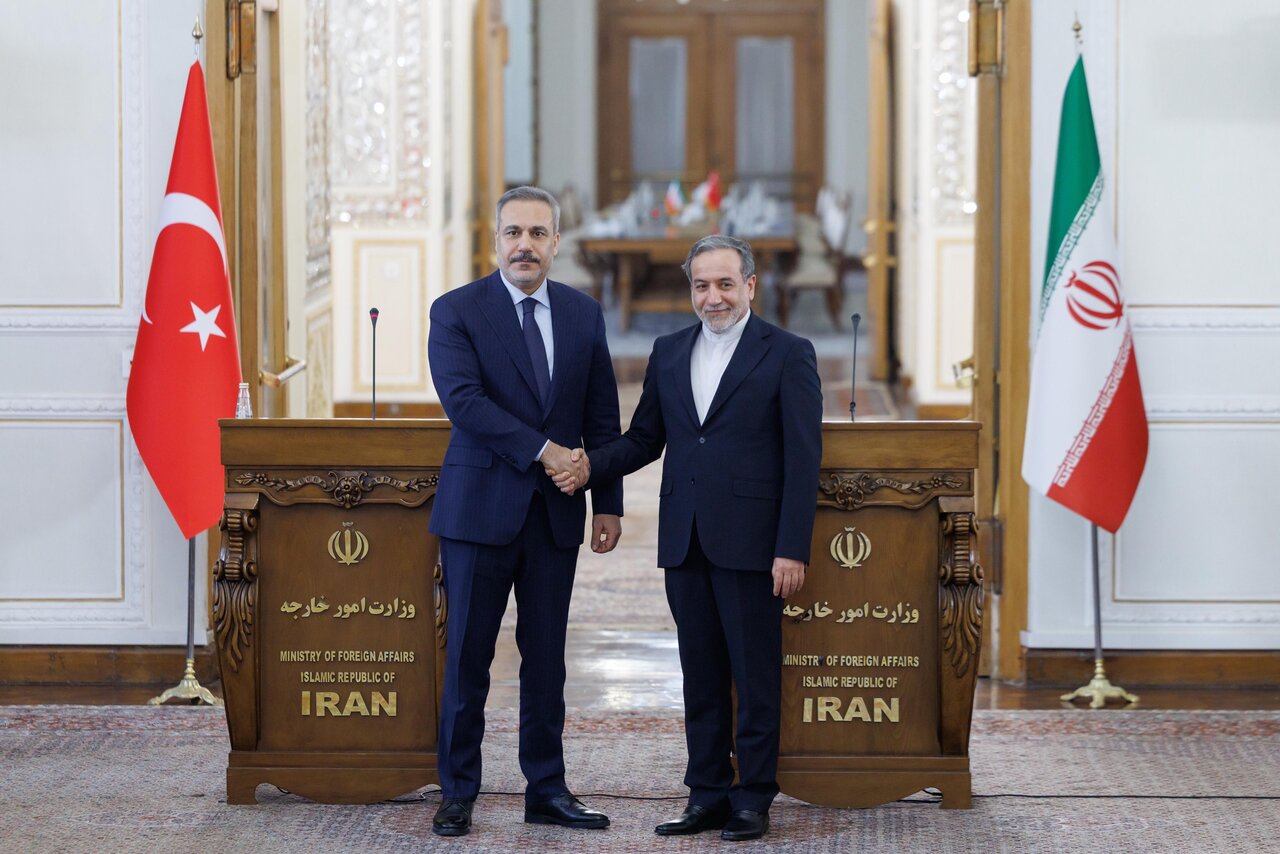
TEHRAN, Mar. 10 (MNA) – In a phone call with his Turkish counterpart Hakan Fidan, Foreign Minister Abbas Araghchi stressed that the missiles directed toward Turkish airspace "did not originate from Iran."
Trump: Vance ‘maybe less enthusiastic’ at start of Iran war The Hill
Iran war: 4 big questions that help clarify the future of the Middle East The Conversation
APTOPIX Iran US Military Deaths Casualty Return The Killeen Daily Herald
Russia the only ‘winner’ of US-Israel war on Iran: EU Council president Al Jazeera
Antonio Costa says Russia benefits from soaring global energy prices and attention being diverted from war in Ukraine.

‘Beware lest you be the ones to vanish’: Iran's Larijani hits back after Trump threat Rayhan Uddin on Tue, 03/10/2026 - 11:59 Security chief warns US after Trump vowed to hit Iran 'twenty times harder' if Hormuz strait remains closed Ali Larijani, senior adviser to Iran’s supreme leader, delivers a statement after meeting with Lebanon’s parliament speaker in Beirut on 15 November 2024 (AFP) Off Ali Larijani, the head of the Iranian National Security Council, has issued a strong warning to Donald Trump, after the US president threatened “death, fire and fury” on Iran. Trump posted on Truth Social late on Monday, threatening to strike Iran hard if it continued to keep the Strait of Hormuz closed. “They will be hit by the United States of America TWENTY TIMES HARDER than they have been hit thus far,” he wrote. Trump said the US would take out targets that would “make it virtually impossible for Iran to ever be built back, as a Nation, again”. “Death, Fire, and Fury will reign upon them – But I hope, and pray, that it does not happen!” he said, adding that it would be a gift to China and nations dependent on the strait. (adsbygoogle = window.adsbygoogle || []).push({}); Larijani responded on X, in both Persian and Arabic. He wrote: “The Ashura-loving Iranian people do not fear your hollow threats; for those greater than you have failed to erase it… “So beware lest you be the ones to vanish.” The Strait of Hormuz is a narrow maritime channel, around 33km at its narrowest point, between the Musandam peninsula in Oman and Iran. It is described as the most significant oil chokepoint in the world, with around a fifth of global oil output passing through it, and a third of global liquified natural gas (LNG). Roughly 20 million barrels of oil pass through the strait every day, of which around 14 million barrels are crude oil and six million are petroleum products. (adsbygoogle = window.adsbygoogle || []).push({}); Much of Asia receives gas and oil from hydrocarbon-rich countries in the Gulf via the strait. South Korea receives around 70 percent of its crude oil from the Middle East, while Japan imports around 90 percent from the region, and India around 50 percent. Asian market indices tumbled on Monday, largely driven by the closure of the waterway. Larijani reiterated on Monday that the strait would continue to be closed by Iran if the US and Israel continued their attacks on the country. Responding to a news post on X about France sending two frigates to the Red Sea to reopen the waterway, the security chief said: “It is unlikely that any security can be achieved in the Strait of Hormuz amid the fires ignited by the United States and Israel in the region.” “Especially if that is by the design of parties that were not far removed from supporting this war and contributing to its fanning,” he added. War on Iran News Post Date Override 0 Update Date Mon, 05/04/2020 - 21:19 Update Date Override 0