News
12,736 articles from 50+ sources
As Iran War Tests Investors, Here's How To Navigate The Stock Market During A Crisis Investor's Business Daily
California gas prices rise above $5 a gallon amid US war with Iran The Guardian
The true price of Iran war for oil, people and planet Global Witness
Seventh US service member killed in war with Iran identified The Guardian
Senate Dems threaten wave of war votes to force Iran hearing Politico
Before the start of the war between Israel, US and Iran, Africa was on track for its biggest economic moment in history.
Trump says Iran ‘made a big mistake’ choosing Mojtaba Khamenei US President Donald Trump said Iran “made a big mistake” by selecting Mojtaba Khamenei as the country’s new supreme leader after his father was killed in a US-Israeli attack. Speaking to NBC News, reiterating earlier remarks in which he described the son of Ayatollah Ali Khamenei as a “lightweight”. Trump also said it was “too soon to talk about” seizing Iran’s oil, but added that he does not rule out the possibility.
Mojtaba Khamenei’s supporters take to streets of Tehran on the same day Iran attacks targets in Israel and Gulf states Middle East crisis – live updates US and Israeli warplanes launched new waves of strikes on targets across Iran on Monday, as large crowds took to the streets in Tehran in a defiant show of support for Mojtaba Khamenei, the country’s newly appointed supreme leader. The conflict, now in its second week, continued to escalate, with fresh Iranian missile and drone attacks targeting Israel, US bases across the Middle East and energy infrastructure in the Gulf. Continue reading...
Trump says Iran war is ‘very complete, pretty much’ as economic toll rises The Guardian
Photos from Iran, Israel and Lebanon in the 2nd week of the Iran war Manistee News Advocate
Video | Parliament Erupts As Opposition Seeks 'War Debate' On Iran-Israel Crisis NDTV
Community voices opinions on Iran war The Daily Lobo
Israel: Security intensified at Netanyahu home amid Iran war The New Arab
Graham Says War With Iran Is “Best Money Ever Spent” After Voting to Kick Millions Off Medicaid Last Year Truthout
Opinion | Fears of a ‘Quagmire’ in Trump’s War on Iran The New York Times
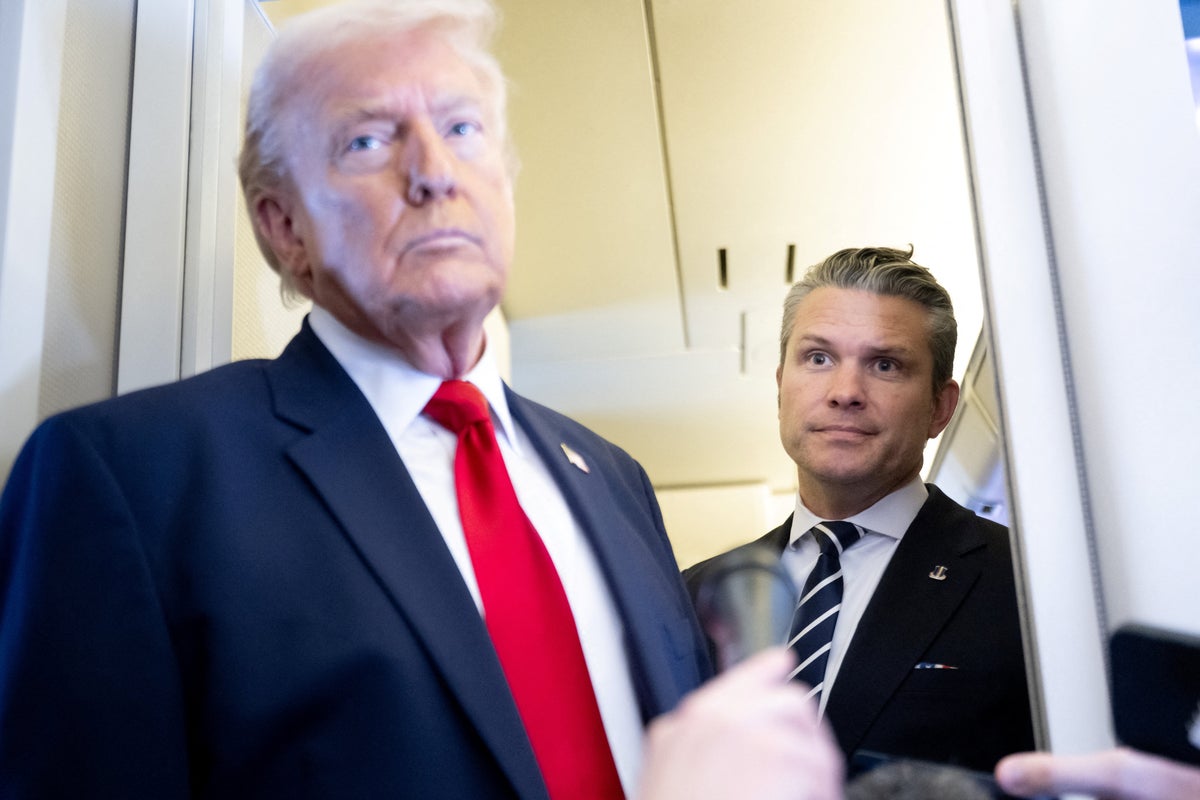
Hegseth has presided over a major Signal security breach, faced scrutiny over missile strikes against alleged drug vessels in the Caribbean and is now overseeing Trump’s war in Iran
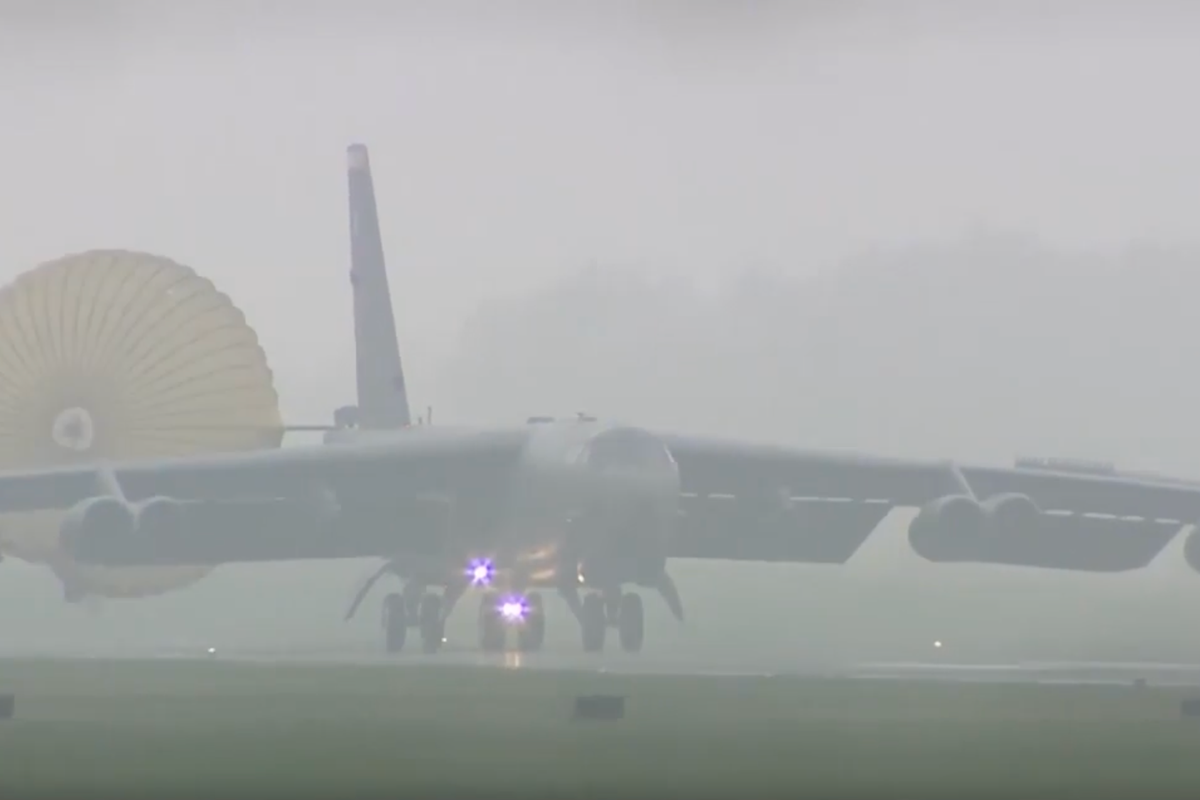
A US Air Force B-52 bomber plane landed at RAF Fairford airbase on Monday (9 March), after the US and Israel’s airstrikes towards Iran sparked widespread regional conflict.

How Iran war will shape the future of Hezbollah and Israeli expansionism Hicham Safieddine on Mon, 03/09/2026 - 16:02 Lebanon's armed resistance has reached a critical juncture, amid ongoing Israeli occupation and ceasefire violations Smoke billows from the site of an Israeli air strike in the southern suburbs of the Lebanese capital Beirut on 9 March 2026 (Ibrahim Amro/AFP) Off The US-Israeli war on Iran has led to a regional conflagration, with Lebanon becoming one of its hot spots. Two days after the attack on Iran, Hezbollah launched rockets across the border towards Haifa. Israel swiftly responded with large-scale bombings, targeted assassination attempts and ground incursions. This new round of fighting on the Lebanese front is unlikely to impact the war on Iran in a significant manner. But it will have serious consequences for the future of armed resistance in Lebanon and Israel’s expansionist plans, including the occupation of larger swathes of southern Lebanese territory. Shortly after the outbreak of hostilities, the Lebanese government voted to outlaw Hezbollah’s military and security activities, instead of taking concrete measures to fend off Israeli aggression. In effect, this was a political and legal coup against the right to resistance. The decision is the culmination of a series of government decrees issued since the November 2024 ceasefire, all aimed at rolling back the state sanctioning of armed resistance that had been in place since the mid-1990s. (adsbygoogle = window.adsbygoogle || []).push({}); Prior to its recent rocket attacks, Hezbollah had fully abided by the ceasefire agreement, while Israeli violations continued unabated. During the declared period of the cessation of hostilities, Israel’s attacks on Lebanon have killed close to 400 people and injured more than 1,100. Israeli forces have also refused to withdraw from five military positions inside Lebanon, while conducting regular incursions to destroy property or abduct citizens. Lebanese fuel to Israeli fire The Lebanese government has added fuel to the fire by tightening the economic siege on the resistance community in southern Lebanon. Reconstruction efforts have been stalled under the pretext of disarming Hezbollah and cutting off financial flows from sympathetic states like Iran or parts of Iraq. On the military front, Lebanon’s army was deployed in the south as part of efforts to assert state sovereignty. But its operations were restricted to seizing Hezbollah weapons in line with US and Israeli demands, rather than defending Lebanese sovereignty against Israeli threats. During this period, President Joseph Aoun and Prime Minister Nawaf Salam sought to apply diplomatic pressure to force Israeli compliance, with no results. Their bet on improving the army’s military capabilities has also reached a dead end. Political forces aligned with the US-Israeli agenda are demanding that the army crack down with force on Hezbollah. This is a recipe for civil war The much-touted Paris conference to support the army, initially scheduled for 5 March, was shelved after the outbreak of this war. The cancellation notwithstanding, previous aid packages suggest that any future funding of the army will likely be geared towards the salaries of soldiers and acting against non-state actors, rather than confronting foreign threats. Amid the current war, the army finds itself at the crosshairs of competing demands. On one hand, political forces aligned with the US-Israeli agenda are demanding that the army crack down with force on Hezbollah. This is a recipe for civil war. So far, the army’s chief commander, Rodolphe Haykal, has resisted this path. On the other hand, the army’s reported withdrawal from several positions in the south once the fighting began, and its impotence in the face of Israeli attacks, have reinforced claims that it is too weak to protect the country’s sovereignty. Interconnected fronts If the army can’t be used as leverage against Hezbollah, the remaining card for its opponents is to drive a wedge between Hezbollah and its social base and its closest ally, the Amal Movement, by blaming Hezbollah rather than Israel for their plight. The timing and circumstances of displacement might appear favourable for this strategy. The government estimates that over 517,000 people have been forced to flee in the last week alone - the second mass displacement in less than two years. It is winter, and the state’s ability to provide shelter and food is limited, while rent has skyrocketed. (adsbygoogle = window.adsbygoogle || []).push({}); The success of this strategy, however, depends in part on the military performance of Hezbollah in the short run, and the outcome of the war in the long run. Many displaced people might be frustrated or critical of Hezbollah’s decision to launch rockets, regardless of signs that Israel could be planning a large-scale invasion after calling in 100,000 reserve soldiers. How Israel is laying the groundwork for ethnic cleansing in southern Lebanon Read More » But the resistance community, including those who are displaced, are equally aware that the trigger is not the cause. They have vivid memories of decades of Israeli aggression, and lived experiences of the more recent and ongoing Israeli attacks. They are also fully aware of Israel’s longstanding settler-colonial ambitions south of the Litani River. If the war leads to a renegotiation of ceasefire terms - ending Israeli violations and occupation, while leading to a safe return of Lebanese civilians and reconstruction - any criticism of Hezbollah’s tactics will evaporate, and the population’s trust in its ability to protect them will be restored after two years of doubt. A return to the status quo, or more Israeli gains, would have the opposite effect. The likelihood of either scenario is not a strictly domestic affair. It will be impacted by the outcome of the regional war and Iran’s ability to withstand this latest US-Israeli onslaught. The interconnectedness of the two fronts is a reminder that the current conflict in the Middle East is not a domestic or national affair, but a broader crisis that could shape the future of US imperialism and Zionist settler-colonialism for decades to come. The views expressed in this article belong to the author and do not necessarily reflect the editorial policy of Middle East Eye. Israel's war on Lebanon Opinion Post Date Override 0 Update Date Mon, 05/04/2020 - 21:29 Update Date Override 0
Trump’s War Becomes World’s Latest Economic Hazard The New York Times