News
12,736 articles from 50+ sources
‘No Imminent Threat’: First Senior Trump Administration Official Resigns Over Iran War Time Magazine
Top US intelligence official resigns over Iran war CNN
Opinion | Prolonging the war with Iran could strengthen China’s hand The Washington Post

The other trade chokepoint at risk from the Iran war CNN
As bombs fall and millions are displaced, protests grow in Iran. Could this war be strengthening Iran’s resolve?
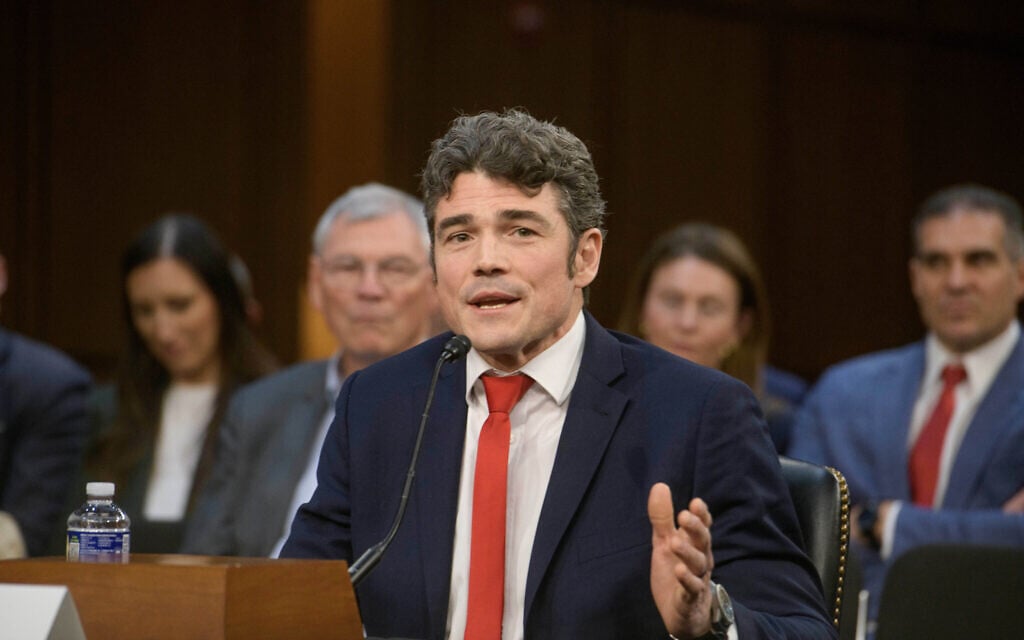
Joseph Kent, whose ties to extremists and conspiracy theories drew scrutiny, says US president was 'deceived' into launching attack, says Iraq war was also 'manufactured by Israel' The post US counterterror official quits over Iran war, claims Israel tricked Trump into it appeared first on The Times of Israel.
Rift Widens Among Republicans Over Israel and War in Iran GV Wire
Trump’s Iran war has cost Americans at least $11bn already. And that’s just the start | Arwa Mahdawi The Guardian
An extra 45 million people could face acute hunger if the Middle East war rages on beyond June, swelling the number worldwide to a "terrible" high, the United Nations warned Tuesday. The war, now in its third week, and its shockwaves on food and fuel costs could price families out of staple foods far beyond the region, the UN's World Food Programme said. "The escalating humanitarian fallout from the conflict in the Middle East is growing more concerning by the day," warned WFP deputy executive director Carl Skau.
US-Israel-Iran War Latest Update: Who Will Succeed Ali Larijani? Speculation Grows Over Iran’s Next Security Chief Amid Conflicting Death Claims The Sunday Guardian

Al-Aqsa Mosque closure heralds a dark new chapter for Palestinians Lubna Masarwa on Tue, 03/17/2026 - 15:36 Israel is using the Iran war as a pretext to empty the complex of worshippers, as it pushes to exert full control over the holy site Palestinian Muslims pray outside the Old City of Jerusalem during Ramadan on 15 March 2026, as the nearby Al-Aqsa Mosque remains closed by Israel (Ahmad Gharabli/AFP) Off It’s the last Friday of Ramadan, and the Old City of Jerusalem is a ghost town. Al-Wad, the main street that leads to Al-Aqsa Mosque, is empty, and the shops selling sweets, herbs and clothes are all closed. Even the pharmacies and the famous Abu Khadija’s coffee shop have been forced to shut their doors. No sweets are offered to children. There are no calls to buy Ramadan products. The usual decorations that adorn the alleyways during the Islamic holy month are nowhere to be seen. The rumbustious Old City has fallen silent. Walking towards the main entrance to Al-Aqsa complex, Souq al-Qattanin, a market usually bursting with tourists, pilgrims and children, is empty. Two Israeli police officers stand guard idly at the green door, ensuring no-one gets closer. (adsbygoogle = window.adsbygoogle || []).push({}); For those of us who have lived all of our lives in this city, the empty streets and closed doors inspire a deep fear and uncertainty for the future of Palestine. Israel enforced the closure after it joined the US in attacking Iran. It started by closing the doors of the Ibrahimi Mosque in Hebron, before extending restrictions to Al-Aqsa. Both mosques are in occupied Palestinian territory. Palestinians are used to arbitrary and punitive restrictions on their lives. But the closure of Al-Aqsa, one of the holiest sites in Islam, during Ramadan is unprecedented. Pretext of war This has been the first Ramadan since Israel seized East Jerusalem in 1967 that Palestinians have been unable to perform Friday prayers at the mosque. For Palestinians living in the occupied West Bank, this has hit especially hard, since Ramadan is usually the only time of year when Israel allows them, albeit in limited numbers, to visit Al-Aqsa. (adsbygoogle = window.adsbygoogle || []).push({}); Even during the Covid-19 pandemic, the streets were busier than they are now. Restrictions on prayers imposed then were a matter for the Islamic Waqf, which administers Al-Aqsa. This time, it was Israeli authorities who banned crowds from the site, citing public safety considerations because of the war. Al-Aqsa is the foundation of Palestine - and losing it means losing something essential to our existence Curiously, the same rule does not apply to the other side of the city, where restaurants and coffee shops are full of people, and synagogues remain open. It’s very clear that the empty streets presage a new and darker chapter in the history of a city that has endured tumultuous events for many centuries. Israel is using the war as a pretext to empty Al-Aqsa of worshippers, and to impose a new reality of full control over the site. For Palestinians, Al-Aqsa is the foundation of Palestine - and losing it means losing something essential to our existence, even among those who are not highly religious. A Palestinian woman who lives in the north of Israel told me: “Al-Aqsa Mosque is not only the sacred heart of Palestinian identity, but it has also become a symbol of sumud, of resilience and the enduring struggle for liberation, carrying the faith and prayers of Palestinians towards liberation of their land, the right of return and the restoration of their dignity as a free people.” Imposing a new reality In 2021, during the May uprising, thousands of Palestinians marched to Al-Aqsa: both religious and secular, Muslim and Christian. Palestinians from all towns and cities in Israel and the occupied territories rushed to the site in a symbolic effort to protect it, not only because of its religious importance, but because it stands as an emblem of Palestinian identity. The fear is that this shutdown is the prelude to a takeover and a complete change in the status-quo arrangements that have long determined who controls this space. Israel is unilaterally imposing a new reality, which threatens to transform the site primarily into a Jewish place of worship, as has already happened at the Ibrahimi Mosque. In 1994, Baruch Goldstein, a US-born settler, opened fire on hundreds of Muslims worshipping in the mosque during Ramadan, killing 29 Palestinians and wounding another 125. Goldstein was eventually disarmed and killed by survivors. The attack was condemned by then-Prime Minister Yitzhak Rabin, but venerated by some on the Israeli far right. Goldstein’s tomb in the settlement of Kiryat Arba subsequently attracted pilgrimages from Zionist extremists. Itamar Ben Gvir, Israel’s far-right national security minister, gave a speech in front of a wall-hanging that glorified Goldstein in 2023. After the attack, the prayer hall was partitioned on the recommendations of an Israeli-led commission. Two-thirds of the space is reserved for Jews and the remaining third for Muslims. Could the same now happen to Al-Aqsa? City under siege Aouni Bazbaz, director of international affairs at the Islamic Waqf, said the closure could have serious consequences. “The continued closure of Al-Aqsa Mosque, particularly at a time when signs of normal life are returning elsewhere, could carry risks and future consequences that cannot be ignored,” he told Middle East Eye. (adsbygoogle = window.adsbygoogle || []).push({}); Bazbaz warned that keeping the mosque closed could “heighten tensions and public anger”. Fakhri Abu Diab, a Jerusalem-based activist and expert on the city’s affairs, said the public safety justification for closing the mosque was a lie: “The police and the government do not care about protecting us. There are no bomb shelters for Palestinians in Jerusalem.” Israel's closure of Al-Aqsa Mosque is an act of war Read More » He said the objective of the closure was to empty the mosque, push Palestinians away, and prevent them from exercising their right to worship, especially during Ramadan. “We have been prevented from reaching Al-Aqsa, yet people are still in the streets and the markets,” Abu Diab said. The closure of Al-Aqsa is part of a wider siege imposed on Palestinians in the Old City. “They destroyed our source of living. We were waiting for Ramadan to make some business, but they forced everyone to close, except if you have a food shop,” one young man, who defied orders to close his juice kiosk, told MEE. “A friend of mine had to pay a 6,000-shekel ($1,935) fine for opening his shop, even though they allowed food shops to open. But even apart from the fine and the harassment, to whom are you going to sell? The city is closed and there are no customers.” Israel has closed the entrances to the Old City. Soldiers guard the Damascus Gate and check IDs. Only residents with addresses inside are allowed through. “Sometimes they open it, and sometimes they decide to close; there is no reason for that, and no one knows when they change the orders,” the man at the juice stall said. A Palestinian man stands with a tray, selling some wheat. Nearby, an Israeli policeman walks across and confronts him. “Go before I turn this on its head,” he says in broken Arabic, gesturing at the tray. “Don’t force me to do that to you.” The views expressed in this article belong to the author and do not necessarily reflect the editorial policy of Middle East Eye. Al-Aqsa Attack Opinion Post Date Override 0 Update Date Mon, 05/04/2020 - 21:29 Update Date Override 0

Israel 'assessed Iranians would be slaughtered' if they rise up against Islamic Republic MEE staff on Tue, 03/17/2026 - 15:47 Israeli officials reportedly say Iran's ruling establishment 'not cracking' and would defeat popular uprising despite calls from US, Israel and Pahlavi An Iranian woman holds an image of the new supreme leader Ayatollah Mojtaba Khamenei as she takes part in the Al-Quds Day rally (AFP) Off Israel has privately assessed that Iranians would be "slaughtered" if they took to the streets against the Islamic Republic, despite Israeli Prime Minister Benjamin Netanyahu repeatedly calling for them to do so. According to a State Department cable reviewed by the Washington Post, a number of Israeli officials privately admitted to their US counterparts that the Islamic Revolutionary Guard Corps (IRGC) had the "upper hand" and would quickly overwhelm them. In spite of boasts from both the US and Israel, the officials conceded that the Islamic Republic was "not cracking” and was willing to “fight to the end" and any attempt by anti-government activists to take control would likely be a disaster. The cable details meetings between American officials and senior members of Israel’s National Security Council, Ministry of Defence and Ministry of Foreign Affairs on Wednesday and Thursday. Though Iranians inside and outside Iran have at various points been supportive of US and Israeli strikes against the Islamic Republic, the increasing civilian death toll and mixed messaging from the two countries has soured some of that fervor. (adsbygoogle = window.adsbygoogle || []).push({}); In a speech following the killing of Iranian security chief Ali Larijani on Tuesday, Netanyahu again called on opponents of the Islamic Republic to rise up against their government. "We are undermining the regime in the hope of giving the people an opportunity to remove it," he said in a televised statement. "It will not happen all at once, and it will not be easy. But if we persist, we will give them an opportunity to take their fate into their own hands." Reza Pahlavi’s supporters in Iran are turning against him Read More » However, his comments appear to contradict the assessment of his own officials, who were cited by the Washington Post as saying Iran's ability to launch ballistic missiles and drones "everywhere they want to" was proof of the state's resilience. The Israelis also said that despite reports of his being wounded or out-of-action, new Supreme Leader Mojtaba Khamenei was “still in charge” and “more aligned” with the the IRGC than his father. The failure of Iran's opposition to provide an organised front or project its influence inside the country since the beginning of the most recent conflict has been another factor. Middle East Eye spoke to a number of Iranians inside the country earlier this week who had previously been supporters of monarchist leader Reza Pahlavi - arguably the most high-profile opposition figure - but had now lost faith is his ability to lead. Pahlavi took to X on Sunday to urge Iranians to take to the streets, using Chaharshanbe Suri - an ancient celebration ahead of the Persian new year – to mobilise the public. But there has been little obvious response to his calls. “My friend was shot right in front of my eyes,” Majid, a 21-year-old student in Tehran, told MEE. “I still cannot process it.” “Now he tells people to go celebrate in the streets - does he even know what life is like here? People go to sleep not knowing if they will wake up alive in the morning. “We are afraid every time we step outside that another air strike might hit somewhere nearby. And in this situation he says we should celebrate?” War on Iran News Post Date Override 0 Update Date Mon, 05/04/2020 - 21:19 Update Date Override 0

Israeli press review: Confusion over army's plan in Lebanon Nadav Rapaport on Tue, 03/17/2026 - 15:45 Meanwhile, Israel's closed gas rigs are proving costly, while interceptor production capacity is limited Smoke rises from an Israeli strike on southern Lebanon, 17 March 2026 (AFP) Off Confusion over Israeli army plan in Lebanon On Monday, Israeli Defence Minister Israel Katz said the army had launched “a ground manoeuvre in Lebanon to remove threats and protect” the residents of northern Israel. Katz said that “hundreds of thousands of Shiite residents of southern Lebanon who have fled or are fleeing their homes will not be allowed to return south of the Litani area until the security of the northern residents is ensured.” But the Israeli media is reporting what appears to be a conflict between public statements regarding the nature of the operation and the operation’s actual intentions. On Monday, Haaretz cited military sources who said that Israeli ground operations are directed at removing Hezbollah operatives from the border area, not stripping the missile threat from Lebanon. The Israeli army sources told Haaretz that the new operation aimed to destroy Hezbollah infrastructure south of the Litani River. (adsbygoogle = window.adsbygoogle || []).push({}); According to Israel's Channel 13, the Israeli army has erected 20 outposts in Lebanon, in what the channel said resembled the “Security Zone” policy that guided Israel’s occupation of southern Lebanon between 1982 and 2000. Amos Harel, a military commentator for Haaretz, noted that “Hezbollah’s presence south of the Litani is limited in scope”, and that the group’s remaining operatives there can quickly move north before the Israeli army gets to them. Harel questioned the effectiveness of the new military operation, noting that most of the missiles and drones directed at Israel from Lebanon are fired from north of the Litani. Closed gas rigs proving costly With the war on Iran leading to what some describe as the worst energy crisis in modern history, Israel’s gas rigs in the Mediterranean have remained shut since it began, economic daily Calcalist reported on Monday. “Mediterranean gas rigs have been shut down for the third time since the outbreak of the October 7 war, forcing the energy sector to once again rely on more expensive and polluting fuels such as coal and diesel,” the report said. (adsbygoogle = window.adsbygoogle || []).push({}); Israeli Energy Minister Eli Cohen extended the gas rigs shutdown until 26 March over fears they could be attacked. But the cost of the shutdown is raising questions over government policy, with Israel’s energy sector relying heavily on gas, from which about 70 percent of the country’s energy production comes. An Israeli financial expert told Calcalist that shutting down Israel's two gas rigs had cost the Israeli economy 600m shekels ($193m) already. “The overall economic damage is even higher, driven by the increased cost of electricity production due to greater reliance on coal and diesel,” the expert said. The report added that the private companies that operate the rigs are suffering losses of millions of US dollars every day. “Revenues have effectively vanished, and the Israeli government is entirely absent from the situation,” an energy company official said. (adsbygoogle = window.adsbygoogle || []).push({}); Interceptor production capacity limited Recently, Israel denied reports that it was running low on missile interceptors, after Israeli news site Ynet said that more than 1,300 missiles had been fired from Iran and Lebanon since the latest war on Iran began. On Monday, The Marker, Haaretz’s economics daily, reported that despite Israeli denials, the production of interceptors has a limited capacity. The report said that Israel also has an obligation to sell interceptors to Germany, as the two countries recently signed a contract guaranteeing Israel's supply of interceptors to Germany. Israel’s arms industry is “producing interceptors around the clock, but both the number of interceptors and the rate of production are limited”, the report said, as the actual rate of production remains under a gag order. Even if the line of production is extremely fast and effective, it will take Israel “time to make up for the shortages”, the report noted, as the Israeli army has intercepted over a thousand missiles since October 2023. “Over the weekend, there were already reports in Israel of missiles that were launched and fell in open areas after a decision was made not to intercept them,” the report said, possibly indicating shortages. In addition, Israel's Home Front Command changed its alert system this week, stating that it would be aiming to activate sirens and alerts more precisely. Media Tel Aviv, Israel News Post Date Override 0 Update Date Mon, 05/04/2020 - 21:19 Update Date Override 0

Satellite photos are beginning to be released showing ships ablaze in an Iranian port and destroyed buildings at military bases

submitted by /u/124bpmperfection to r/worldnews [link] [comments]
How the Iran war could trigger a European energy crisis Atlantic Council

submitted by /u/Auspectress to r/geopolitics [link] [comments]
Israel's Elbit Systems sees further growth from Iran war Yahoo Finance
At least 200 American troops wounded in Iran war, US military says The Guardian