News
12,736 articles from 50+ sources
Opinion | Is The Gulf Now Questioning Its US Ties - And The American 'Guarantee'? NDTV
Iran-Israel-US War Latest News: India’s Energy Supply at Risk? 37 Indian Oil & LPG Tankers Stuck Near Strait of Hormuz as Middle East War Escalates The Sunday Guardian
Shadow Fleet Ships Among Few Plying Strait of Hormuz, Analysis Shows WSJ
Saudi Aramco promises full production can be restored within days if Strait of Hormuz is reopened MarketWatch
Saudi-Based Aramco Warns of ‘Catastrophic Consequences’ From Strait of Hormuz Disruption as France Plans Escort Missions The Media Line
Explosions heard in Doha Reuters reported a boom in Qatar's capital of Doha.
Trump warns Iran not to block Strait of Hormuz Cleveland Jewish News
Iran Security Chief Dismisses Trump Warning Over Strait of Hormuz Oil Flow Kurdistan24
Strait of Hormuz disruptions: Implications for global trade and development | UN Trade and Development (UNCTAD)
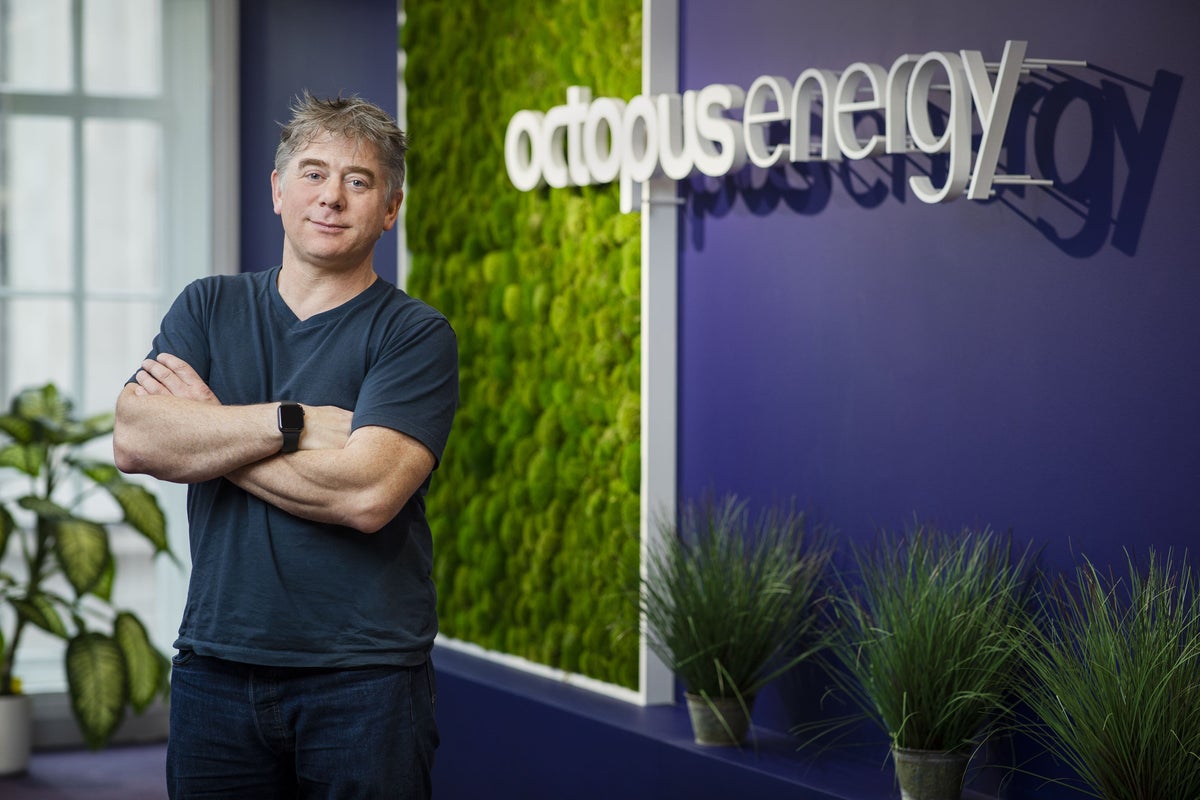
The UK’s largest household energy supplier said it has increased fixed-price tariffs and introduced exit fees amid higher wholesale prices.
Iranian attacks affect global economy, says Qatari Foreign Ministry spokesman The Qatari Foreign Ministry spokesman Majid al-Ansari said that "repelling and dealing" with Iranian attacks are now a priority. "Iranian attacks affect the Qatari economy and the global economy as a whole," he was quoted as saying by Al Jazeera, adding that while Doha believes in diplomacy, any attack with be dealt with. "This is an attack on us, our citizens, and our facilities, and it cannot be accepted," Ansari said. "We were optimistic about the Iranian president's apology, but then we saw an attack on the UAE, Bahrain, and Qatar."
UKMTO reports loud bang near vessel 36 natuical miles from UAE An incident was reported 36 nautical miles north of UAE's Abu Dhabi on Tuesday, the United Kingdom Maritime Trade Operations (UKMTO) said. The master of a vessel reported a splash and a loud bang in close proximity to a bulk carrier.
Iran’s Strategy in the Ramadan War: Control of the Strait of Hormuz and Global Impacts WANA News Agency
Only two vessels not linked to Iran or Russia have braved ‘chicken run’ since US president’s promise on Friday Middle East crisis – live updates Only two vessels not linked to Iran or Russia have made the “chicken run” through the strait of Hormuz since Donald Trump said he would “ensure the free flow of energy to the world”, according to maritime records. One of those that braved the journey since the US president’s announcement of emergency measures on Friday went “dark” by switching off its transponder and a second signalled it was Chinese owned and crewed. Continue reading...
Panama Canal chief reveals logistical capabilities as Strait of Hormuz is stalled by Iran conflict Fox Business
Gas, oil prices worry GOP as Trump floats taking over Strait of Hormuz The Hill
Bangladeshi oil ships to get safe passage in Strait of Hormuz amid Mideast conflict: Report Anadolu Ajansı

Why Trump and Netanyahu are the most dangerous men on the planet David Hearst on Mon, 03/09/2026 - 23:22 As Iran stands firm, there is no clear exit strategy from a war driven by one man's ego and another's messianic vision A person wears a T-shirt with images of US President Donald Trump and Israeli Prime Minister Benjamin Netanyahu at a protest in New York on 2 March 2026 (Adam Gray/Getty Images/AFP) Off It’s difficult to know who is deluding themselves more about the war on Iran: US President Donald Trump or Grok. Elon Musk's AI platform wrongly claimed that footage of a fire in Glasgow was related to an incident in Tel Aviv, and it also confused a video appearing to show oil fires in Iran with a 2017 blaze near Los Angeles. Meanwhile, in a dizzying stream of social media posts since the US attacked Iran, Trump has variously called for a mass uprising, demanded the country’s unconditional surrender, claimed that he would be directly involved in choosing Iran’s next leader, suggested that Iran is being beaten to hell, and vowed to widen his target list. But his most significant post called the assassination of former Iranian Supreme Leader Ayatollah Ali Khamenei “the single greatest chance for the Iranian people to take back their Country”. This was a chance the Iranian people did not take. They instead came out onto the streets by the thousands to mourn Khamenei while the bombing was taking place. (adsbygoogle = window.adsbygoogle || []).push({}); In addition to that, the killing of the Iranian head of state, in itself an event unique in modern history, might have done the very opposite of what Trump and the “brains” of the operation, Israeli Prime Minister Benjamin Netanyahu, had intended. The assassination of Khamenei might have revitalised and given new direction to the Islamic Republic and the Iranian revolution. Iran's red lines When the Islamic Republic feels threatened, it is quite capable of suppressing national uprisings. But Khamenei was also a pragmatist. Under his rule, Iran did not reply to the serial killings of its top generals and nuclear scientists - and when it did, it was in a highly choreographed manner intended to close the affair. Under Khamenei, Iran kept to its red lines, which were not to attack its Gulf neighbours nor to close the Strait of Hormuz. There were occasions when some of its proxy militias did - notably, drones from Iraq attacked the Abqaiq and Khurais oil facilities in eastern Saudi Arabia in 2019, temporarily halving Aramco’s daily output - but responsibility for that was blurred, and there was an element of plausible deniability. The Houthis claimed responsibility. Iran did not attack its Gulf neighbours when its top general, Qassem Soleimani, was killed by a US drone at Baghdad’s airport; nor when Hamas leader Ismail Haniyeh was killed at a guesthouse run by the Revolutionary Guards after the inauguration of President Masoud Pezeshkian; nor when several senior military commanders were killed by Israel in the 12-day war last year. Trump, whose 'gut instinct' led him to attack Iran in the middle of negotiations, is flailing around wildly with a new policy soundbite for each new day Iran did not respond to the helicopter crash that killed former president Ebrahim Raisi in Azerbaijan, which takes on a different complexion now that the stated policy of Israel is to kill leaders past and present. Khamenei represented the second phase of the Islamic Republic, which weighed its response. Khamenei was unbending. His oft-quoted remark to US officials was: “Someone like me does not pledge allegiance to people like you.” But he calculated risks and acted accordingly. In response to Soleimani’s assassination, Iran targeted two US bases in Iraq with missiles, but told the Iraqi government what bases it was about to attack. Both Hezbollah and Iran refused to join ranks with Hamas after its attack on Israel on 7 October 2023. And Iran tried twice to negotiate with Trump on its uranium enrichment programme. It was not so under the first supreme leader, Ayatollah Ruhollah Khomeini. His Iran was revolutionary, and as such, much more unpredictable. At the height of the revolution, 52 American hostages were held for 444 days to protest against Washington allowing the deposed shah into the US for medical treatment. When invaded by Saddam Hussein’s superior army, backed by the US and Europe and funded by the Gulf states, Khomenei could not rely on the regular army to defend Iran. He turned to the Islamic Revolutionary Guard Corps (IRGC), formed to protect the revolution and act as a counterweight to Iran’s existing forces. Iran had no real army when Saddam invaded. It did by the time the war ended eight years later: the Iran-Iraq War turned the IRGC into a formidable fighting force. (adsbygoogle = window.adsbygoogle || []).push({}); Revolutionary spirit Khamenei’s Iran was neither revolutionary nor unpredictable. His death may well have changed that; far from killing the revolutionary spirit of the Islamic Republic, it may have revitalised it. In the space of 10 days, Iran has closed the Strait of Hormuz, stopped oil and gas production along the Gulf, and created a global oil crisis several times the magnitude of the 1973 oil crisis. The loss of oil - 20 million barrels a day - equals all the oil stoppages from 1978 to 2022 combined. It has made a mockery of the US promise to protect Gulf shipping lanes. Gulf states are seeking private foreign military specialists to support their operations, including radar operators, ground maintenance crews, ground security teams, and electronic warfare specialists to provide protection during active operations. They are also seeking pilots. Israel's war of regional supremacy will not end with Iran Read More » Iran severely damaged the $1.1bn early warning radar system in Qatar, which is needed to operate every Thaad launcher and Patriot battery in the region. The US is now having to replace its damaged Patriot systems by plundering those installed in South Korea. It has peppered Manama, Kuwait City, Dubai, Doha and Riyadh with drones. It has all but halted air traffic through and to the Gulf. Fourteen countries in the region have been dragged into the war, including Cyprus, alongside three other European powers: Norway, the UK and France, who have had their airbases or embassies attacked. Iran is fulfilling the promise its wartime leader, Ali Larijani, made in interviews reacting to Khamenei’s death: “We will burn their hearts. We will make the Zionist criminals and the shameless Americans regret their actions.” Indeed, the US bombardment appears to have galvanised Iran. Crowds came out onto the streets and stayed there until well after midnight to cheer the appointment of Khamenei’s son, Mojtaba, as his successor. Look at the footage of these mass demonstrations, and by no means is everyone on the streets a religious conservative. Mojtaba is the man Trump explicitly told Iranians not to choose as their leader, a warning reinforced by Israel’s daily revised kill list. But in choosing Mojtaba, the regime is telling Trump that he cannot bully Iran, as he has tried to do to the rest of the world. Iran has swapped a leader who was 86 years old and reportedly had cancer, for his 56-year-old son, a principlist with long-established connections to the IRGC. Global crisis As part of his service in the Habib Ibn Mazahir Battalion, a volunteer-linked faction in the IRGC, Mojtaba made contacts with figures who would rise to senior positions in Iran’s security and intelligence apparatus, such as Hossein Taeb, the future head of the IRGC’s Intelligence Organisation. Unlike Trump’s sons, Mojtaba is well dug into his country’s security state. Until today, Mojtaba wielded his political influence behind the scenes. A supporter of the former populist president Mahmoud Ahmadinejad, Mojtaba was accused of helping to mastermind both the claimed rigging of the 2009 election and the crackdown on protesters that followed. (adsbygoogle = window.adsbygoogle || []).push({}); Ten days after being attacked, Iran is keeping its promise to make this war not just a regional crisis, but a global energy crisis, too - and all this before the Houthis have formally entered the war. They have the power to stop international shipping through the Bab el-Mandeb Strait at the mouth of the Red Sea. They have been preparing for war. Most importantly, the US-Israeli attack has galvanised support for the Iranian regime out of patriotism and sheer national outrage at what Trump and Netanyahu are trying to engineer in their country. Listen to this voice: Abdolkarim Soroush is a prominent Iranian philosopher and intellectual, an early supporter of the 1979 Islamic revolution who became one of its sharpest critics, and a leading advocate for religious reform. He has argued that Islamic law is not immutable but subject to interpretation, a stance that led to his exile from Iran. This is what he says today: “Our military forces fight with faith and courage, and the people too must rush to the aid of these self-sacrificing souls however they can. “This black cloud will pass from over the country, but its shame will remain on the foreheads of those who stood alongside the traitors to the homeland. Today, neutrality is nothing but folly and lack of conscience; contrary to the clamour of a tiny minority, the majority of the Iranian people demand the severing of the hand of the aggressors.” Trump, whose “gut instinct” led him to attack Iran in the middle of negotiations, is flailing around wildly with a new policy soundbite for each new day. Having previously dismissed sending ground troops, he is now reported to be seriously interested in the notion. For a time, Trump mused about using Iranian Kurdish groups as a spearhead. Apart from the fact that there are five different Iranian Kurdish groups, the Iranian Kurds have good reason not to heed Trump’s call. Both Baghdad and Ankara are implacably opposed, sources tell me. Bubble burst As each day passes, the magnitude of this crisis is growing. France is sending frigates. Britain is readying an aircraft carrier. There has been no planning for either; it is just a last-minute scramble. Iran is suffering severe blows with the daily bombardments by US and Israeli bombers, but it has not been crippled. On the contrary: it has shown it can resist and reply in kind. It has burst the bubble of security and wealth that surrounded the Gulf states, and exposed their vulnerability to full-scale war, which so often in the past did not seem to affect them or change their lifestyle. To prevail, Trump needs Iran to crumble - and soon. It shows no sign of doing so; rather, its survival strategy appears to be working How does this end? Bit by bit, the pressure of the turmoil gripping oil and financial markets will build, pushing Trump to call a halt to the worst intervention the US has made in a long history of failed wars. Market turmoil does not augur well for Trump. This is not a president who ignores what Wall Street tells him, especially when only 20 percent of US adults are behind him. To pursue this war to the end, the US would have to occupy one or possibly two key straits to protect international shipping channels - and they could only do so with troops on the ground. None of this can be done quickly. If he backs down, Trump will leave his own legacy in tatters, and stop Netanyahu’s messianic vision of a region dominated by Israel in its tracks. No future US president will be led down the same garden path by the same alliance. To prevail, Trump needs Iran to crumble - and soon. It shows no sign of doing so; rather, its survival strategy appears to be working. But in the meantime, this war can go a lot further in wrecking nations, destroying oil fields, burning Gulf wealth and killing thousands of innocent civilians. This is the price the region is paying for one man’s ego, another man’s messianic vision, and the impotence of a Europe that just stands by and watches. Thwarted and frustrated, Trump and Netanyahu are currently the two most dangerous men on this planet. The views expressed in this article belong to the author and do not necessarily reflect the editorial policy of Middle East Eye. War on Iran Opinion Post Date Override 0 Update Date Mon, 05/04/2020 - 21:29 Update Date Override 0
Saudi Aramco chief warns of vulnerable global oil markets The head of Saudi Aramco has warned that global energy markets remain vulnerable as most of the world’s spare oil production capacity sits in the Middle East. Speaking amid growing turmoil in the region, Aramco’s chief executive said: “Unfortunately for global markets all spare capacity is in this region.” He added that the company is currently relying in part on existing global stockpiles to continue supplying customers, warning that it "cannot be used for an extended period of time".
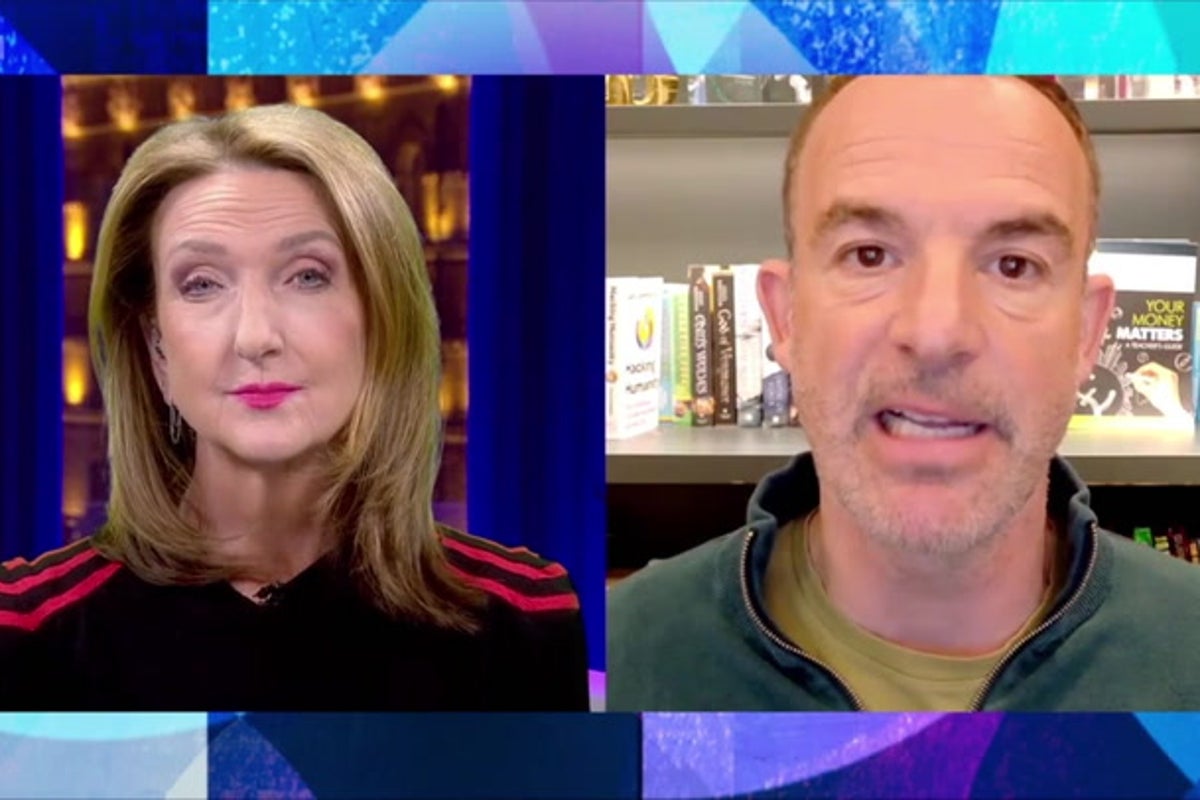
Martin Lewis has issued advice for those worried about their energy bills amid fears the war in the Middle East will spark another cost-of-living crisis in the UK, with fuel prices set to soar.