News
12,736 articles from 50+ sources
Trump suggests he may delay China trip as he pressures Beijing for help with Strait of Hormuz AP News
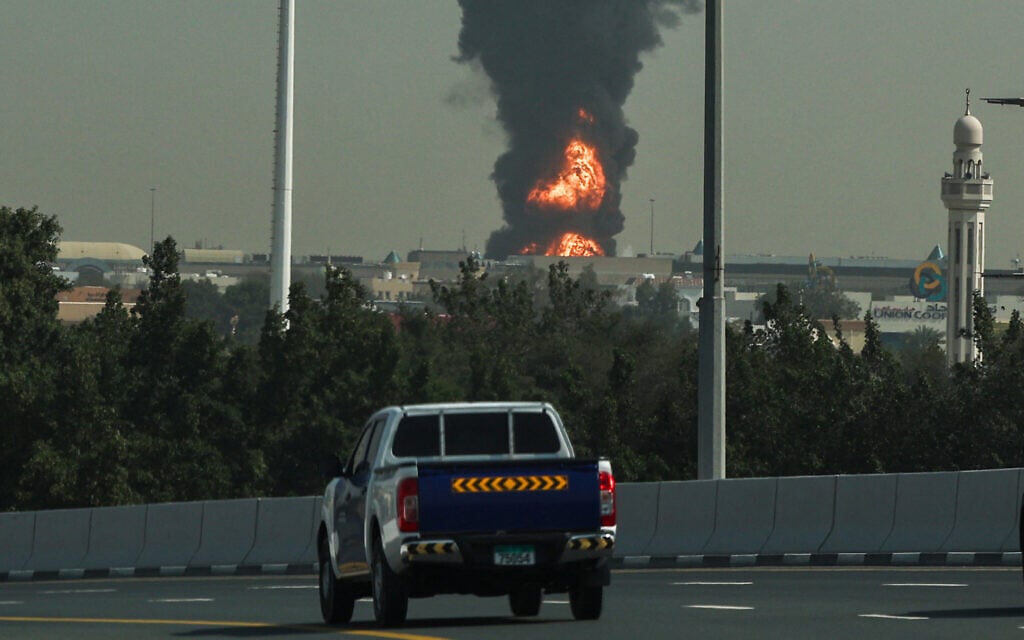
Dubai Airport temporarily closed, passengers evacuated to lower floor after drone strike sets fuel tank on fire; Saudi crown prince said to be urging Trump to keep hitting Iran hard The post Iran hits Gulf neighbors, keeps stranglehold on oil shipping, fueling energy crisis fears appeared first on The Times of Israel.
The Latest: Trump calls for help to reopen the Strait of Hormuz FOX 8 News
EU weighs action to keep Strait of Hormuz open for shipping European Union foreign policy chief Kaja Kallas on Monday said the bloc is discussing ways to keep the Strait of Hormuz open amid rising tensions affecting global energy supplies. “It is in the interest of the European Union to keep the Strait of Hormuz open,” Kallas said, adding that officials had also discussed the issue with the UN secretary-general. She warned that closing the waterway would be “a very serious development for oil and energy supplies” as the war in Iran drives up oil prices. Kallas said the EU will discuss the possibility of "changing the mandate" of the Aspides Naval Mission, adding that America's easing of sanctions on Russian oil sets a "dangerous precedent". Mission Aspides is an EU naval mission to protect cargo ships in the Red Sea from attacks from Yemen's Houthis.
Iran-US war latest: Israel says it has ‘thousands of targets’ left to hit as Trump issues Strait of Hormuz warning to Nato The Independent
Ships stranded at Hormuz, energy crunch at home: How India’s U.S.-Israel tilt is testing ties with Iran CNBC
Trump seeks naval coalition to open Strait of Hormuz: Is anyone joining? Al Jazeera
'We will remember': Trump warns countries to help secure Strait of Hormuz as shipping stalls CNBC
Trump threatens to delay Xi summit over Strait of Hormuz standoff Farm Progress
UK, Allies Refuse Trump Call to Send Warships as Strait of Hormuz Blocked Kyiv Post
Tokyo's move comes as oil prices remain elevated amid the effective closure of the Strait of Hormuz.
Strait of Hormuz coalition 'won't work': Expert says it's impossible without Iran's assurance CNBC
U.S. Oil Benchmark Nudges $100 As Trump Demands Countries Send Warships To Police Strait Of Hormuz Forbes
Trump demands others help secure Strait of Hormuz, Japan and Australia say no plans to send ships Yahoo
Oil prices climb despite Trump moves to temper market Axios
Allies cautious after Trump calls for help securing Strait of Hormuz news.cgtn.com
FACTBOX-Reactions to Trump's call for help to secure Strait of Hormuz Japan Wire by Kyodo News
Trump demands 7 countries help secure Strait of Hormuz Türkiye Today

Can this US-Israeli war of choice on Iran be stopped? Nelson Wong on Fri, 03/13/2026 - 18:54 Time is short. Every day the bombs fall, the risk of wider escalation grows, and the institutions preserving global peace are further eroded Members of Iran’s Red Crescent society walk near smoke plumes after an air strike on the Shahran oil refinery in northwestern Tehran on 8 March 2026 (AFP) On The bombs falling on Iran represent more than just another Middle Eastern conflict. They represent a fundamental assault on the international legal order, a deliberate escalation by powers that have chosen military force over diplomacy, and a dangerous gamble with global stability. As the United States and Israel prosecute their joint military operation against the Islamic Republic, we must ask ourselves: can this war of choice be stopped? And perhaps more urgently, what are its true objectives? This is not a war of necessity. Iran was not attacking the US or Israel. It was engaged in diplomatic negotiations when it was attacked. This is a war of choice, chosen by Washington and Tel Aviv, imposed on Tehran, and justified through claims that crumble under scrutiny. Article 2(4) of the UN Charter prohibits “the threat or use of force against the territorial integrity or political independence of any state”. Self-defence is permitted only “if an armed attack occurs”. (adsbygoogle = window.adsbygoogle || []).push({}); No such attack occurred. The “imminent threat” invoked by US officials has been a pretext for aggression throughout history, from the Gulf of Tonkin to the Iraq War. The US and Israel have bombed Iranian cities, killing Iran’s supreme leader, top officials and hundreds of civilians, including around 160 children at a girls’ school. This is not self-defence. This is blatant aggression. The hypocrisy is striking. The same powers that lecture others about the rules-based order are tearing that order apart. The message is clear: international law applies to everyone except the US and its closest allies. Iran's right to self-defence In response to the attacks that began in February, Iran has struck US military bases in neighbouring Gulf countries used as launching pads for strikes on its territory. Western media portrays this as escalation, but this portrayal is backwards. Iran’s strikes are acts of self-defence. A nation under attack has the right to strike back at the forces targeting it, including the bases from which attacks are launched. (adsbygoogle = window.adsbygoogle || []).push({}); What is remarkable is Iran’s restraint. It has targeted military installations, not civilians, and it has made clear that its strikes will cease when the aggression ceases. Contrast this with the US-Israeli operation, which has bombed schools, residential areas and civilian infrastructure, killing indiscriminately with no concern for the laws of war. Gulf countries could pressure the US, but they remain caught between dependence on American security guarantees and fear of Iranian retaliation Gulf countries hosting US bases - Saudi Arabia, the UAE, Kuwait, Qatar and Bahrain - find themselves in an impossible position. By allowing their territory to be used for attacks on Iran, they have made themselves legitimate targets under international law. The US could stop this war tomorrow. But the Trump administration shows no inclination to de-escalate. The influence of the Zionist lobby, acknowledged by Secretary of State Marco Rubio (though clumsily), appears decisive. Israel sets the pace; the US follows. Israel could stop this war. But Prime Minister Benjamin Netanyahu’s government has its own reasons to prolong the conflict, including domestic pressures, strategic ambitions, and a desire to eliminate what it sees as an existential threat. Gulf countries could pressure the US, but they remain caught between dependence on American security guarantees and fear of Iranian retaliation. European countries have diplomatic relationships and economic leverage, but they have shown themselves unwilling to act independently of Washington. This leaves Russia and China. Both have voiced disapproval of the unprovoked war and called for a return to negotiations. Both view Iran as a strategic partner. Russia, deeply engaged in the Middle East, views a weakened Iran as a strategic loss. China has even more at stake: Iran is a key node in the Belt and Road Initiative and a major oil supplier, and the neighbouring Gulf countries are home to substantial Chinese investments. A destabilised Iran threatens Chinese interests directly. But their influence is limited. They can provide diplomatic support, offer mediation, and use their UN Security Council positions. But ultimately, the decision to end this war lies with those who started it. The grand strategy Are we witnessing disconnected events, or a pattern aimed at containing Washington’s strategic competitors? Consider the record: a pressure campaign against Venezuela, which is aligned with Russia and China; threats over the Panama Canal, where serious Chinese investments rest; bombing Iran, a country integrated deeply with Russian and Chinese interests; and renewed threats against Cuba - all of this while the US has explicitly identified China as a “pacing challenge” and Russia as an “acute threat” in strategic documents. (adsbygoogle = window.adsbygoogle || []).push({}); Iran matters for its connections to Eurasia. Russia’s strategic alliance with Iran is no secret, and it has also relied on countries in the region for money transfers bypassing western systems, gold trade, and access to warm-water ports. Disrupting these connections weakens Russia. China imports substantial oil from the Middle East through the Strait of Hormuz, while Chinese goods flow along Belt and Road routes traversing Iran. A war destabilising this region threatens all these interests. By serving Israel's agenda, Trump betrayed Gulf allies Read More » If this is a coordinated strategy, the US is using military power not just for immediate objectives, but to disrupt the economic and strategic connections underpinning the rise of other powers, namely China and Russia. This war of choice can be stopped, but not easily. It requires sustained pressure from multiple directions: Russia and China coordinating diplomatic efforts, Gulf states asserting their interests, European countries acting independently, and the international community defending the UN Charter. Most of all, it requires the American people to demand that their government cease its aggression. The antiwar movements that helped end Vietnam, opposed the war in Iraq, and challenged endless wars over the last two decades must be revived. But time is short. Every day the bombs fall, the risk of wider escalation grows. Every day the fighting continues, the institutions preserving international peace are further eroded. We must act now. We must demand our governments choose diplomacy over war. The alternative is too terrible to contemplate. A widened war in the Middle East would destabilise the global economy. It would threaten energy supplies. It would displace millions. It could draw in other powers, including Russia and China, with consequences no one would be able to predict. And it would deal a lasting blow to the non-proliferation regime, opening the door to a nuclear-armed Middle East, and the collapse of the entire system of arms control built since the Cold War. This war of choice can be stopped. But only if we choose to stop it. The views expressed in this article belong to the author and do not necessarily reflect the editorial policy of Middle East Eye. War on Iran Opinion Post Date Override 0 Update Date Mon, 05/04/2020 - 21:29 Update Date Override 0
The Latest: Trump calls for help to reopen the Strait of Hormuz Union-Bulletin