News
12,736 articles from 50+ sources

European allies refuse US request to help open Strait of Hormuz MEE staff on Mon, 03/16/2026 - 13:18 UK, Germany, Spain and France among those unwilling to send navy to re-open crucial waterway Smoke rises from the Thai bulk carrier 'Mayuree Naree' near the Strait of Hormuz after an attack, on 11 March 2026 (Handout/Royal Thai Navy/AFP) Off European allies have pushed back on a US request to help re-open the Strait of Hormuz, with Germany stating outright that the conflict with Iran was "not Nato's war". Iran moved to close the strait last week in response to Israel and US attacks on the country, blocking a passage where more than 20 percent of the world’s oil and gas supply moves through. Despite a call from US President Donald Trump over the weekend for allied assistance, there has been widespread reluctance to get involved in the war. German Chancellor Friedrich Merz's spokesman said the conflict has "nothing to do with Nato". "Nato is an alliance for the defence of territory," said Stefan Kornelius. "The mandate to deploy Nato is lacking" in the current situation, he told reporters. (adsbygoogle = window.adsbygoogle || []).push({}); German Defence Minister Boris Pistorius added that while there would be "no military participation", they would seek a diplomatic solution to the crisis. For his part, UK Prime Minister Keir Starmer also ruled out a Nato mission, but said he was working with allies to come up with a "viable" plan to reopen the waterway. "We're working with all of our allies, including our European partners, to bring together a viable collective plan that can restore freedom of navigation in the region as quickly as possible and ease the economic impacts," he said in Downing Street. "Let me be clear: that won't be, and it's never been envisioned to be, a Nato mission." Energy Secretary Ed Miliband said on Sunday that the British government was considering sending minesweeping drones rather than warships to Hormuz. (adsbygoogle = window.adsbygoogle || []).push({}); The French foreign ministry also confirmed that France would not send ships to the Strait, writing on X that its naval mission is in the Eastern Mediterranean and remains "defensive". 'Very bad for the future of Nato' Spain, which has been the most vocal critic of the war on Iran in Europe, also ruled it out, with Defence Minister Margarita Robles saying Madrid was "absolutely not" mulling a military contribution. Poland, likewise, dismissed any involvement in a naval operation to open the strait. The lukewarm response from European capitals came after Japan and Australia voiced similar sentiments earlier on Monday, with Canberra noting it would not be sending a navy ship to the Strait of Hormuz. Britain drawn closer to Iran war as a reluctant Starmer moves to appease Trump Read More » Trump has warned that the refusal of allied countries to help open up the strait would be "very bad for the future of Nato", without elaborating. A number of Scandinavian and Baltic countries, which have been keen to ensure US support over Russia's activities near their borders, suggested they were not closing the door on the issue. "We did not want this war. From day one, we have called for de-escalation," Denmark's foreign minister, Lars Lokke Rasmussen, told Danish media in Brussels before an EU foreign ministers' meeting. "That said, I believe we need to keep an open mind and look at how we can contribute." Lithuanian Foreign Minister Kestutis Budrys told reporters in Brussels: "Nato countries should consider" a US request for help but said they would "need to see the entire operational environment and the capabilities with which we could contribute". His Estonian counterpart said his country was "always ready for discussions with the US, including now regarding the situation in the Strait of Hormuz". War on Iran News Post Date Override 0 Update Date Mon, 05/04/2020 - 21:19 Update Date Override 0

ICC governing body set to rule on prosecutor Karim Khan misconduct claims Sondos Asem on Mon, 03/16/2026 - 10:34 The 21-member Bureau of the Assembly of States Parties meets in The Hague to discuss a judicial panel report on allegations of sexual misconduct facing the chief prosecutor ICC Chief Prosecutor Karim Khan has been on leave since May 2024 pending a sexual misconduct probe (AFP/file photo) Off The International Criminal Court’s executive body is meeting on Monday to discuss its response to a judicial report on allegations of sexual misconduct facing the court’s chief prosecutor Karim Khan. The report, by an independent panel of three judges, is understood to advise the 21-member Bureau of the Assembly of States Parties (ASP) whether Khan has committed serious misconduct, less serious misconduct, or no misconduct at all. The judges have followed the standard of "beyond reasonable doubt", the highest standard of proof in criminal law. Khan has strenuously denied all allegations of sexual misconduct. The report, which was sent to the ASP bureau last week, will not be made publicly available, and has not been seen by the prosecutor or the majority of the court's 125 member states. (adsbygoogle = window.adsbygoogle || []).push({}); Only members of the bureau have been handed copies of the highly confidential report, diplomatic sources told Middle East Eye. Since December, the panel has been examining an external report conducted by the UN Office of Internal Oversight Services (OIOS) into the allegations against Khan. The OIOS investigation was commissioned by the ASP presidency in November 2024 following media reports that a member of Khan's office had accused him of sexual assault, and after the complainant refused to cooperate with the ICC’s own investigative body. The judges' report provides non-binding advice to the ASP's leadership regarding whether a finding of misconduct has been established. According to an internal ASP document seen by MEE, in the event of a finding of serious misconduct or misconduct of a less serious nature, the bureau may decide to suspend Khan pending a final resolution of the case. Exclusive: UK confirms phone call between Cameron and ICC’s Karim Khan Read More » In either case, Khan would be given 30 days to respond to the report and to attend a hearing. If the bureau approves a finding of serious misconduct, and following the hearing, the 125 members of the court must vote by an absolute majority (63 states) to remove Khan from office. It remains unclear whether bureau members will reach a decision during Monday's meeting. "The bureau will either form a view or agree on a process," a member of the ASP told MEE on condition of anonymity. "The issues are complex. Delegates take instructions from capitals," said the diplomat. "It’s an adjudicative responsibility. We need to compare notes and try to convince each other. It’s a diverse matter. (adsbygoogle = window.adsbygoogle || []).push({}); "Some states parties might come ready to make a decision," added the source. "There will be an attempt to do this today." Khan has been on a voluntary leave of absence since May last year. His deputy prosecutors have been in charge of his office in his absence. The investigation has cast a long shadow over the court’s leadership, with prolonged uncertainty over the future of the prosecutor raising concerns among diplomats and staff about the court’s ability to fulfil its mandate during the transitional state of limbo. Before he was placed on leave, Khan and his deputies had been busy investigating atrocity crimes in a dozen situations, including Palestine, Ukraine, Sudan, Afghanistan, Libya, the Democratic Republic of the Congo, and the Philippines. Sanctions and threats Since Khan's decision to apply for arrest warrants for Israel's Prime Minister Benjamin Netanyahu and then defence minister Yoav Gallant in May 2024, the court has faced a ferocious campaign by Israel and its allies, primarily the US, attempting to pressure him to drop the investigation into alleged war crimes by Israeli leaders. (adsbygoogle = window.adsbygoogle || []).push({}); Since February 2025, US President Donald Trump's administration has imposed financial and visa sanctions on Khan, his two deputy prosecutors, six judges, the UN’s special rapporteur on Palestine, and three Palestinian NGOs in connection with the Israel-Palestine investigation. Exclusive: How Karim Khan’s Israel war crimes probe was derailed by threats, leaks and sex claims Read More » The US has also threatened sanctions against the court itself, which ICC officials consider a "doomsday scenario". ICC judges are currently examining an Israeli challenge to its jurisdiction over the Palestine situation, and a separate Israeli complaint, filed on 17 November, which seeks to disqualify the prosecutor over alleged lack of impartiality. MEE revealed last summer that on 23 April 2024, as Khan was preparing to apply for warrants for Netanyahu and Gallant, the then British foreign secretary David Cameron threatened in a phone call with the prosecutor that the UK would defund and withdraw from the ICC if the court issued the warrants. The UK's foreign office in January confirmed the call took place but has declined to comment on Cameron's threats. In his first comment on the matter, Khan in December filed a submission to the ICC's appeal chamber in response to an Israeli request for him to be removed from the investigation and for the warrants to be dropped, corroborating MEE's previous reporting, which uncovered many details of efforts to undermine Khan, including Cameron's explosive phone call. His statement sets out in detail the chronology of events that led his office to apply for warrants against the two Israelis, as well as Hamas leaders, on 20 May 2024, after months of what he described as “a meticulous process” by his office. The allegations of sexual misconduct were first revealed to Khan in person by members of his team on 2 May 2024, the same day he was planning to announce the Netanyahu and Gallant arrest warrants, according to the timeline of events outlined in the document. Israel alleges that Khan rushed the warrants after he was made aware of sexual misconduct allegations against him. But Khan's statement rejected Israel's case, describing it as being based on “a haze of ends-oriented conjecture and misleading or false assertions”, and “a miasma of speculative reporting”. International law News Post Date Override 0 Update Date Mon, 05/04/2020 - 21:19 Update Date Override 0
European allies refuse US request to help open Strait of Hormuz Middle East Eye
Europe Rejects Trump’s Demands for Warships to Reopen the Strait of Hormuz The New York Times
Pakistan-bound oil tanker passes through Hormuz Strait amid Iran war Reuters
Wary allies show there's no quick fix to Trump's Iran crisis BBC
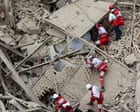
Leaders seek a diplomatic solution despite US president’s threat of ‘a very bad future’ for Nato unless it provides warships Middle East crisis – live updates European countries have ruled out sending warships to the strait of Hormuz, despite threats from Donald Trump that Nato faces “a very bad future” if members fail to help reopen the vital waterway. Germany ruled out participation in any military activity, including efforts to reopen the strait. “This is not our war, we have not started it,” said the country’s defence minister, Boris Pistorius. Continue reading...

Could Gulf states learn from Ukraine's drone revolution? Omar Ashour on Thu, 03/12/2026 - 23:15 As Iran targets US interests in regional countries, Kyiv's ongoing defensive efforts against Russia offer a blueprint for battlefield adaptation An interceptor drone used to protect against Russian drone attacks is pictured at an undisclosed location near the front lines of eastern Ukraine, on 9 October 2025 (Ed Jones/AFP) On In the first year of Russia’s full‑scale invasion, I argued that the under‑noticed defence inventories of the so‑called Global South still held Soviet‑legacy systems and calibres that could be repurposed for Ukraine’s immediate defence - less a grand strategy than a stopgap for force generation while western industry caught up. That argument rested on a simple fear harboured by every strategic planner: in an attritional fight, what matters is not only what you own on paper, but how quickly you can turn stocks into sorties, and procurement into sustained combat power. Four years later, the strategic irony is that the direction of traffic has flipped. Ukraine remains a recipient of western systems, but it has also become a producer of operational learning - an exporter of battle-space logic, procurement lessons, and counter‑drone methods. Europe’s long “holiday from history” is over; the Gulf’s current defence strategy against air and missile attacks suggests that it should internalise the same lesson, not theatrically but institutionally. Since the 1970s, the Gulf security architecture has relied heavily on US forward presence and missile defence, but the scale of recent attacks illustrates the limits of even advanced systems when confronted with mass mixed-vector raids. The lesson is therefore the expansion of partnerships, and the adaptation of defence architecture toward more scalable counter-drone layers. This is where Ukraine comes in - heavily. (adsbygoogle = window.adsbygoogle || []).push({}); Ukraine’s drone war is no longer a tactical novelty. It has become central to front-line operations, with relentless feedback loops between operators and industry. In 2025, the Ukrainian defence ministry planned to procure around 4.5 million domestically produced first-person view (FPV) drones, a figure that reads like industrial mobilisation rather than “innovation theatre”. Volume drives demand. According to Ukrainian President Volodymyr Zelensky, over the three-month winter period, Russia launched more than 14,670 guided aerial bombs, 738 missiles, and nearly 19,000 attack drones - an average comfortably above 200 attack drones per day. The point for Gulf planners is not that the Gulf must mirror Ukraine’s geography. It is that Ukrainian forces have been forced, nightly, to solve the hardest air‑defence problem there is: how to defeat mass mixed‑vector raids without bankrupting the defender. Composite threat That adaptation has been cyclical rather than linear. When electronic warfare made radio‑linked FPVs less reliable in Ukraine, tethered and fibre‑optic drones proliferated. When Ukrainians began recognising and acting on patterns, the Russians diversified their routes, increased attack volumes, and mixed in decoy drones. (adsbygoogle = window.adsbygoogle || []).push({}); Ukraine’s own officials have warned about the growing significance of fibre‑optic drones, precisely because they are difficult to jam. In parallel, soldiers in Ukraine are using improvised tools, such as nets or barriers, to help stop Russian attacks, reinforcing a lesson that Gulf and other militaries should heed: survivability is a combined product of expensive systems and cheap, scalable mitigation. Ukraine has become, under sustained aerial attack, the world's most battle‑tested school of countering terrorism from the air The threat shaping Gulf security is not a single missile or drone, but a composite strike architecture: ballistic missiles for speed and destructive effect, cruise missiles for low‑altitude penetration and precision strike, and one‑way attack drones and loitering munitions for saturation, decoying, coercion and cost imposition. The intent is operational and political: pressure on critical infrastructure - ports, airports, power, refineries and desalination nodes - while exhausting the defender’s interceptor inventory and decision cycles. Official tallies show the scale of Iran’s opening salvos. There have been 186 ballistic missiles and 812 drones detected towards the UAE; 101 ballistic missiles, 39 drones, and three cruise missiles detected towards Qatar; and hundreds more monitored or destroyed by Bahrain and Kuwait. From disclosed figures alone, the early total was already approaching 2,000 missile and drone threats - and that tally explicitly noted the absence of public data for Saudi Arabia and Oman at the time. As the first week of war progressed, official updates pushed the cumulative count higher. The wider Gulf picture thus cannot be treated as episodic. It is an air‑and‑missile defence campaign with all of Ukraine’s familiar burdens: readiness, resilience, stockpiles and replenishment. Question of sustainability This war’s most revealing datapoint is not merely how many targets were intercepted, but how many high‑end rounds were spent to do it - and what that implies for sustainability. According to Zelensky, Middle Eastern states expended more than 800 PAC-3 Patriot air-defence missiles within the first three days of the conflict - a significantly higher volume than Ukraine has used during the course of Russia’s war against it. Is that verifiable as a precise, audited figure? Not clearly. Neither Gulf defence ministries nor the Pentagon publish a public shot‑by‑shot expenditure ledger, and public threat tallies of inbound missiles and drones do not automatically translate into interceptor counts, as multiple interceptors may be fired for each incident. Zelensky’s tally should thus be read cautiously; more as an informed political warning than a number we can independently certify. But the strategic warning he makes is strongly corroborated: modern air defence can consume annual production rhythms in days. Andrius Kubilius, the European commissioner for defence and space, has highlighted the same problem. He said that roughly 700 Patriot interceptors were used during a four-month period in Ukraine, noting that Lockheed Martin produced only 600 PAC‑3 missiles in 2025. Add the fact that Iran has reportedly launched hundreds of missiles and more than 1,000 drones at Gulf states since 28 February, and you have the backbone of Zelensky’s argument, even if you treat the 800 figure as approximate. Battle tested Ukraine’s battlefield adaptation is not a moral story; it is a procurement and force‑design blueprint. That’s why there is a “race” to adopt Ukrainian counter‑Shahed techniques, tactics and procedures - and to embrace a “good enough” philosophy in operations, because exquisite high-tech systems alone cannot keep up with large-scale demand. That knowledge transfer is already starting. Qatari and western officials are exploring Ukrainian interceptor drones, detection methods and jamming approaches as cheaper complements to Patriot‑class interceptors. Why the Gulf fears Israel's 'day after' in Iran Read More » Meanwhile, Ukrainian manufacturers are positioning for export: a Reuters report cites one producer as saying that its P1‑SUN interceptor downed more than 2,500 enemy drones in four months, with claims of high monthly production capacity. The operational takeaway for Gulf defence planners is not to copy Ukraine mechanically, but to mimic its adaptation cycle and architectural logic. To defend against aerial threats, Gulf states should prioritise layered, scalable networks: distributed sensors, electronic warfare, mobile guns, low‑cost kinetic interceptors, hardened command and control, and passive protection for critical infrastructure, while preserving Patriot/Thaad/Aegis missile defence systems for the instances when they are really needed. The goal is to stay on the right side of the defence affordability frontier by maximising the value of defended assets per unit cost, and ensuring the attacker’s marginal cost of adding drones rises faster than the defender’s marginal cost of stopping them. Ukraine’s experience is therefore vital not only to Europe’s defence, but also to smaller states confronting larger aggressors - including many in the Gulf. And because Ukraine has become, under sustained aerial attack, the world’s most battle‑tested school of countering terrorism from the air, it is in the Gulf’s strategic interest that Ukraine does not fall to a colonial war of conquest in Europe. The views expressed in this article belong to the author and do not necessarily reflect the editorial policy of Middle East Eye. War on Iran Opinion Post Date Override 0 Update Date Mon, 05/04/2020 - 21:29 Update Date Override 0
Airline says limited number of flights will operate as of March 18 between Qatari capital and dozens of destinations.
FCC’s Carr warns networks over Iran war coverage The Week
'Not our war': U.S. allies balk at Trump's Strait of Hormuz demands NBC News
Larijani rebukes UAE, other Islamic states for not backing Iran during war ایران اینترنشنال
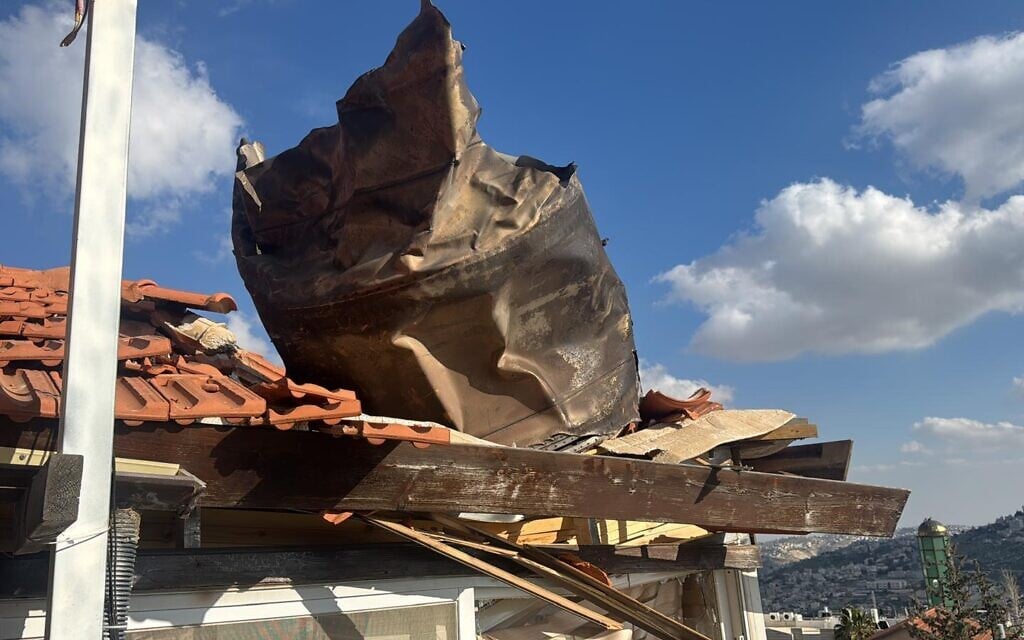
Five missile attacks on country target north, center, south and Jerusalem; woman lightly injured after impact on her home in Rishon Lezion The post Injuries and heavy damage to homes as Iran fires multiple missile salvos at Israel appeared first on The Times of Israel.

US told Turkey war would last just four days, expert says The United States government had told Turkey through official channels that the war on Iran would only take four days, Asli Aydintasbas, a Washington-based Turkey expert, said during an interview on Sunday. “Turkey and some of its allies were told, through official channels, that this operation would take days and be completed in four days,” Aydintasbas, a fellow at the Brookings Institution, said in an interview with the Serbestiyet news site. “You cannot tell a Nato ally that you have made a four-day plan and then extend the operation to 14 days. In a sense, this was also a betrayal of the regional countries.” US told Turkey war on Iran would end in just four days, expert says
Oil prices dipped and equities rose on Monday as investors focused on the crucial Strait of Hormuz and the head of the IEA said more crude could be released on the market if necessary. As the Middle East war entered its third week, Wall Street opened higher while most European stocks climbed after Asian stocks mainly dipped. International benchmark Brent North Sea crude dropped back two percent to $101 after rising about three percent earlier in the day while the main US contract West Texas Intermediate plunged more than five percent to $93.37.
The surge of drone use in conflicts worldwide, seen most vividly in the Ukraine and Middle East wars, will accelerate the race to develop high-power laser systems that could down the devices far more cheaply than traditional defensive weapons. It is a critical issue for governments threatened by low-cost, easily obtainable drones that can wreak outsize destruction, and are usually shot down only by the most advanced -- and expensive -- missile technologies.
With assault rifles, daggers and posters of Iran's late Ayatollah Ali Khamenei waving in the air as tens of thousands chant "death to America, death to Israel", there's little mistaking where the loyalties of Yemen's Houthis lie. But will the battle-hardened militia backed by the Islamic republic join the war with the United States and Israel? Since the Middle East war erupted, the Houthis have held regular demonstrations in their capital Sanaa, where supporters have come out in full force to rally behind their brothers in arms in Iran.
China under pressure as Trump ties high-stakes summit to Strait of Hormuz crisis South China Morning Post
Bardem hits out at film industry for lack of activism Actor Javier Bardem has called out members of the film industry for their lack of activism at Sunday's Oscars. Bardem, 57, told the Independent that "I think it's comfortable-ness" that prevented members of the industry from speaking out. He added, "I think they don't want to feel, themselves, uncomfortable. And that makes me uncomfortable; me and many others." The actor, who has appeared in films like No Country for Old Men and Dune, was criticised for using his apperance at the Oscars to declare "no to war and free Palestine", which was met with a round of applause. Bardem also wore a pin that he wore in 2003 to protest against the Iraq war, "which was an illegal war and we are here 23 years after with another illegal war", he told reporters, referring to the war on Iran. Javier Bardem says “no to war and free Palestine” at the #Oscars, earning a huge round of applause from everyone in the room. pic.twitter.com/7p3whJzhbm March 16, 2026
Iranian state media calls for turning fire festival into a symbolic protest by burning figures of Trump and Netanyahu.