News
12,736 articles from 50+ sources
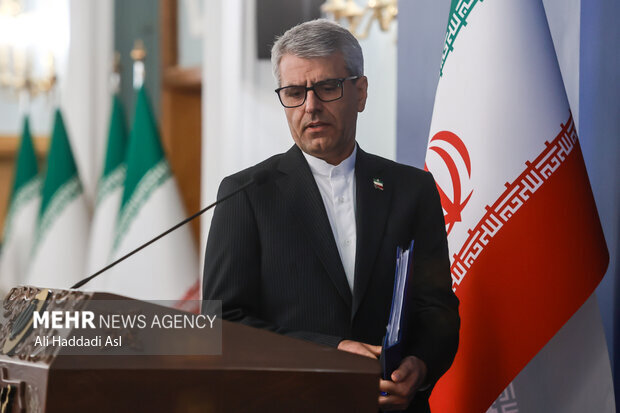
TEHRAN, Mar. 12 (MNA) – Iranian Foreign Ministry Spokesman Esmaeil Baghaei has described new European Union sanctions imposed against Iran as “immoral and unlawful.”
Experts, reports on the Strait of Hormuz and gas prices CBS News

submitted by /u/uncle-ice493 to r/geopolitics [link] [comments]

Unrelenting Iranian attacks on shipping traffic and energy infrastructure again pushed oil above $100 a barrel
Russia's Dmitriev says he discussed global energy crisis with US counterparts Russian presidential envoy Kirill Dmitriev said on Thursday he had discussed the current energy crisis with his US counterparts as part of a meeting of the US-Russia working group on economy that took place in Florida. "Today, many countries, primarily the United States, are beginning to better understand the key, systemic role of Russian oil and gas in ensuring the stability of the global economy, as well as the inefficiency and destructive nature of sanctions against Russia," Dmitriev said in remarks posted on his Telegram channel.

submitted by /u/SendStoreMeloner to r/worldnews [link] [comments]
Iran war risks higher household inflation expectations Financial Times
Morning Bid: Iran widens war on shipping, Trump talks Strait Reuters

TEHRAN, Mar. 12 (MNA) – The office of Grand Ayatollah Sayyid Ali al-Sistani, Iraq’s prominent Shia cleric, has extended his congratulations to Ayatollah Seyyed Mojtaba Khamenei on his election as the new Leader of the Islamic Revolution of Iran.
Iran's new supreme leader ordered the vital Strait of Hormuz oil shipping lane to remain closed on Thursday, while US President Donald Trump said stopping the Islamic republic's "evil empire" was more important than crude prices. Ayatollah Mojtaba Khamenei, who was reportedly injured in an air strike, has yet to appear publicly since his nomination last Sunday as supreme leader, and his defiant message was read by a newscaster on state television.
The Middle East war is creating the biggest oil supply shock in history, the International Energy Agency warned Thursday, as Iran launched a new wave of attacks against Gulf energy targets that sent prices spiking above $100 a barrel. Images from Bahrain showed thick smoke rising after a strike on fuel tanks in Muharraq, with residents told to stay inside and close their windows.
The Middle East war has caused the biggest oil supply shock in history, the International Energy Agency warned Thursday, as Iran launched a new wave of attacks against Gulf energy targets that sent prices spiking above $100 a barrel. Images from Bahrain showed thick smoke rising after a strike on fuel tanks in Muharraq, with residents told to stay inside and close their windows.
Iran launched a new wave of attacks against Gulf energy targets on Thursday, hours after two oil tankers were hit, sending crude prices soaring again despite record reserve releases. The renewed drone and missile attacks against Iran's Gulf neighbours and Israel followed a warning from Tehran that it could wage a prolonged war that would "destroy" the world economy. US President Donald Trump meanwhile insisted Iran was facing imminent defeat, though he cautioned that did not mean the war would end "immediately."
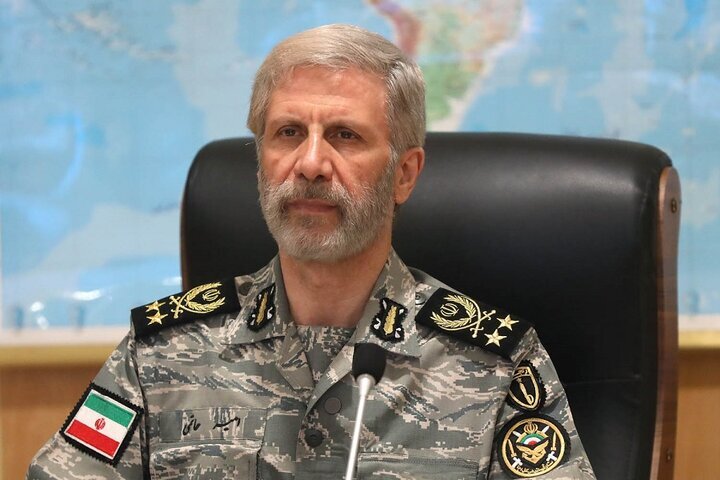
TEHRAN, Mar. 12 (MNA) – Chief Commander of the Army Force of the Islamic Republic of Iran Major General Amir Hatami has said that his forces have been fully prepared to defend the country with all their might and power.

Why the Gulf fears Israel's 'day after' in Iran Dania Thafer on Tue, 03/10/2026 - 17:18 The postwar landscape could leave GGC states encircled by instability, while removing the last major constraint on Tel Aviv's pursuit of regional hegemony A plume of smoke rises from the port of Jebel Ali following a reported Iranian strike on Dubai on 1 March 2026 (Fadel Senna/AFP) On Iran has struck every Gulf state with missiles and drones, yet the region’s richest nations and their powerful militaries have remained strikingly passive. They had plenty of warning that the conflagration was coming. Analysts spent weeks speculating on when the US and Israel would strike, while Iran’s leadership threatened to unleash “hell” on the region in return. In the end, both sides delivered on their threats: the US and Israel started the war, while Iran expanded it by striking various civilian targets and infrastructure in every Gulf Cooperation Council (GCC) state. Why, then, have the GCC states remained focused on defence and damage control? The answer is that although they are under unprecedented pressure, their strategic calculus remains largely unchanged. They may be furious at Iran, but - as before the war - they perceive that they have few good options for “the day after”. (adsbygoogle = window.adsbygoogle || []).push({}); On a strategic level, Israel and the Gulf states are fundamentally divided on how a postwar Iran should look. The Gulf states would prefer to end the war quickly and with minimal disruption. Israel, by contrast, wants a long war and is tolerant of chaos. Though the potential scenarios vary, there are two commonalities. Firstly, whether Iran’s regime falls or not, the Gulf states believe that further chaos and instability will likely be the result. Secondly, they fear that the conflict will enable Israel’s regional revisionism and its encroachment into the Gulf. This is why the GCC lobbied hard against the war. It also explains why Gulf states are now trying to buy time by sticking to a defensive strategy. Preferred outcome The most favourable outcome for the GCC would be a rapid end to the conflict following the decapitation of Iran’s senior leadership. For the Gulf states, Iran’s domestic order matters far less than its regional project of the self-proclaimed “axis of resistance”. Accordingly, any “same but different” leadership would have to significantly moderate Iran’s military adventurism and little else. This outcome could also mitigate the chaos that the Gulf states associate with a more transformative regime change. (adsbygoogle = window.adsbygoogle || []).push({}); It would allow the GCC to quickly return to the status quo, reopening for business and re-establishing dialogue with Tehran. In short, Gulf states could revert to their prewar strategy without having to ask many difficult questions about their own perceptions and policy prescriptions. For the Gulf states, this is a worst-case scenario. They are desperate to avert conflict and to not have chaos become a regional reality The problem is that there are substantial impediments to this outcome. Decapitation alone falls short of Israeli and US goals. President Donald Trump has bragged that the US has killed not just many key figures from the current Iranian leadership, but their potential successors as well. One plausible endgame for Washington is a deal requiring Iran to dismantle both its nuclear programme and its ballistic missile arsenal. Though the Iranians are likely now more than ever to resist giving up their ballistic missiles given their prolific use in the ongoing conflict, the biggest barrier to this scenario remains Israel. Israel’s approach appears to pursue the same outcome – disarming and neutering Iran – through a different pathway that requires far more than decapitation. Prime Minister Benjamin Netanyahu has explicitly stated that Israel will deem any reshuffling of Iran’s leadership as insufficient. Its aim is cumulative institutional destabilisation, designed to steadily erode Iran’s capacity to threaten its adversaries. The common denominator for both the US and Israel is an Iran that can no longer pose a threat to Israeli or US interests. Yet achieving that outcome remains far from certain, and would likely require a prolonged and destabilising confrontation. Slow-burn conflict The second potential outcome is less a “day after” scenario and more the perpetuation of the current conflict in slow-burn form. Like contemporary Gaza, even if a ceasefire is declared, it would be a ceasefire in name only. In between a series of flare-ups, low-level violence would simmer but never entirely abate, with repeated tit-for-tat exchanges between Israel, the US and Iran. The Iranian leadership would inevitably reshuffle, given the damage the US and Israel have already caused. But it would not rethink its grand strategy, and it would continue to strike GCC states to push the US towards a ceasefire. Israel and the GCC view this scenario from opposite strategic poles. For the Gulf states, this is a worst-case scenario. They are desperate to avert conflict and to not have chaos become a regional reality. Every GCC state is focused on ending their over-reliance on energy by diversifying their income streams. Even if the number of attacks abates, one drone or rocket is too many, because it can keep tourists and investors away. Moreover, a sustained threat to GCC states could add a premium to oil prices and further disrupt energy production. The Gulf states would also have to remain in a constant state of high alert, caught between two warring parties while trying to de-escalate, all the while bearing the brunt of the attacks in a war they did not want. Conversely, this looks like Israel’s optimal outcome. Unlike the Gulf states, Israel is not in close geographic proximity to Iran, nor do they share maritime borders. As a result, its risk tolerance is much higher. Being able to permanently “mow the grass” through regular strikes against Iran, rather than having to fight Tehran’s proxies next door, would give Israel the strategic depth it craves. For the Gulf states, however, this would provide the opposite: permanent conflict on the home front. This could be the new status quo already, given that Netanyahu claimed Israel had crippled Iran’s nuclear programme in the 12-day war last June, only for him to invoke the same alleged threat to justify the current wave of strikes. Pandora's box The third scenario is a Pandora’s box: the Islamic Republic’s collapse. Exactly how this would come about is an open question. From the perspective of GCC states, this scenario likely appears no better than the second, and could prove even more destabilising. Yet it also carries a narrow, albeit uncertain, possibility of a more favourable outcome, should a less hostile regime eventually emerge in Tehran. (adsbygoogle = window.adsbygoogle || []).push({}); The Trump administration’s inability to delineate what a “day after” may look like, and how to get there, does not help. Given that just one in four US voters currently support the conflict, boots on the ground are unlikely. There is no credible anti-regime armed group within Iran that could take power. Whether in Iraq, Libya or Afghanistan, history overwhelmingly shows that total regime collapse associated with outside interference is often followed by years of civil war and chaos. Although driven largely by internal forces, Syria has been the most hopeful outcome following the fall of the Assad regime, as the new government has moved closer to the Arab Gulf states and adopted a far less confrontational posture towards Israel. Yet while a post-collapse government in Iran that adopts a less hostile regional posture is theoretically possible, this prospect is highly unlikely given the country’s size, political structure, and entrenched security institutions. No optimal Gulf endgame Gulf states are caught in middle of the US-Israel war on Iran. There is a way out Read More » The second and third "day after" scenarios above, which are ideal outcomes for Israel, would leave the Gulf states surrounded by three perpetually unstable, fragile states: Yemen, Iraq and now Iran. Before Operation Epic Fury entangled all the Gulf states in a single escalation cycle, the Yemen-based Houthis hit Saudi Arabia and the United Arab Emirates in 2022. Iran and Israel both bombed Qatar in 2025. The last thing that the Gulf states want is the perpetuation of this descent into instability. Now, Iran and allied militias in Iraq have launched drones and missiles towards US bases across the Gulf. This has exposed an uncomfortable reality for Gulf leaders: when Israeli and GCC interests collide in Washington, Israel sits higher in the hierarchy of American alliances, as evidenced by Secretary of State Marco Rubio’s contention that the US timed this war to align with Israel’s plans. Gulf leaders have little interest in joining what they view as Israel’s war. They remain unconvinced that the US could or would constrain Israel. This illustrates why the Gulf states remain focused on defensive over offensive operations, even while Iran escalates the conflict. The Gulf states’ history when facing two competing regional rivals offers a pertinent lesson. During the 1980s and 1990s, GCC states sought to mitigate the revisionist aspirations of Iraq and Iran alike. Several Gulf leaders opposed the 2003 Iraq invasion, not because they supported Saddam Hussein, but because they feared regime change would produce chaos, and Iran would fill the void. They were right. It’s little wonder, then, that most Gulf leaders now fear that toppling the Islamic Republic will not bring quiet, and will instead only remove the last major constraint on a revisionist Israel’s pursuit of regional hegemony. The views expressed in this article belong to the author and do not necessarily reflect the editorial policy of Middle East Eye. War on Iran Rob Geist Pinfold Opinion Post Date Override 0 Update Date Mon, 05/04/2020 - 21:29 Update Date Override 0
Why the Gulf fears Israel's 'day after' in Iran Middle East Eye
'Global order & security will be at risk if ...': Iran's message to Pakistan PM Shehbaz Sharif The Times of India

Donald Trump claims US has 'won' war with Iran but needs to 'finish the job'
Iran Israel US War | Iran signals it will hit U.S., Israeli economic and tech targets The Hindu
Two Indian ships allowed to pass through Strait of Hormuz amid Iran-US war | India News Hindustan Times