News
12,736 articles from 50+ sources
Macron: France and allies must protect ships in Strait of Hormuz Yahoo
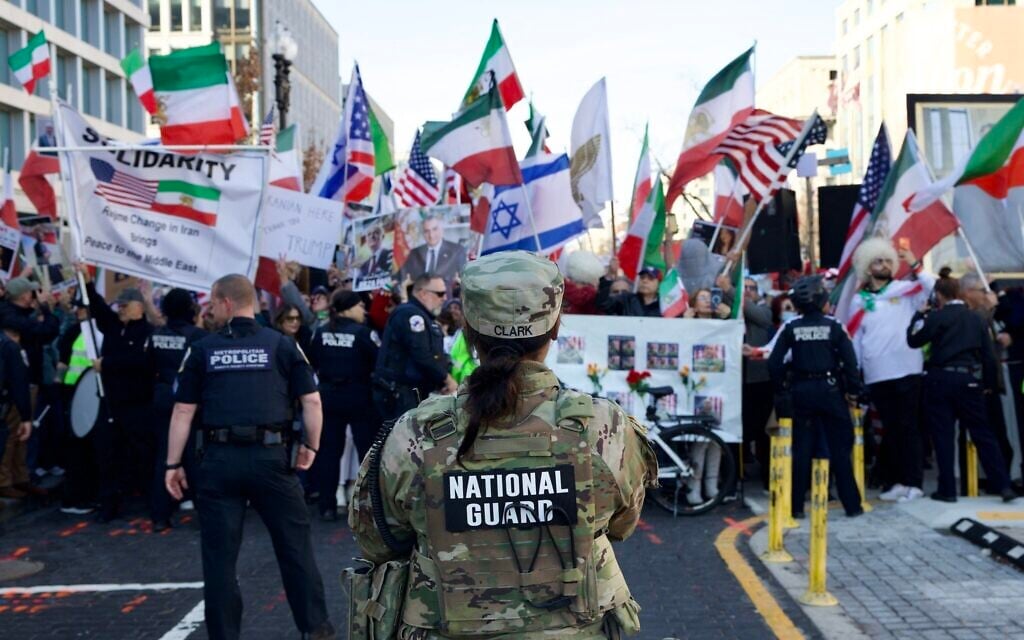
About half of US Jews surveyed think war will exacerbate antisemitism and anti-Israel sentiment, though only 12% assess Netanyahu was main driver in decision to launch attacks The post 68% of ‘connected’ American Jews back the US-Israel war against Iran, survey finds appeared first on The Times of Israel.

submitted by /u/F0urLeafCl0ver to r/worldnews [link] [comments]
Oil prices surge as Iran lashes out The Week
How the UK's gas addiction keeps energy bills high despite rising role of wind and solar
Oil Trims Gains on Strategic Reserve Talks But Upside Risks Persist WSJ
Bill Kaplan: War with Iran, then what? WisPolitics
.png?width=1200&auto=webp&trim=0%2C0%2C0%2C0)
Have your say: Ed Davey has urged King Charles to scrap his US trip as Trump’s attacks on Sir Keir Starmer put the state visit in question

submitted by /u/SuperXGamerAb to r/worldnews [link] [comments]
Mideast-bound bauxite, alumina vessels divert due to Hormuz blockage Reuters

submitted by /u/SuperXGamerAb to r/worldnews [link] [comments]

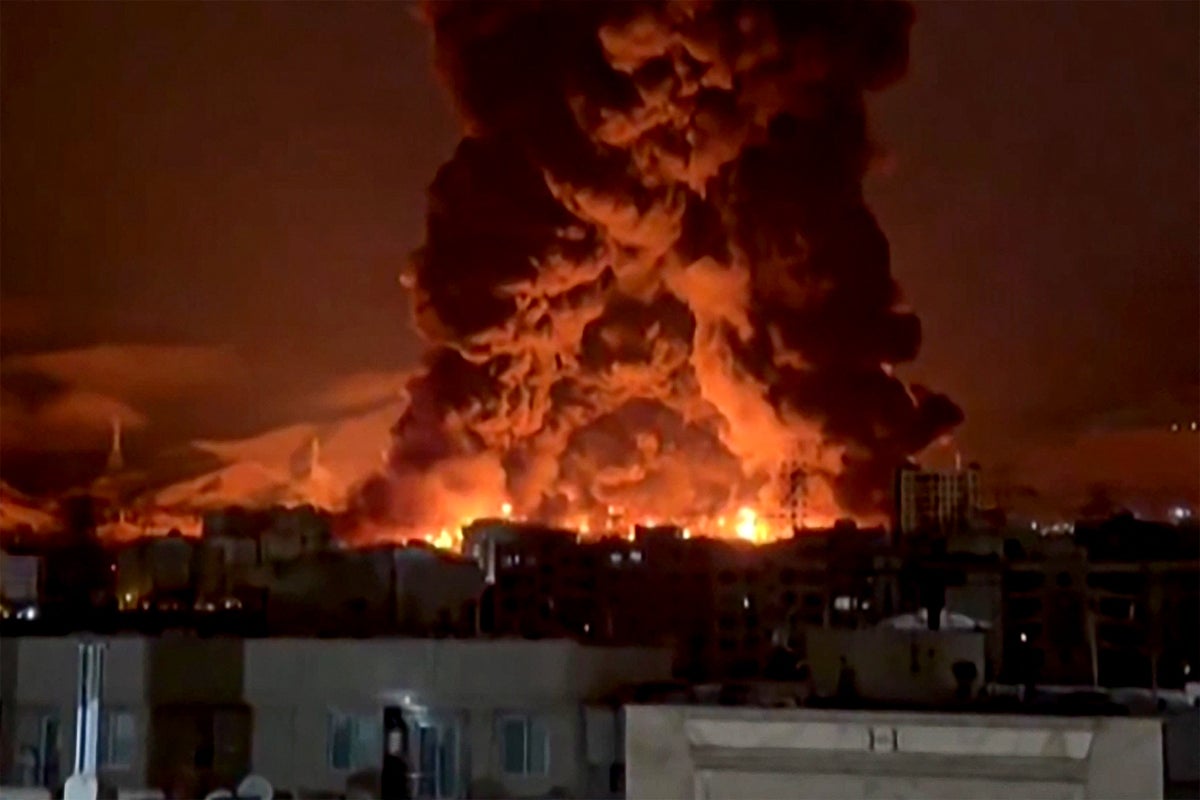
Huge crude oil spike and Asia plummet: How the Iran war hit the markets Rayhan Uddin on Mon, 03/09/2026 - 15:27 Oil prices jumped to the highest levels since 2022, as South Korean and Japanese indices slump following Iranian closure of Strait of Hormuz A crude oil tanker is guided to a berth at the oil terminal at the port in Qingdao, in China’s eastern Shandong province on 7 March 2026 (CN-STR/AFP) Off The global commodity market was jolted as markets reopened on Monday, as the war on Iran continued to escalate over the weekend. Israel struck over 30 oil depots in Iran on Saturday, including in Tehran and Karaj. The strikes on depots went far beyond what the US expected when Israel notified it in advance, according to a report in Axios. Iran threatened to attack oil facilities in neighbouring countries in response. It launched a fresh wave of attacks on the Gulf on Sunday, with attacks reported in the UAE, Qatar, Bahrain and Kuwait. (adsbygoogle = window.adsbygoogle || []).push({}); Middle East Eye takes a look at how the war is impacting the markets. Crude oil soars above $100 Oil prices jumped to the highest levels since 2022, before falling back slightly. Brent crude prices soared as high as $119 per barrel, while US West Texas Intermediate (WTI) also rose to $119.48 a barrel. The price of Brent crude later dropped to around $105, as the Financial Times reported that G7 finance ministers would meet to discuss the potential joint release of petroleum from reserves co-ordinated by the International Energy Agency. In a post on Truth Social, US President Donald Trump insisted the spike would not last. (adsbygoogle = window.adsbygoogle || []).push({}); “Short term oil prices, which will drop rapidly when the destruction of the Iran nuclear threat is over, is a very small price to pay for U.S.A., and World, Safety and Peace,” he wrote. “ONLY FOOLS WOULD THINK DIFFERENTLY!" he added. Qatar, the world’s second largest producer of liquified natural gas, has been forced to close the Ras Laffan plant due to air strikes in the vicinity. Kuwait, Iraq, the UAE and Saudi Arabia have all reduced oil production, partly due to Iran blocking the Strait of Hormuz. These countries export oil to Asia via the narrow maritime channel between Iran and Oman. (adsbygoogle = window.adsbygoogle || []).push({}); Strait of Hormuz closure hits Asian markets Asian market indices took the brunt of investor anxiety following the outbreak of war. As markets opened on Monday morning, Japan’s Nikkei 225 dropped by around 5.2 percent, while South Korea’s KOSPI slumped 6.2 percent over the weekend. There were smaller drops elsewhere: Hong Kong’s Hang Seng Index was down by 1.8 percent, while India’s NIFTY 50 fell by around 2.5 percent. South Korea and Japan’s market indices have plummeted since the war began nine days ago. The KOSPI is down 16 percent, while the Nikkei 225 has fallen around 10 percent. Australia’s ASX 200 has fallen 6 percent over that period. The drop in Asian equity markets is linked to the global energy shock caused by the war, but also specifically the reliance on the Strait of Hormuz for oil exports. South Korea receives around 70 percent of its crude oil from the Middle East, while Japan imports around 90 percent. UK and EU markets dip Markets tumbled in Europe too on Monday. London’s FTSE 100 fell by 1.7 percent in early trading, reaching its lowest level since mid-January. Meanwhile, both Germany’s DAX and the CAC in Paris dipped by around 2.4 percent. The pan-European Stoxx 600 fell by 2 percent. In the currency markets, the pound was 0.8 percent down against the US dollar, at $1.331. It was the biggest daily fall in over a month. UK Prime Minister Keir Starmer said supporting British people with the cost of living and energy bills would be at the top of his mind. UK government bonds tumbled for a third day too, as investors weighed up the impact of the war on the British economy. US dollar rallies The US dollar index, which measures the currency against a basket of six major peers, climbed to 99.57 - its highest in three months. This was partly sparked by traders revising inflation expectations, with the war meaning the Federal Reserve could delay a cut to interest rates. Like other markets around the world, US stocks dropped on Monday - though less severely than in Asia and Europe. The S&P 500 fell by 1.1 percent early on Monday, while Nasdaq 100 fell 1 percent. Markets reacted to Iran naming Mojtaba Khamenei, the son of slain Ayatollah Ali Khamenei, as its new supreme leader, and keeping up attacks on countries in the region. They saw that, coupled with Trump’s recent statements, as signs of a prolonged war. Gold falls while agricultural markets rise Gold fell 2 percent, amid concerns of the war driving up inflation. Spot silver was down 0.3 percent on Monday, while platinum lost 1 percent and palladium fell 1.3 percent. Meanwhile, aluminium soared to its highest in four years due to supply concerns amid the war. Benchmark three-month aluminium on the London Metal Exchange hit its highest since March 2022 at $3,544 per ton. In agricultural markets, Malaysian palm oil rose 9 percent and Chicago soybean oil climbed to its highest since 2022 - both driven by the crude oil hike. Wheat also rose to its highest since June 2024, while corn prices hit a 10-month high. War on Iran News Post Date Override 0 Update Date Mon, 05/04/2020 - 21:19 Update Date Override 0

submitted by /u/FootballAndFries to r/worldnews [link] [comments]
Kentuckian is seventh solider to die in Iran war, says Pentagon Kentucky Lantern
What Is Life Like Beneath the Bombs of the Iran War? Reason Magazine

submitted by /u/murphystruggles to r/worldnews [link] [comments]
Ministry of National Defence says no casualties or damage after missile shot down over southern city of Gaziantep.
submitted by /u/Force_Hammer to r/worldnews [link] [comments]
BEIJING, March 9 (Reuters) - Chinese Foreign Minister Wang Yi on Monday called for a ceasefire in the Gulf region as soon as possible, stressing that the sovereignty, security and territorial integrity of Gulf countries should be fully respected, according to statements from his ministry. Wang made the remarks in a phone call with his Kuwaiti counterpart Jarrah Jaber Al-Ahmad Al-Sabah on Monday as Iran answered a U.S.-Israeli bombing campaign with strikes around the Gulf region.
By Olivia Le Poidevin GENEVA, March 9 (Reuters) - The United Arab Emirates ambassador to the United Nations in Geneva called on Monday for a de-escalation of the U.S.-Israeli war with Iran and a return to negotiations. Oil prices have surged as some major producers cut supplies and stock markets have gone into a nosedive since the war began on February 28, and Iran has fired on Gulf states that host U.S. military bases, causing travel and business disruptions.